MEDIA CONCEPT
What is ARTEFACT ARTEFACT is an educational digital medium about the new nature of imagery. It explores how generative AI is changing photography, fashion, advertising, design, and art. The focus is not on the neural network itself, but on the image—how it is created, why it appears plausible, and what happens to it after publication. The Problem We have become accustomed to perceiving photography as a testimony to reality. But today, a convincing image can exist without the person, place, or event it depicts. Visual plausibility no longer equals documentary truth.
Mission and Value To help readers consciously perceive synthetic visual content: to distinguish between photography and reconstruction, to understand the origin of images, to critically assess the context, and to recognize the cultural value of new visual forms. Audience and Formats Students and professionals in design, photography, fashion, art, and media, as well as viewers interested in visual culture. Primary formats include visual analyses, «real vs. synthetic» comparisons, case studies, and thematic archives.

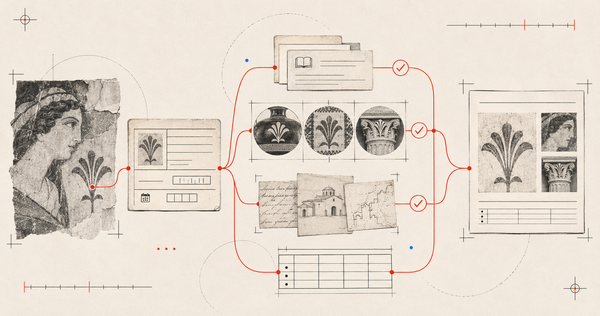
Visual metaphor: an object that appears real but exists only as an image.
EDITORIAL SYSTEM
Six categories from the first assignment form the basis for automated material classification.
Publication Logic
Every piece is built around a single visual object. The editor answers three questions:
- What do we see?
- What technology was involved in its creation?
- How is the image connected to reality?
Media Formula:
IMAGE × TECHNOLOGY × REALITY
Example of a visual theme: the image as an archival document or a persuasive reconstruction.
DATA SOURCES
Where media obtains materials and information regarding the provenance of images.
Primary Sources Work by artists, photographers, and designers; author websites and portfolios; official publications from studios and brands; project descriptions, interviews with creators, and files and metadata provided by the rights holder. Preference is given to the original and direct confirmation of the creation process.
Visual and Professional Platforms Behance and creative studio websites—for sourcing case studies. Publications from art institutions, exhibitions, and specialized journals—for context. Social media should only serve as a signal to locate the original source, not as self-sufficient proof.
Technical and Verification Sources Documentation from generative tools, C2PA / Content Credentials specifications, original files, details of modifications, official statements from creators, and links to initial publications. The absence of metadata does not prove that an image was created by AI.
Audience Feedback Comments, topic suggestions, and reader questions, along with survey results. This data helps select topics but does not verify the authenticity of images.
Visual metaphor: an image that has passed through multiple media and contexts.
DATA UNIT
For automation, it is important to store not only the image but also verifiable context.Material Record in Airtable One record is created for each image with a unique ID. Fields include: title, preview/file, link to the original source, author name, discovery date, original publication date, category («photo, ” „AI, ” „mixed media, ” „unspecified“), tool used—if confirmed, process description, license/permission, proof of origin, rubric, editor, status, and a link to the final publication. Additional Fields Identifier or link to Content Credentials (if available), presence of original file, confidence level in attribution, change history, link to correspondence with the author, and last verification date. Confidence level is an editorial assessment, not a probability calculated by a detector. Record Statuses NEW → SORTED → NEEDS CHECK → VERIFIED / UNVERIFIED → APPROVED → PUBLISHED. For unverified materials, publication is only possible as an uncertainty analysis, clearly marked, rather than as an established fact.
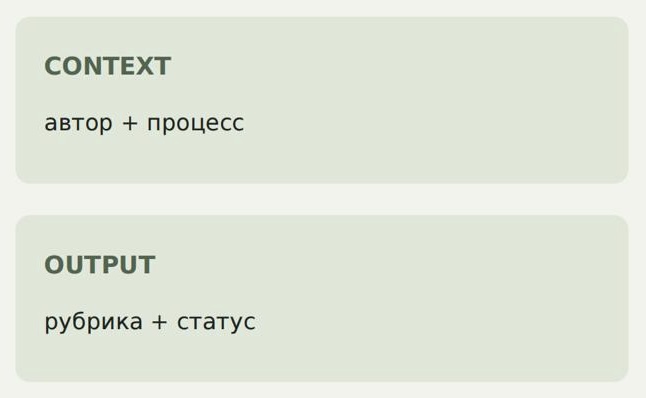
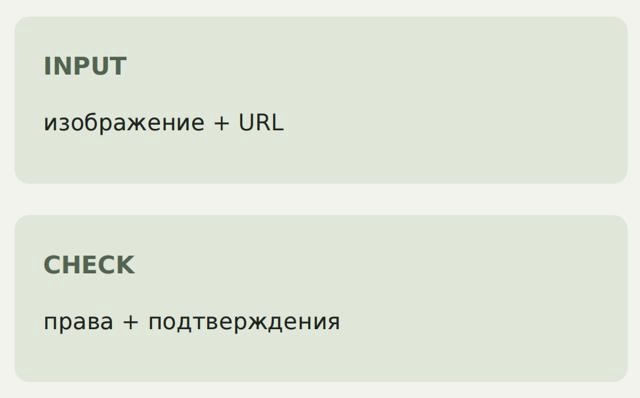
DATA PROCESSING SCHEME
Data Workflow Official Website / Original Material / Permitted RSS → Feedly or RSS → Make → Airtable → ChatGPT for tagging and drafting → editor for review → approved publication in media. Scope of Responsibility Automation accelerates searching, sorting, and text preparation. It does not verify authenticity based on appearance, nor does it have the authority to publish material independently. The final decision remains with the human editor.
AUTOMATED SERVICES
Tool roles and workflow settings.Feedly / RSS — Monitoring The Editor maintains a whitelist of vetted websites and thematic collections: AI photography, digital fashion, synthetic advertising, visual art. The system receives the headline, date, link, and a brief description of new materials. Private accounts and resources without authorized access are not scraped. Make — Data Transfer When a new entry appears, Make creates a card in Airtable, checks for URL/ID matching, and notifies the editor. Connection errors are logged. Repeated requests must not create duplicates. Airtable — Central Archive Stores images and cards with sources, authorship, review statuses, and editorial decisions. Source data is not automatically overwritten. Access to the APPROVED and PUBLISHED fields is restricted to the editor. ChatGPT — Content Processing Suggests categories, brief summaries, a list of questions for the author, headlines, and drafts. It only works with the provided information, clearly separates facts from assumptions, leaves unknown fields blank, and attaches links to verifiable claims.
Technology does not replace context: the visible image and its digital model.
GUIDELINE: CHECKLIST
Guidelines for AI and Editor When Determining Image Provenance.
What the System Must Do
- Maintain a direct link to the source and the date of acquisition.
- Separate the author-confirmed description from automatic inferences.
- Check for the presence and validity of Content Credentials where technically possible.
- Mark the absence of information as «undetermined.»
- Highlight contradictions between sources and forward them to the editor.
What the System Must Not Do Do not label an image as «100% AI» or «100% real» based solely on visual characteristics or detector output. Do not fabricate a prompt, author, model, creation date, license, or processing history. Do not present the absence of C2PA as proof of generation or authenticity.
Editorial Publication Criteria A confident assertion of provenance requires a verifiable primary source, author testimony, or reliable information about the creation process. If these are unavailable, the material is described as a visual case with undetermined provenance. The reader must understand what is known and what remains unknown.
Tone and Language Calm, exploratory, and contemporary. Free from sensationalism or absolute statements. The text should explain to the viewer how the image is constructed and why it is significant, rather than advertising a specific neural network. Complex terminology is clarified with simple language.
Guidelines for Content Preparation The AI generates the headline, lead, description of the visual case study, and review questions. Every fact must be traceable to a cited source. All text undergoes editorial review. Fictitious quotes, unverified data, or descriptions of non-existent experiments cannot be presented as fact.
Image Creation Guidelines Generative AI is used for covers, visual metaphors, experiments, and demonstrating technological capabilities. These images must be clearly labeled as «image created by AI.» Synthetic frames cannot be used to illustrate documentary events without an obvious indication of reconstruction. Imitating a real author or using someone else’s visual material without proper rights is prohibited.
Pre-Publication Review The editor verifies authorship, usage consent, relevance to the section, accuracy of the caption, and clarity of labeling. Auto-publishing is disabled—after preparation, the system keeps the material in the APPROVED-REQUESTED status until manual authorization.
RESULTS AND SOURCES
The Point of Automation: Accelerating Editorial Work Without Automating Trust.
How It Works Using a Single Piece of Content as an Example Topic: «Can a virtual model be perceived as real?» Feedly discovers a studio publication; Make transfers the URL to Airtable; ChatGPT suggests the tags DOUBLE and EVIDENCE and a draft; the editor finds the primary source, verifies rights and process description, clarifies details with the author, and approves the text. The case is published in the media with proper tagging and a source link.
Key Takeaway At ARTEFACT, the content workflow is automated: discovery → archive → classification → draft. The responsibility for authenticity, the assessment of cultural significance, and the decision to publish are not automated. Visual literacy begins with a transparent provenance of the image.
SOURCES / FOR THE FINAL SLIDE • First Homework «ARTEFACT»: hsedesign.ru/project/artefakt-4c86c9ad4f754500bcddf2f82445d692 • C2PA, Content Credentials Specification: spec.c2pa.org/specifications/specifications/2.5/specs/C2PA_Specification.html • NIST, AI RMF: Generative AI Profile (2024): nist.gov/publications/artificial-intelligence-risk-management-framework-generative-artificial-intelligence • Creative Commons — License Terms of Use: creativecommons.org/cc-licenses/ • OpenAI, Content Provenance: developers.openai.com/api/docs/guides/content-provenance