Navigation
Introduction
The Bus — a comic series by American artist and illustrator Paul Kirkner, created in the late 1970s. The first stories were published in January 1979 in the American magazine Heavy Metal, which featured fantasy, science fiction, and alternative comic styles. The series ran regularly for six years and became one of Kirkner’s longest works for the magazine.
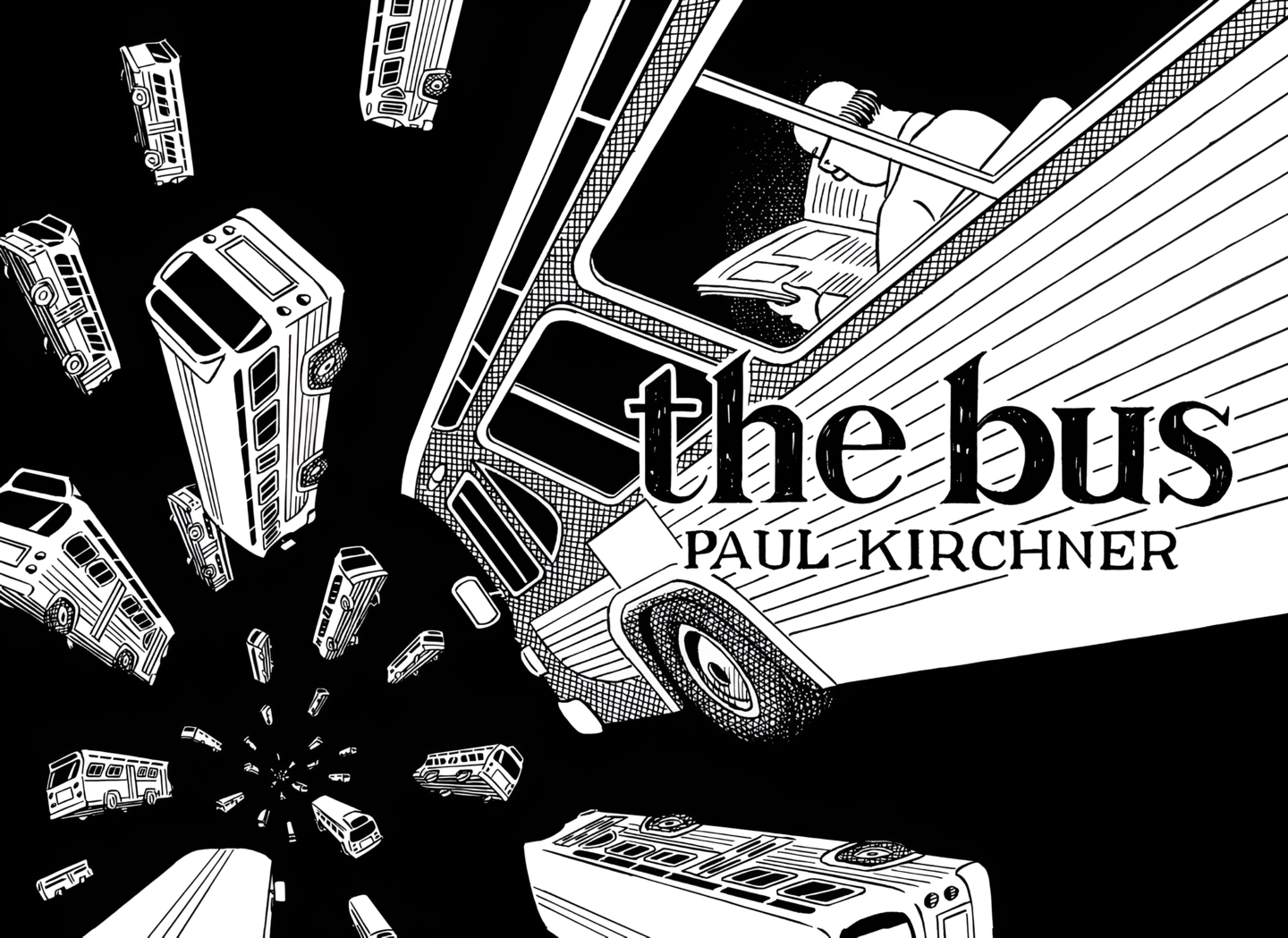
Paul Kirchner, «The Bus.» Cover
«The thing is, Heavy Metal often sold half-page ad spots, and the remaining space needed to be filled with something.»
— Paul Kirchner
«What I enjoyed most about working on The Bus was finding possibilities within the given constraints. The comic was built around several situations: waiting for the bus, boarding it, paying the fare, riding with other passengers, and getting off at a stop. In these very ordinary circumstances, I tried to inject the strangest plot twists I could imagine.»
— Paul Kirchner
Structure
Most stories in the series are told without a single line of dialogue. Communication between characters, when it occurs, is predominantly nonverbal—through glances and touch.
«I enjoy telling stories without words. It forces the reader to construct the events themselves. And if the narrative is sufficiently clear, I think the reader enjoys it.
I have heard the opinion that every humorous story is missing some key element that the viewer or reader must fill in themselves. The pleasure comes from establishing that connection—from the moment you get the joke—and it causes laughter.
The absence of words is another way to make the audience establish that connection independently.»
— Paul Kirchner
However, The Bus cannot be considered a comic existing without text. It is organically integrated into the visual structure: accompanying individual frames as captions or becoming part of the depicted space—appearing on billboards, newspaper headlines, and bus route displays.
Furthermore, the text functions not only as a means of narrative but also as an independent tool for creating humor and absurdity, allowing Kirchner to subvert conventional signage and messages, imbuing them with unexpected meaning.
Main Characters
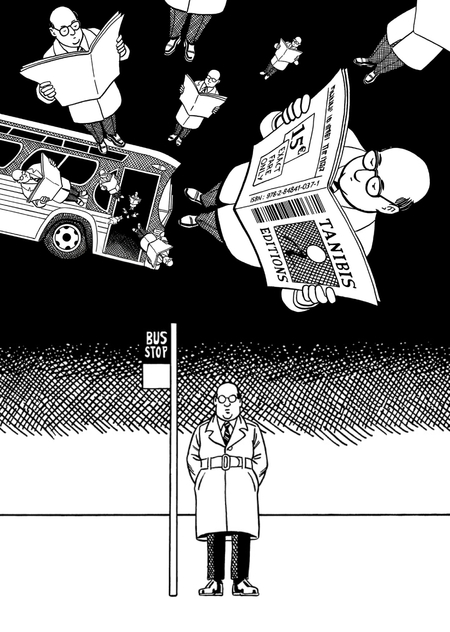
The comic centers on three main characters: a person waiting for a bus, the bus itself, and the bus stop sign. Despite the simplicity of their visual execution, each element possesses distinct characteristics and interacts with the surrounding reality in a unique way.
Paul Kirchner, «The Bus» (p. 24)
The bus stop sign is the most consistent of the three characters. Throughout the comic, it maintains a recognizable form and undergoes virtually no transformation.
The main animated character is an ordinary, unnamed middle-aged man—a typical city resident. His appearance lacks pronounced individual characteristics: he wears classic clothing, glasses, and has a restrained hairstyle that emphasizes his age. He looks like someone you might encounter on a regular city street.
His distinctive feature is his restrained facial expression. Despite the surrounding absurdity, his face remains neutral most of the time. The character’s emotional state must be read through subtle shifts in his appearance, primarily in the depiction of his eyes and lips. In certain situations, they become visible behind his glasses, allowing the reader to discern the character’s reaction to what is happening.
The bus is the most crucial element of visual storytelling. It is depicted as a typical public transit vehicle. At first glance, its form, structure, and details are rendered quite realistically, without noticeable stylization or exaggeration.
Interestingly, the image of the bus was not directly linked to Paul Kirchner’s everyday experience. One might assume upon reading that the author frequently used the bus and drew inspiration from his own rides, but in one interview, he clarified that he regularly used the subway in New York and almost never took the bus.After beginning work on the comic, Kirchner had to specifically photograph buses in New Haven, Connecticut, to use them as visual references.
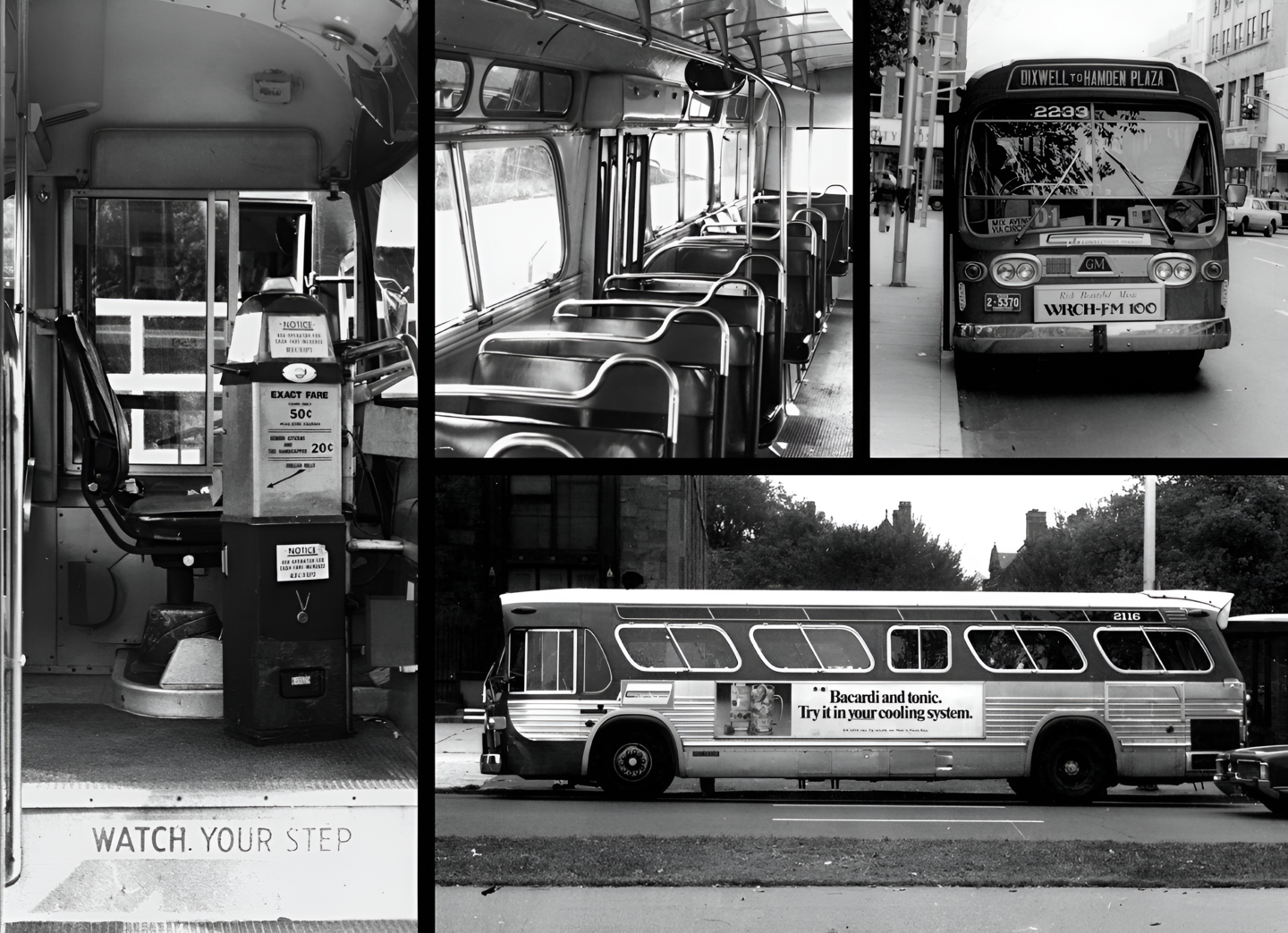
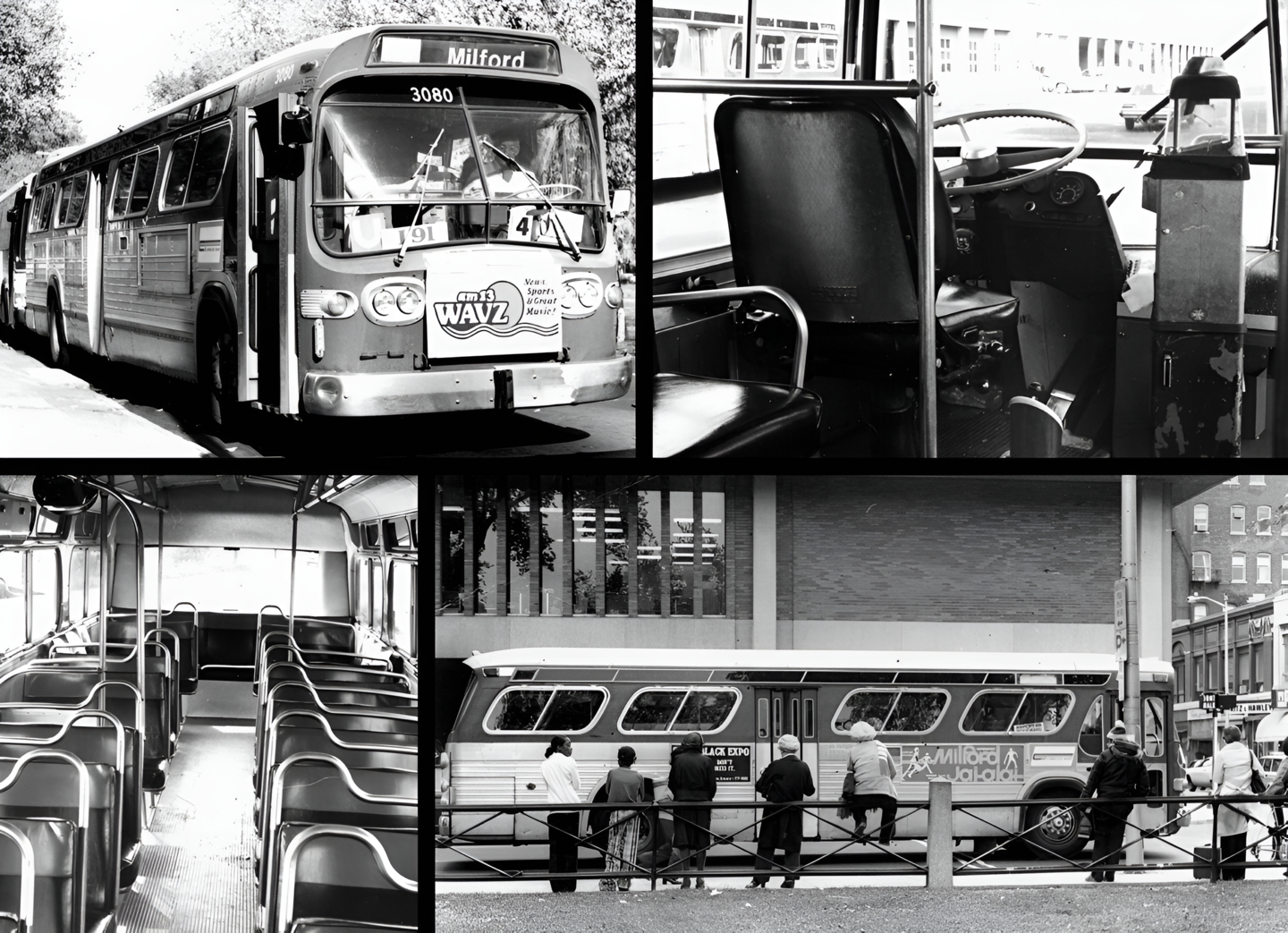
Paul Kirchner, «The Bus» (pp. 3–4)
The interaction between these three characters forms the foundation of the comic’s narrative. The main events unfold around them, and individual situations in which they participate are constructed, either together, separately, or in various combinations with one another.
Paul Kirchner, «The Bus» (p. 55)
The Bus as an Object and Space of Absurdity
Kirchner’s approach is characterized by using the recognizability of the bus as a starting point for deliberately disrupting conventional logic. The author places it in diverse circumstances, alters its surroundings, and changes its interaction with the characters.
«I was inspired by the wild logic of Warner Bros. cartoons and Max Fleischer, the paranoia of the TV series „The Twilight Zone, ” as well as the surreal works of Bosch, Magritte, Dali, and Escher. Over time, I started creating surreal situations directly with the bus itself—transforming it and playing with its secret life and history.“
— Paul Kirchner