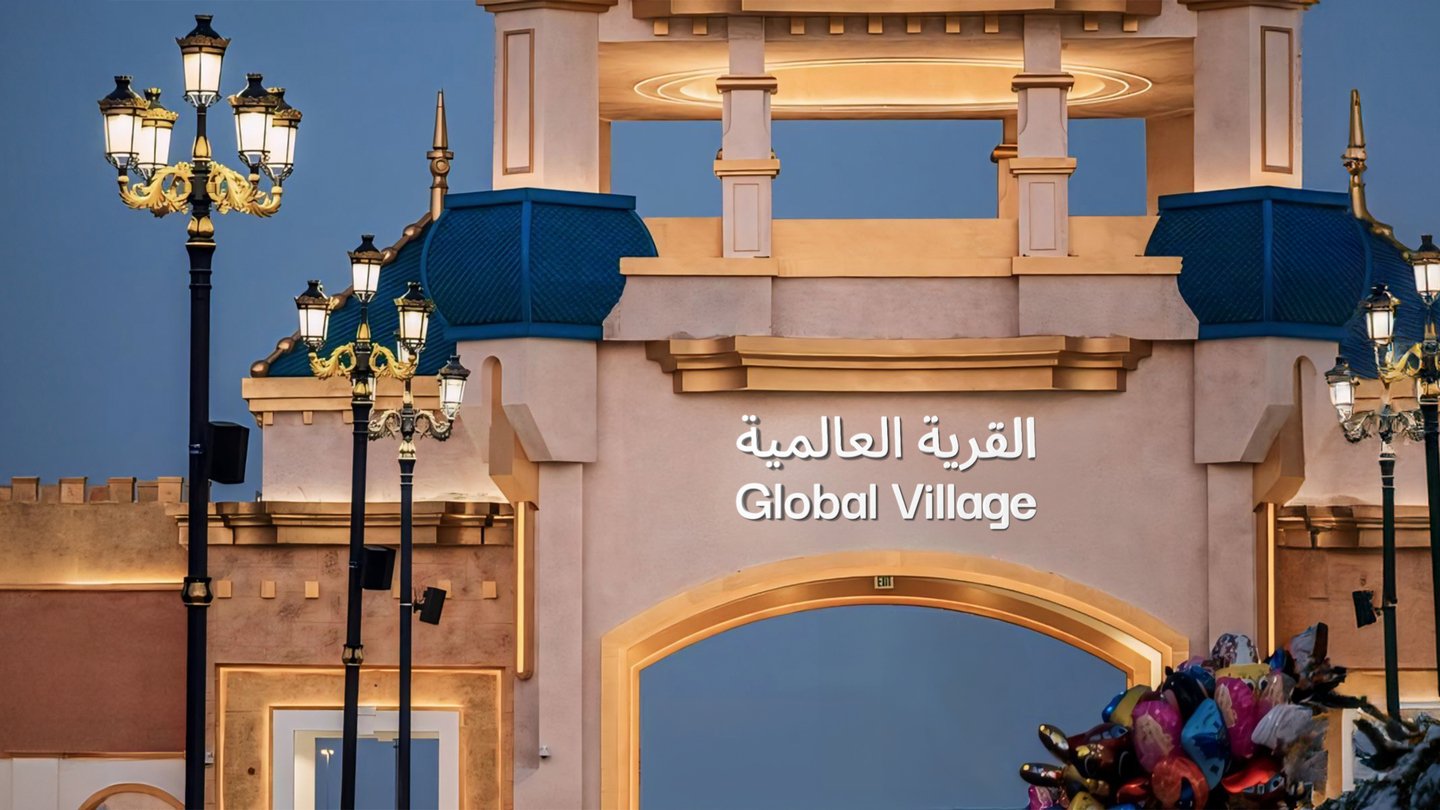
Entrance to the Global Village
COMMUNICATION THEORY IN THE FIELD OF DESIGN
In branding, design is not just a «cover», it is a message: it codes the values and the brand promise into form (color, rhythm, composition, typography, materials, and how the touchpoints behave) and triggers audience response. In course terms, communication is a process of creating and interpreting messages, so it is important not «what we drew», but what meaning people will build from it in a specific context.
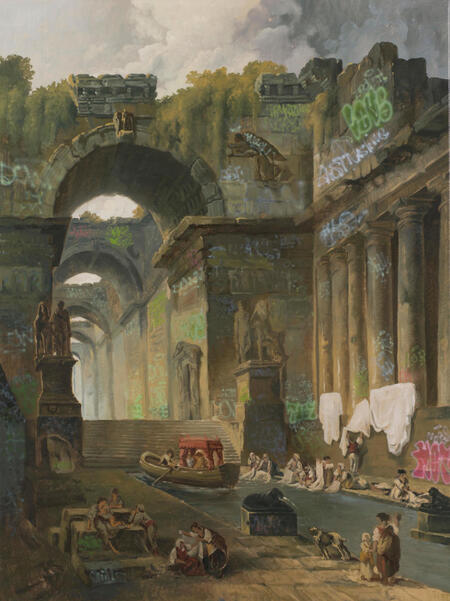
Global Village already «sells the world»: 1.6 million sq. m, 33 country pavilions, 50+ restaurants and cafes, around 7,000,000 visitors per year, ticket about 7 dollars. The core of the brand is «the whole world in one place». The problem from the materials: no single style —> no recognition —> visitors’ photo/video does not reinforce the brand, and there is no merch and portable carriers.
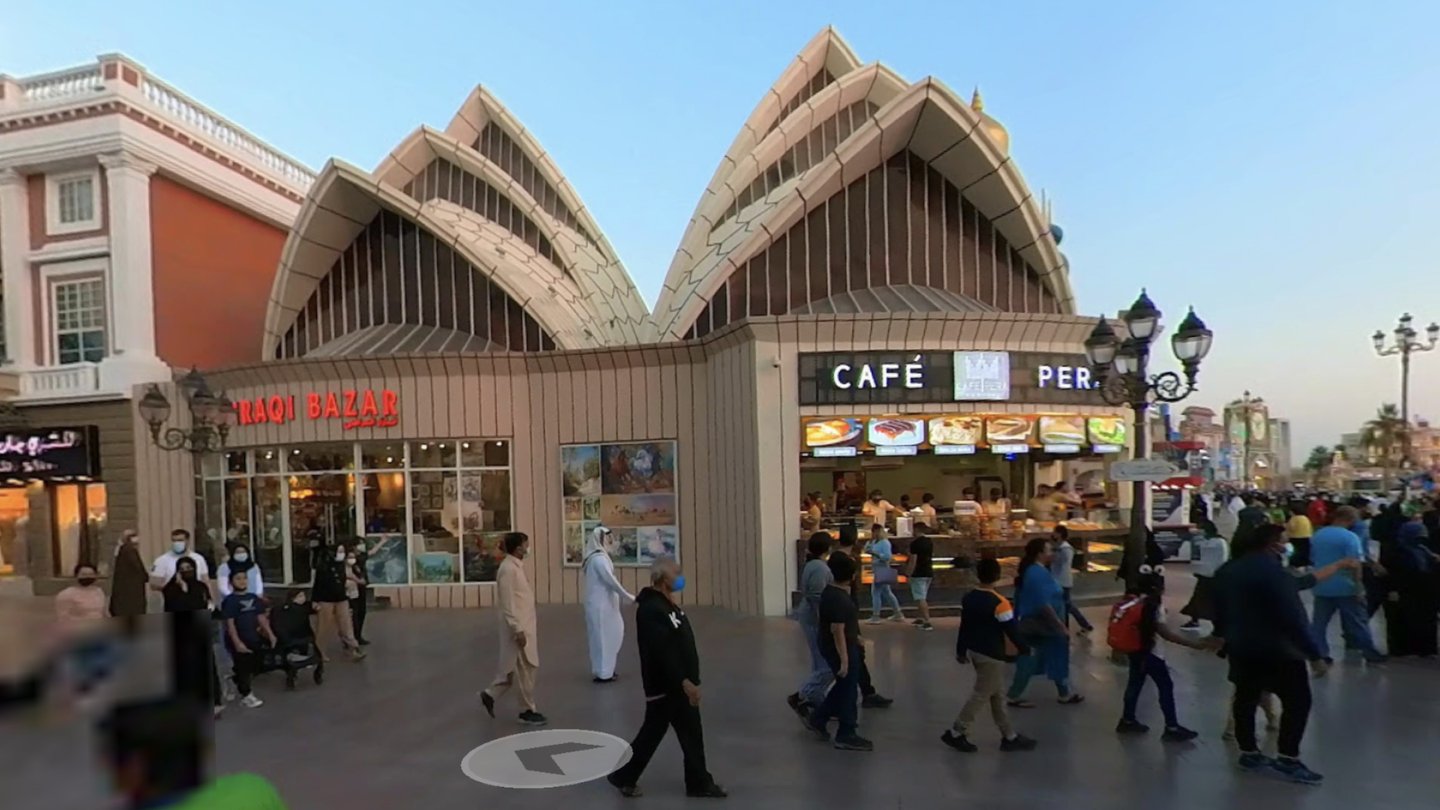
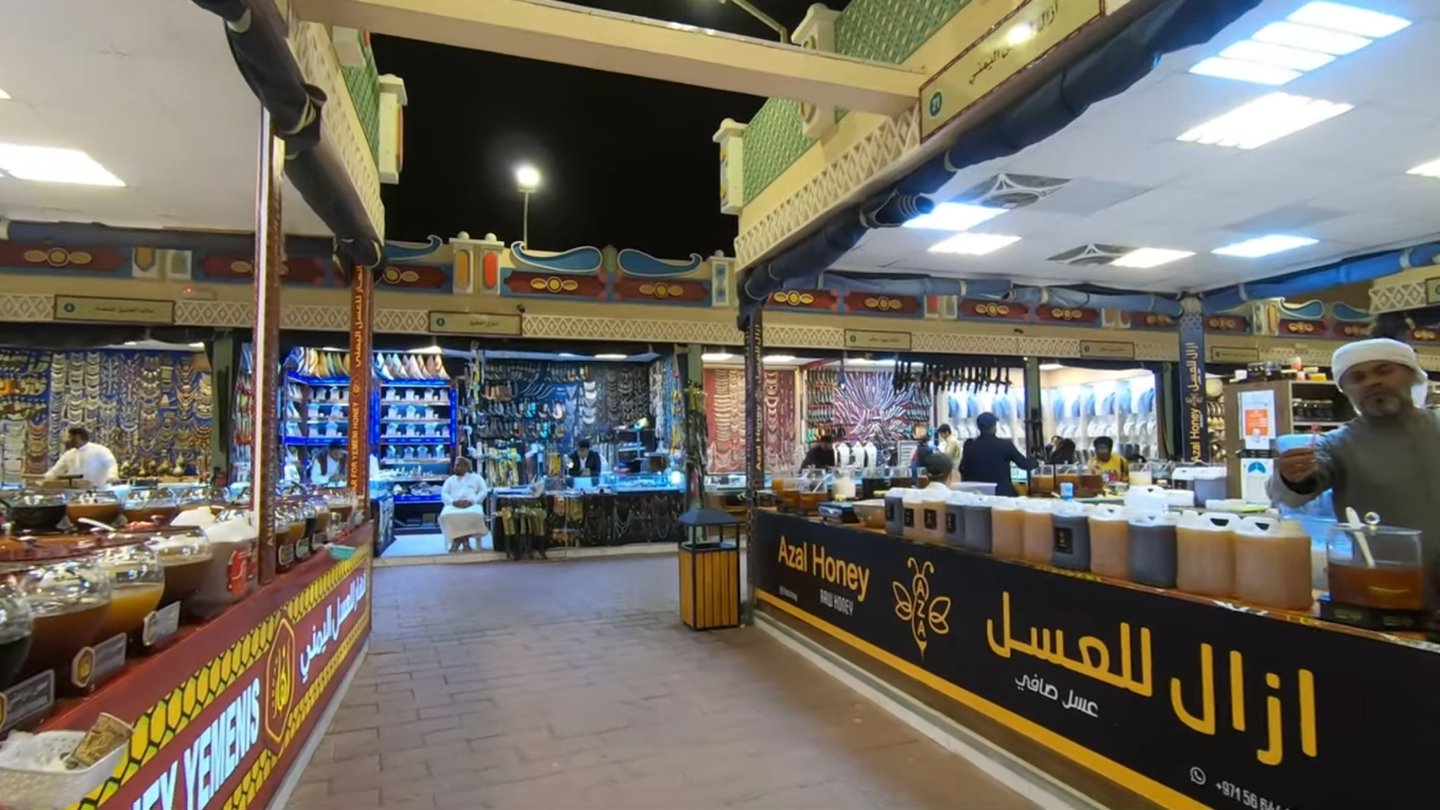
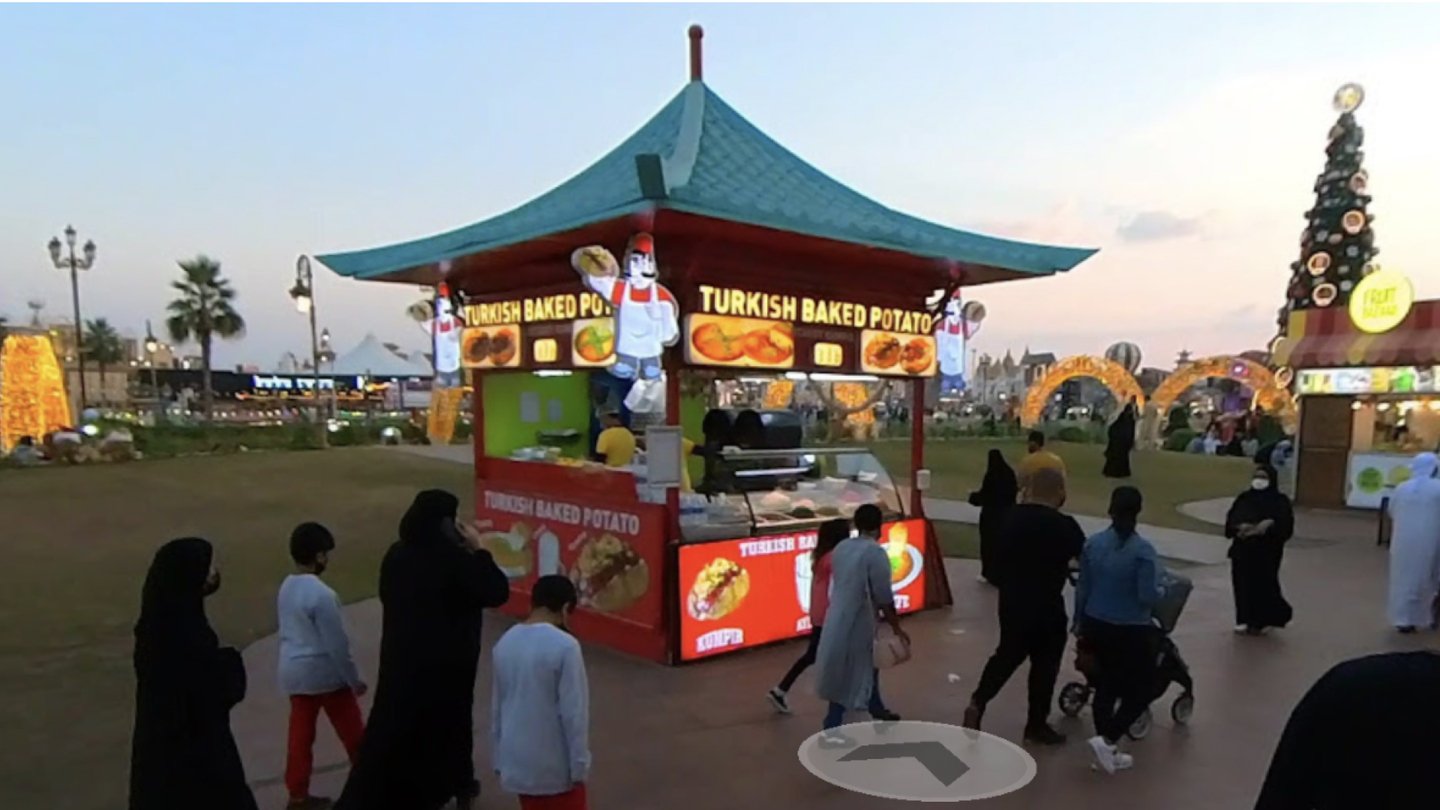
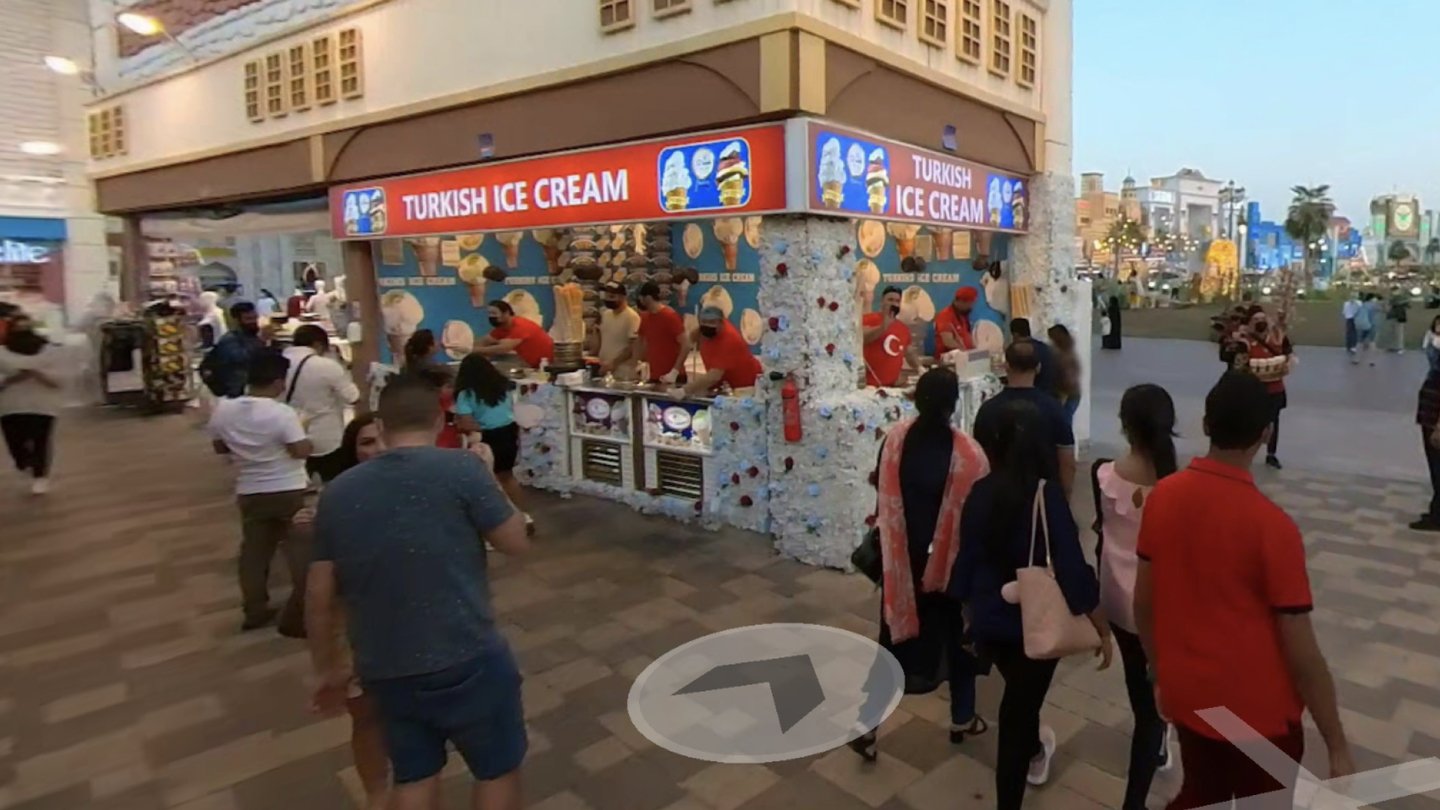
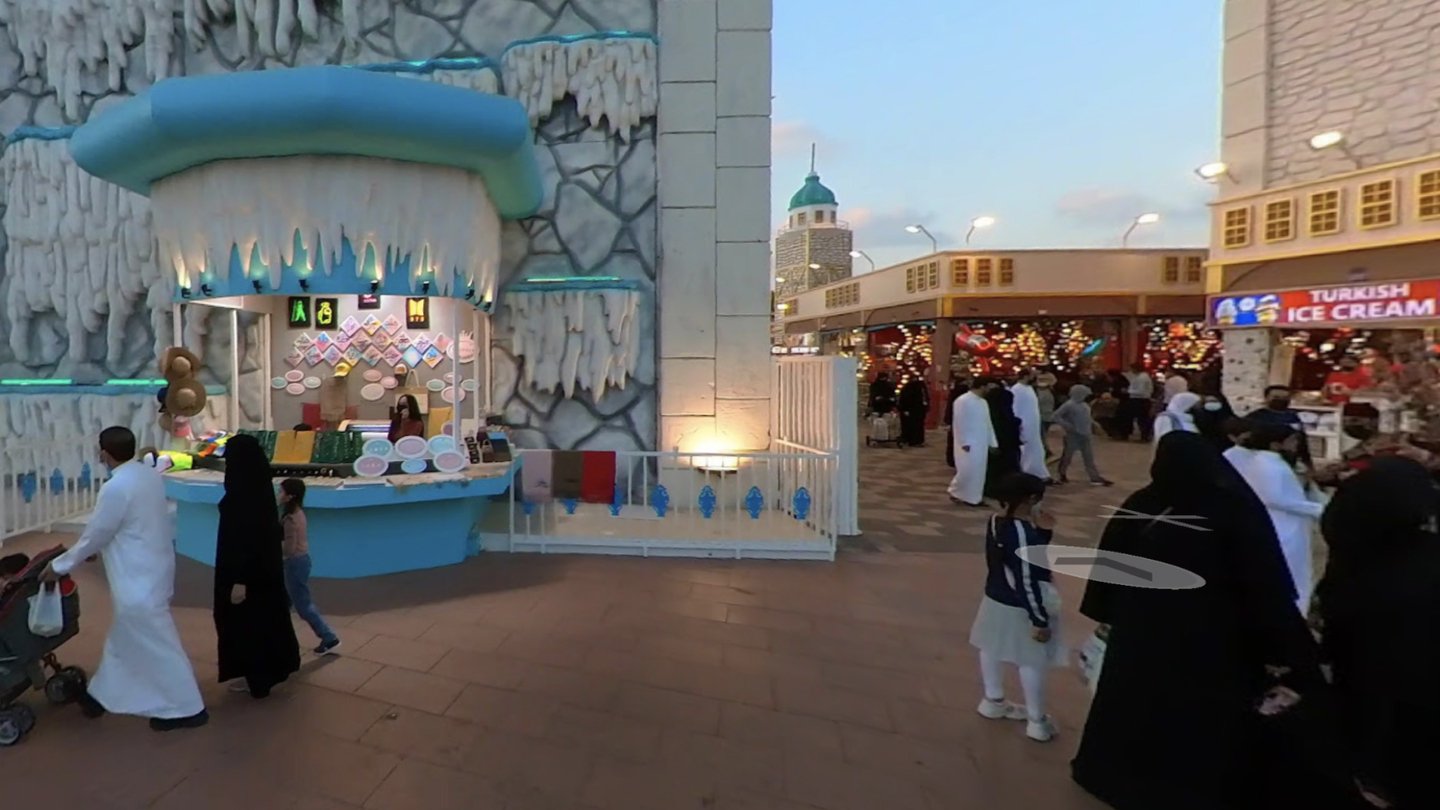
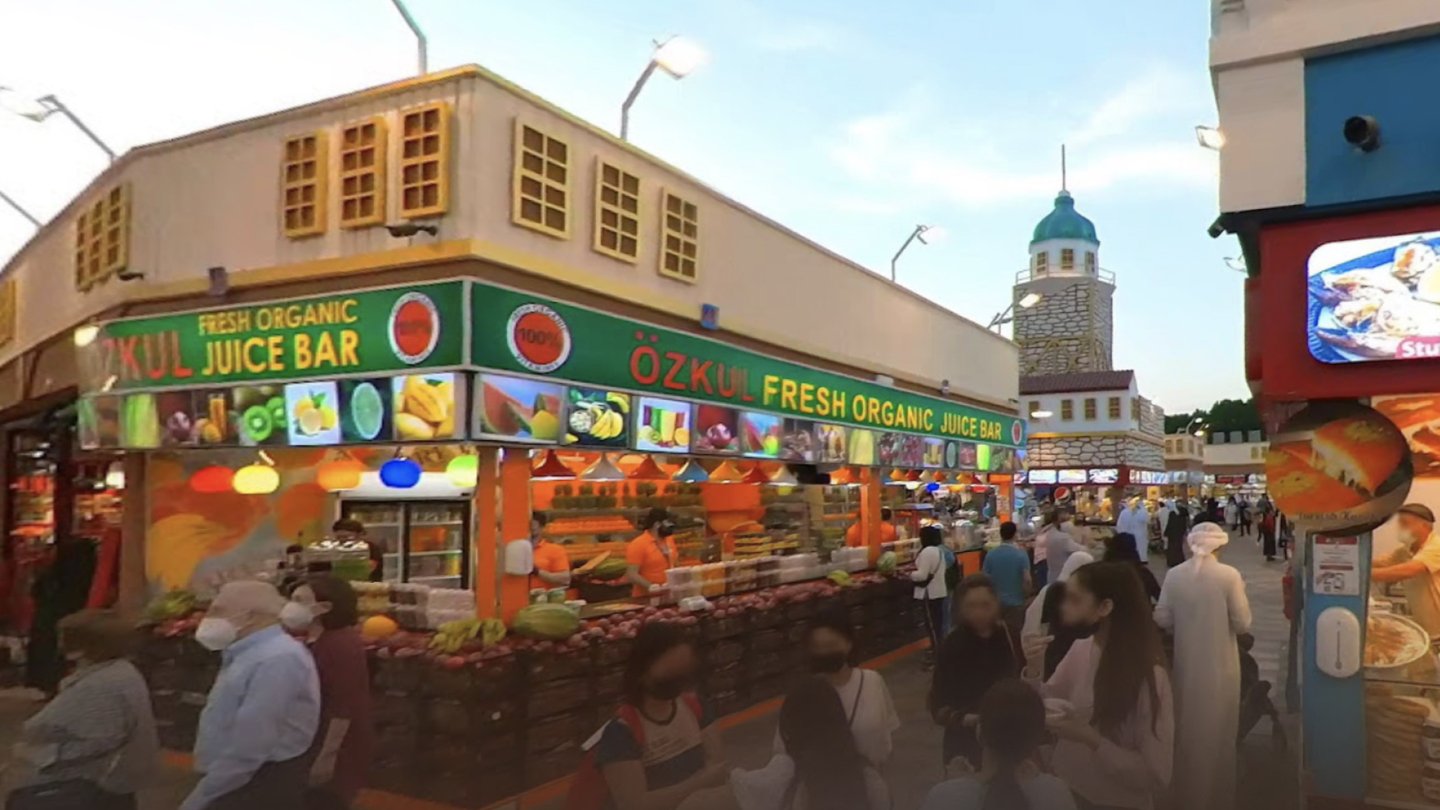
Global Village now
THEORETICAL FRAMEWORK
The project logic is based on a specific course lectures and uses theory as a design tool.
First, we set the optics through Craig’s seven traditions: the semiotic (signs and meanings), the sociocultural (communication as producing shared reality), the rhetorical (persuasion and audience orientation), and the cybernetic (system, channels, feedback).
Then we apply Media Ecology (McLuhan): the communication environment changes meaning, and the global village concept describes instant connectedness of people and messages.
To make the brand work as a story, we use the Narrative Paradigm (coherence / fidelity) and Symbolic Convergence Theory (fantasy theme → fantasy chain → rhetorical vision). This helps to turn a visit into a repeatable plot and create a feeling of «we».
To separate «everyday» and «professional» communication we rely on the Elaboration Likelihood Model (ELM): central route (arguments) and peripheral route (signals and atmosphere).
Finally, Relationship Management Theory gives criteria for brand–audience relationships (trust, commitment, satisfaction) and moves communication from a one-time transaction to a long-term connection.
The key project concept is diversity and unity. We keep cultural differences, but we give one «language of the place», so Global Village is recognizable inside the space and in people’s content.
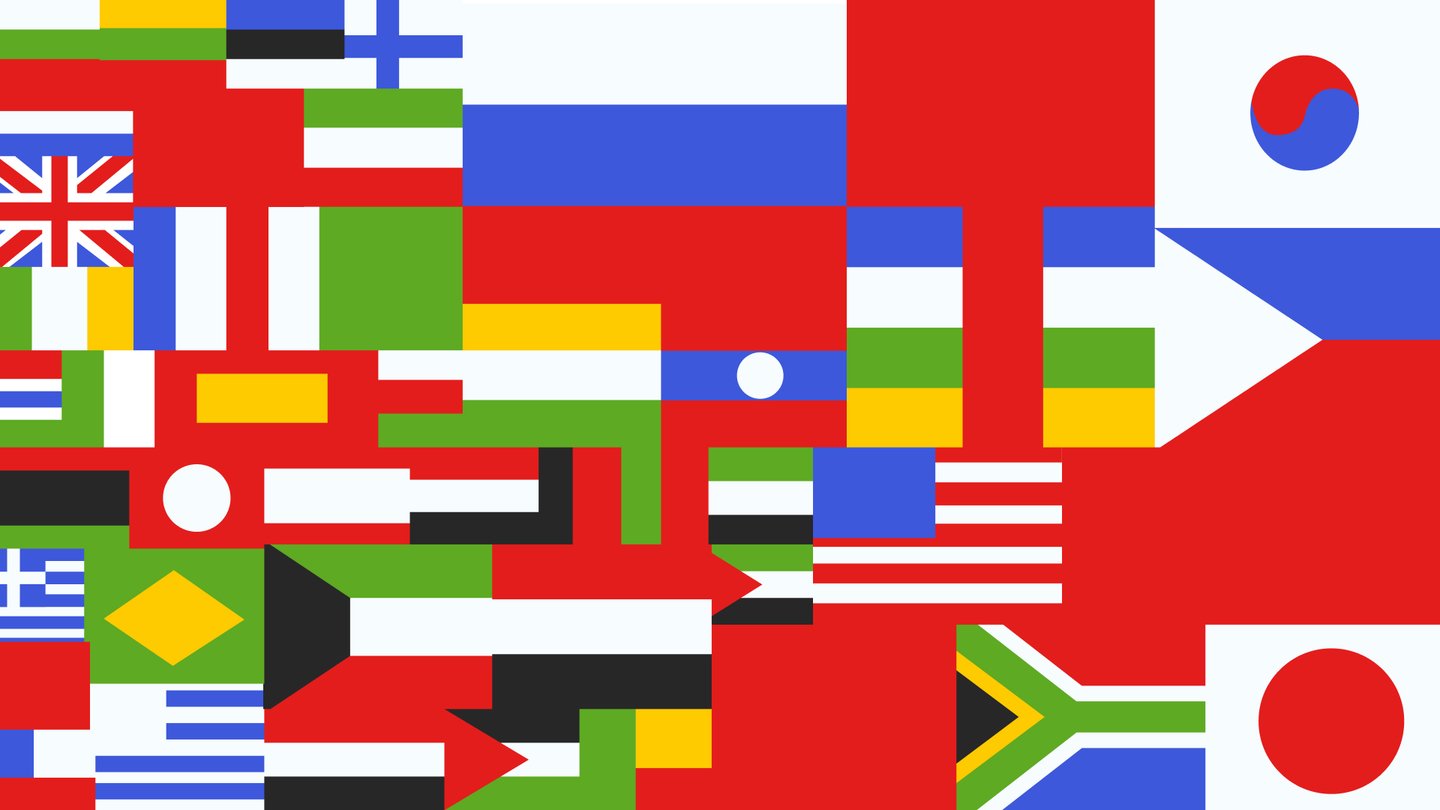
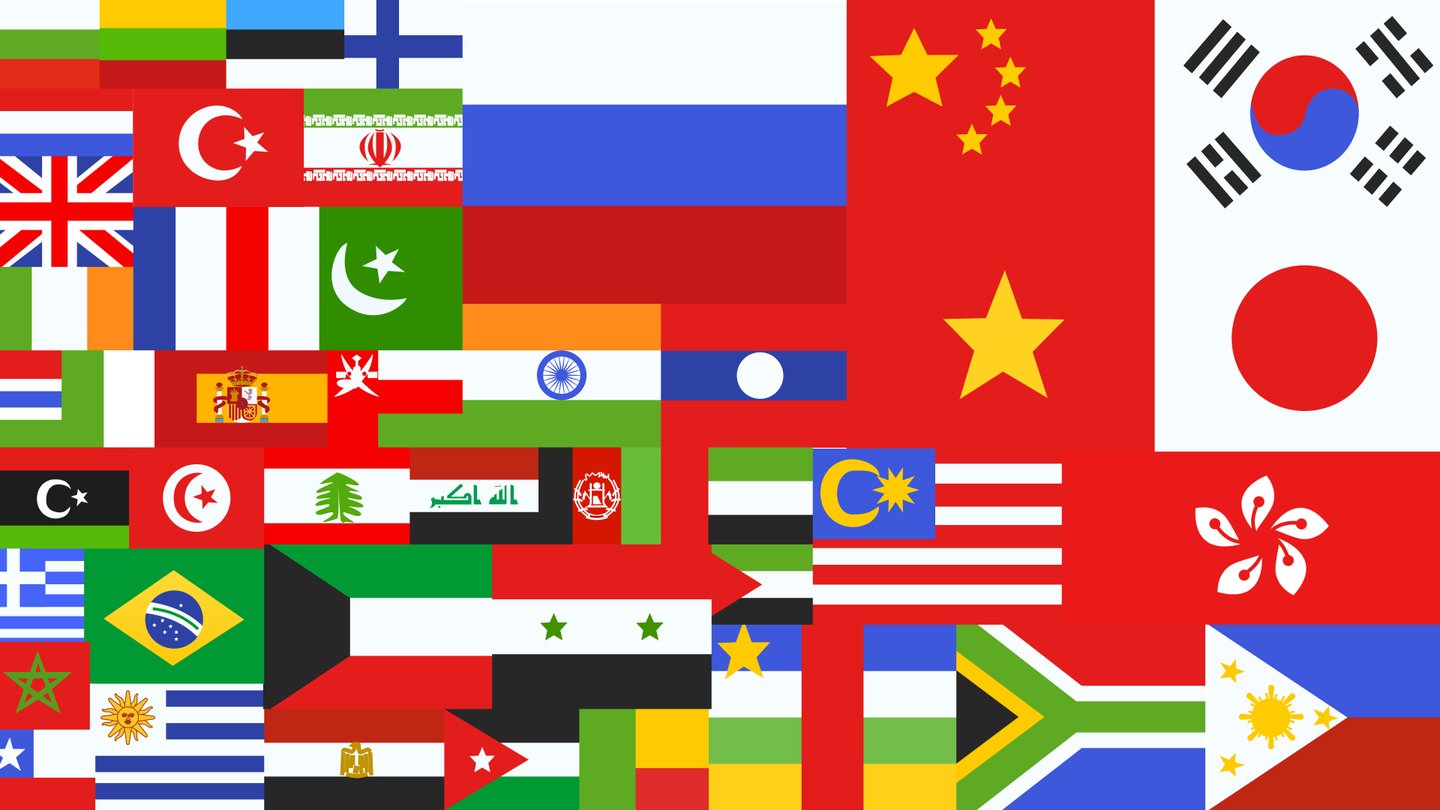
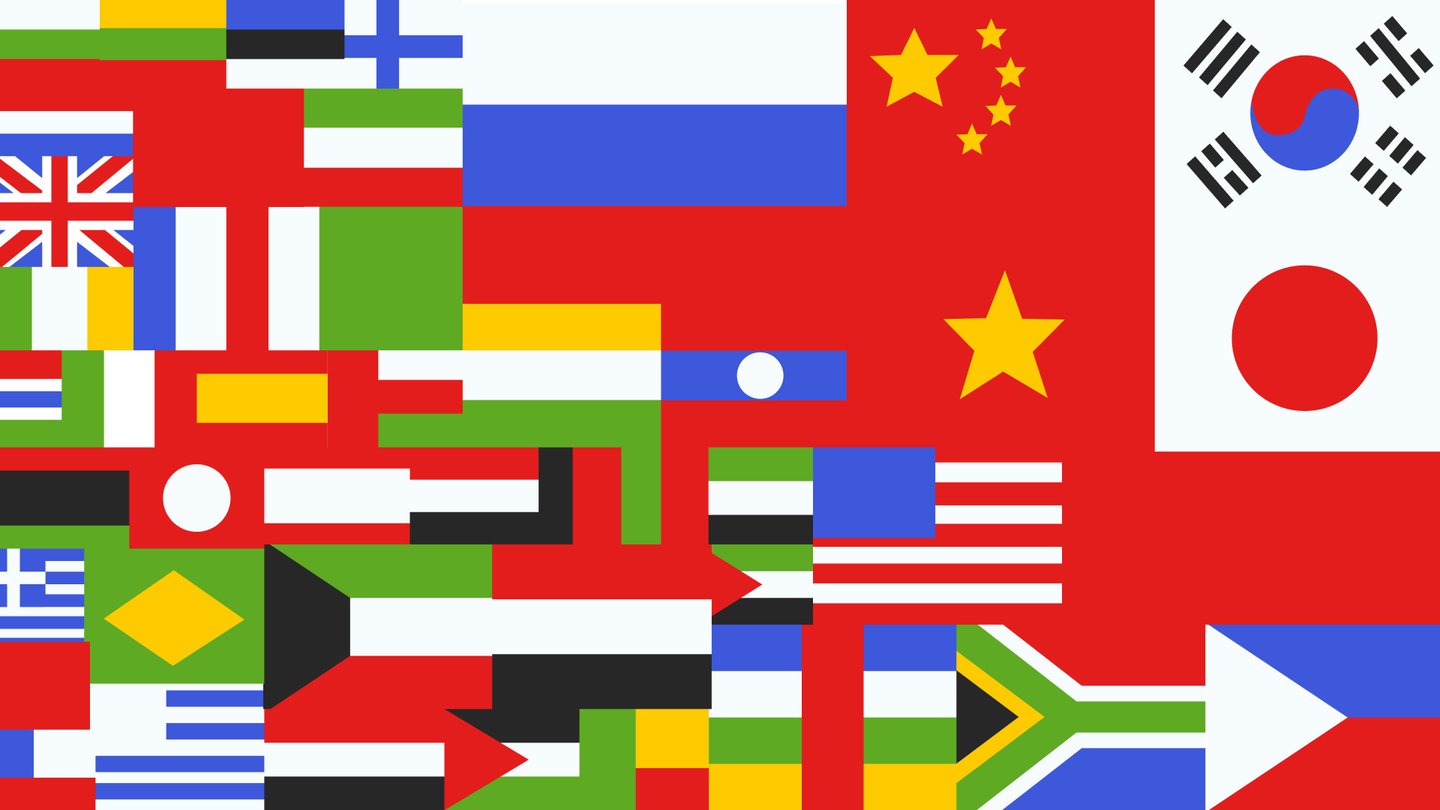
Transforming diversity into a unified style, that forms identity
PRESENTATION FOR A GENERAL AUDIENCE
There are places where you can see a city. There are places where you can see a country. Global Village is a place where you can see the world.
Poster for Global Village
WHAT IT IS
It is a big fair-like territory where each country builds its own pavilion and introduces visitors to everyday life and cultural traditions: it shows ethnic attributes, clothes, goods, and souvenirs. The experience is supported by evening shows on the World Culture Stage, family attractions, shopping zones, and food — 50+ restaurants and cafes plus street food. Because of the scale (1.6 million sq. m), the place feels like a separate «world» where you can spend a whole evening.
Branded pavilion
FOR WHOM
Global Village has several key segments, and each has its own visit motivation. Tourists (50%) come for a wow-experience and a «must-visit» location: it is important for them to see the scale in one evening and to collect a story in photos and videos. Local families and youth (25%) look for an understandable and affordable leisure format — walking, socializing, food, and a bit of attractions. Schools (10%) use the space as a live «geography» and cultural experience that cannot be replaced by a textbook. Local women (15%) come for unique goods and products and value details — quality, origin, and the story behind things.
WHAT YOU WILL GET
Emotionally: an unusual experience, admiration for the scale, togetherness, the feeling of an «own world».
Functionally: new knowledge, variety of countries, cuisines, prices, affordable leisure, the opportunity to buy unique items.
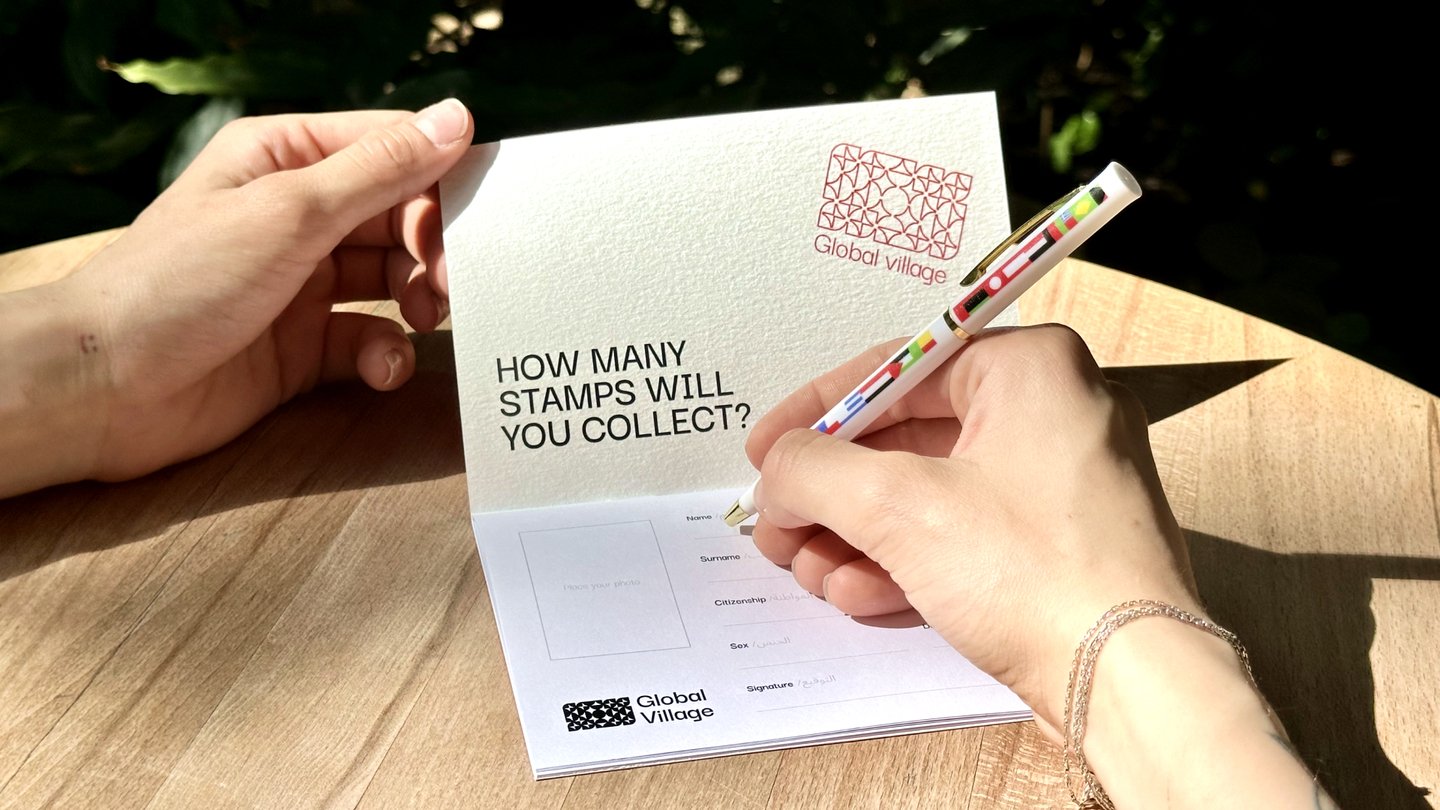
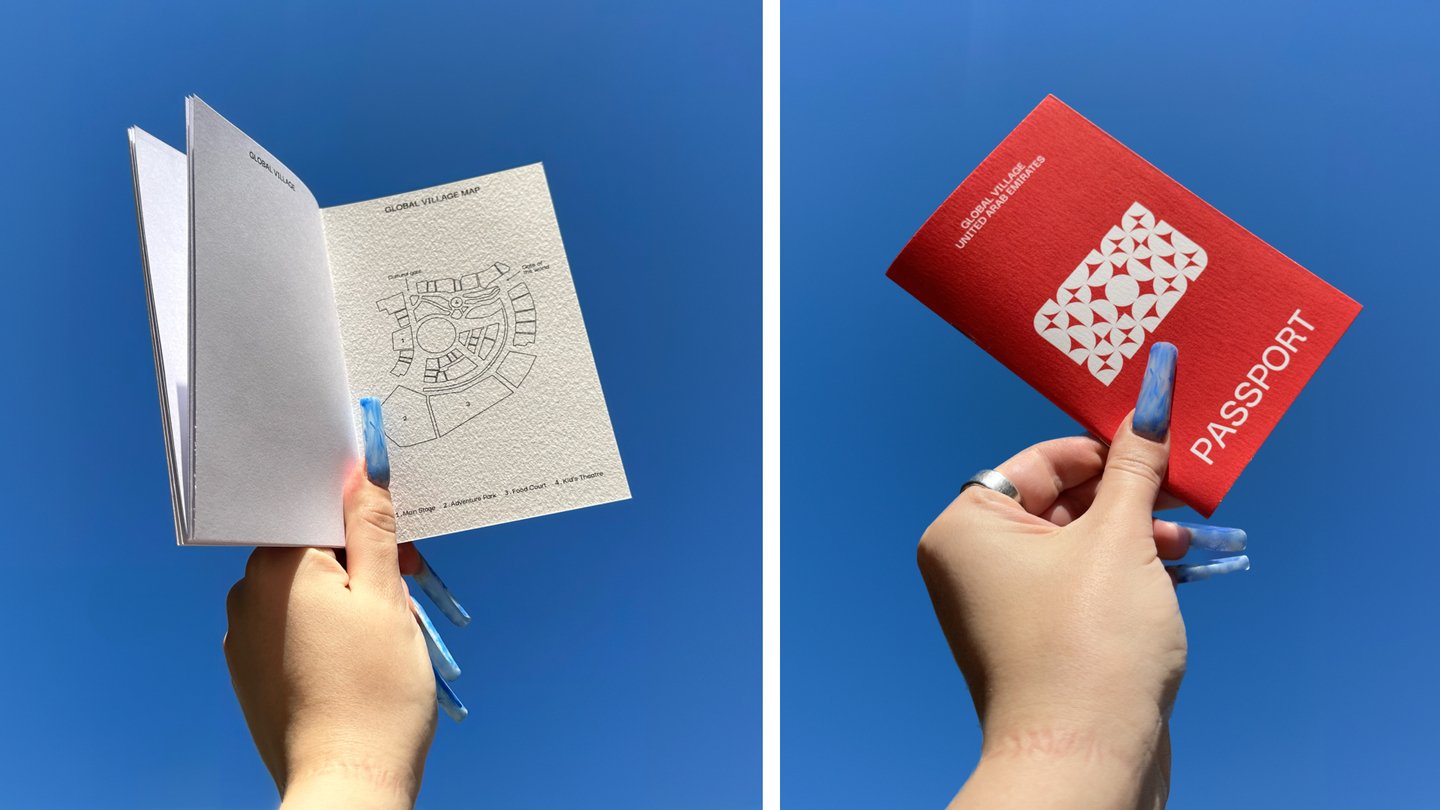
Branded passport for Global Village
HOW IT WILL BE REMEMBERED
We collect «many cultures» into one understandable world: navigation, routes, recognizable style elements, and portable items (ticket, wristband, map, merch), so your content and memory «hold» Global Village. In media ecology terms it means: wherever you «meet» the brand (in the space, in an object, in your phone), it stays the same world.
Navigation in Global Village
Ticket to Global Village
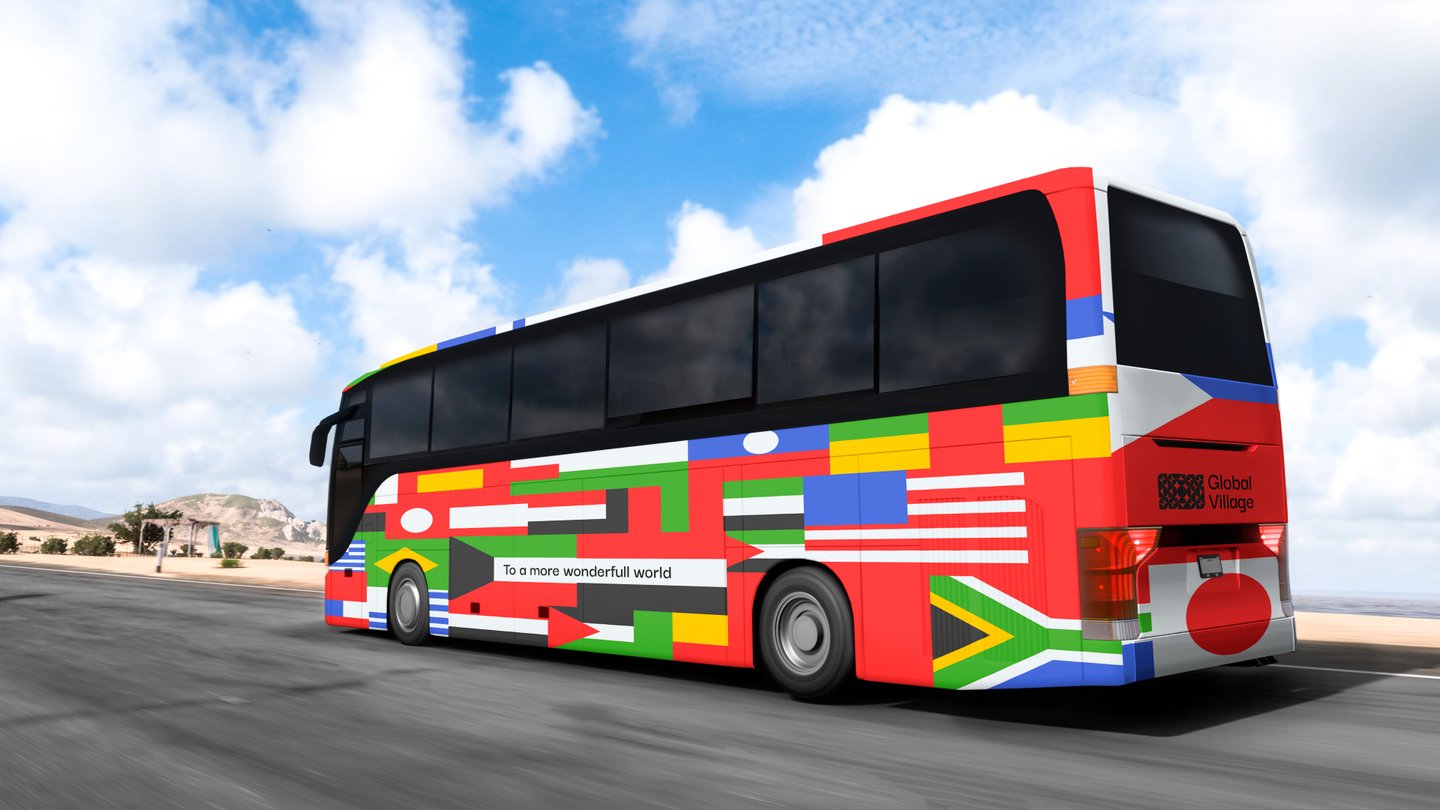
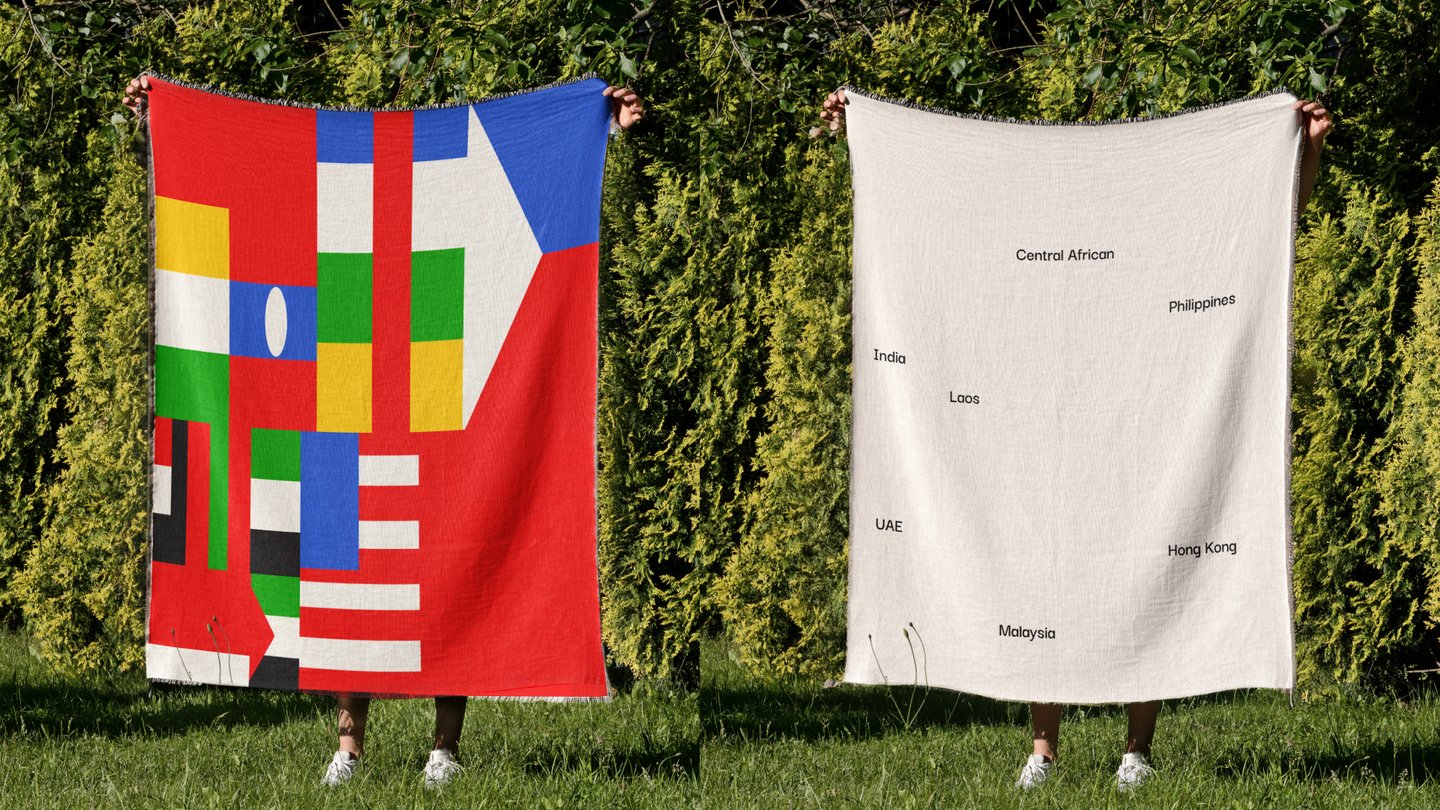
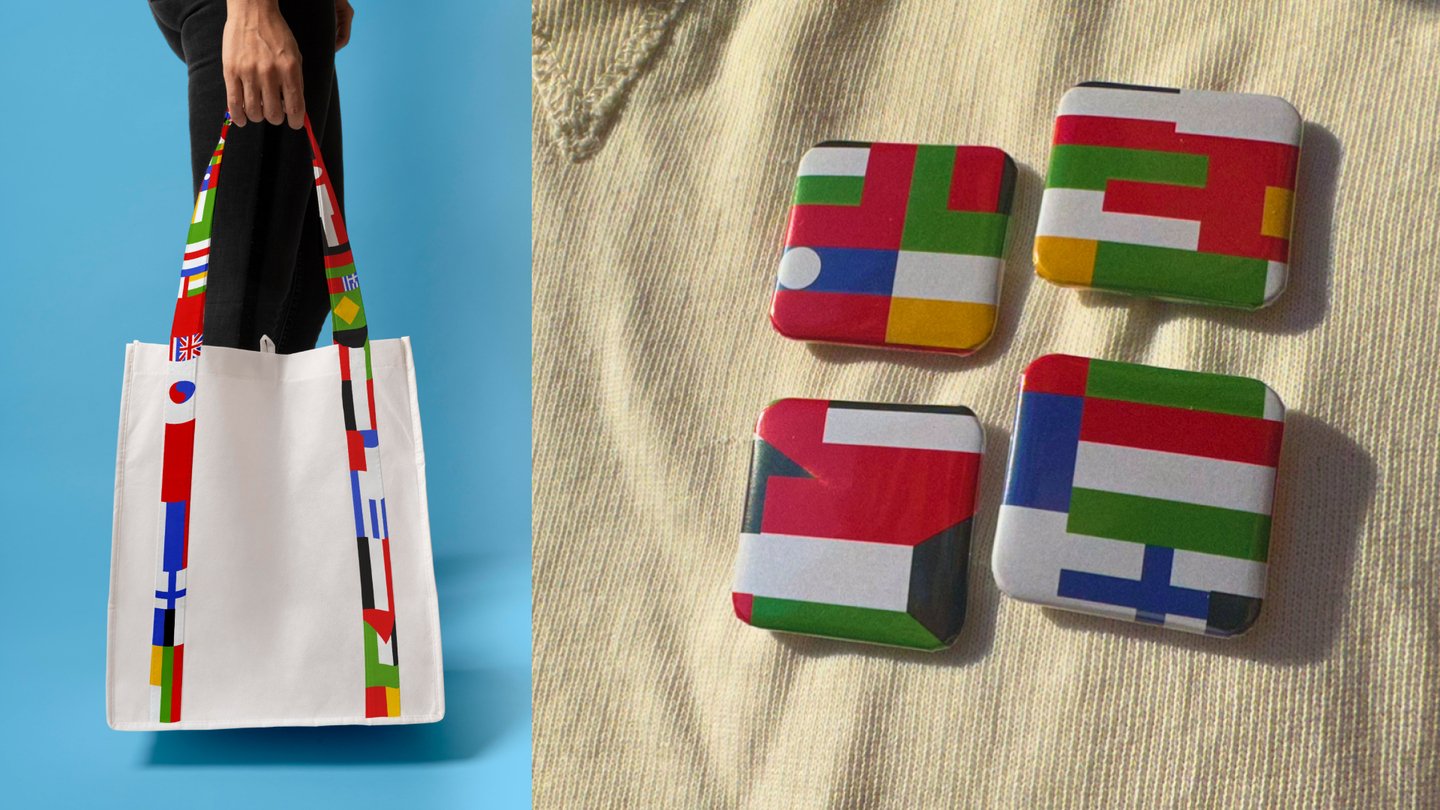
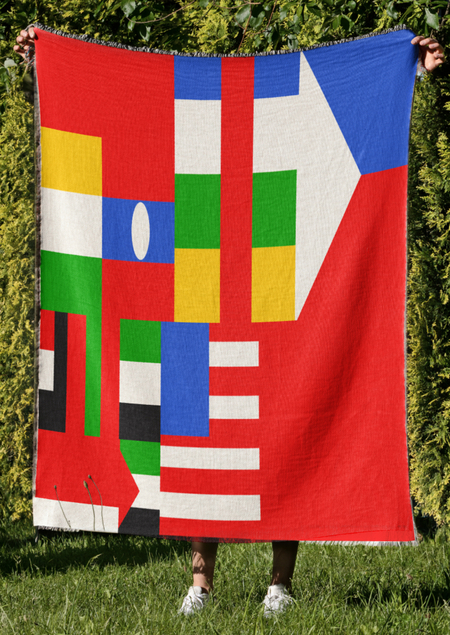
Merch for Global Village: a blanket, a bag, pins and a branded bus
PRESENTATION FOR A PROFESSIONAL AUDIENCE
Problem: no single style —> no recognition; user-generated content does not «brand» the place; no merch and portable carriers.
Task: build the communication into a system.
Hypothesis: a system of signs + an ecosystem of touchpoints will create recognition and repeatability.
Core: «the whole world in one place».
Values: a beautiful world, uniqueness, cultural exchange, education.
Segments as modes: tourists, families, schools, women.
Navigation as the example of branding the place
IDENTITY CONCEPT AND BRAND LANGUAGE