
What is Aviasales?
A metasearch engine that became a cultural reference point.
Aviasales is a Russian metasearch engine for flights and travel deals, founded in 2007. By the mid-2010s it had become the dominant flight aggregator across the CIS market, processing millions of searches per month. Its core product is functional and reliable — but functionality alone does not explain why people follow Aviasales on social media when they have no plans to travel.
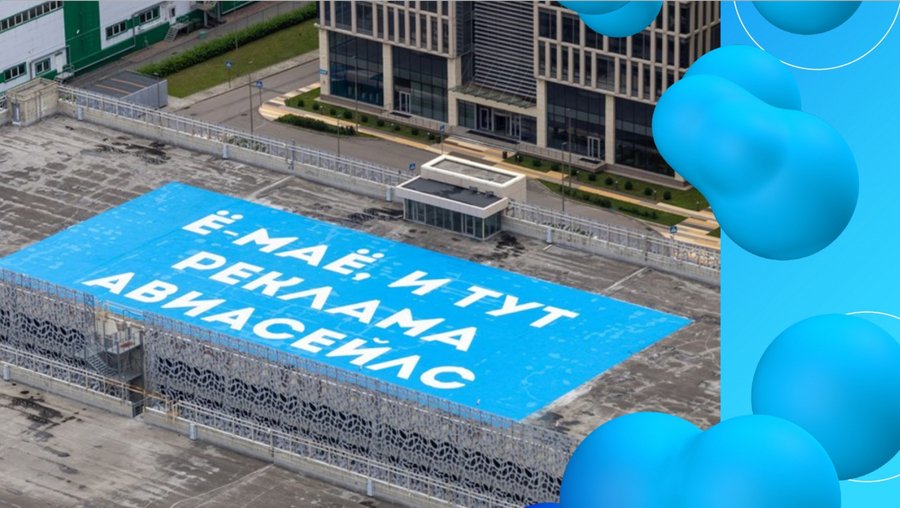
Aviasales ad on a building’s roof.
Target Audience
Primary audience: 18–28 year-olds. Digital natives who grew up in meme culture, who can detect a corporate tone within three seconds, and who will scroll past anything that doesn’t feel real. For them, authenticity is not a preference — it is a filter.
Secondary audience: budget-conscious travelers of all ages who use Aviasales as a tool. Even they eventually get pulled into the brand’s orbit — because the brand doesn’t act like a tool.

Aviasales physical installation on Mount Elbrus.
Brand Positioning
Tone of voice as a competitive advantage.
Most flight aggregators compete on price algorithms, load speed, and UX. Aviasales competes on personality. Their tone is: sarcastic, self-aware, borderline rude, deeply fluent in internet culture. They swear in captions. They mock their own users. They reply to every comment — not with a customer service script, but with something that makes the next person laugh too.
This is not an accident. It is a deliberate and sustained strategy that has been built over years of consistent, risky communication.
Project Goal
This project applies two communication theories to Aviasales' brand strategy. The analysis uses visual evidence: screenshots from social medias and brand collaboration materials.
Aviasales cover.
Communication Channels & PR
*belongs to Meta, an organization recognized as extremist and banned in the Russian Federation.
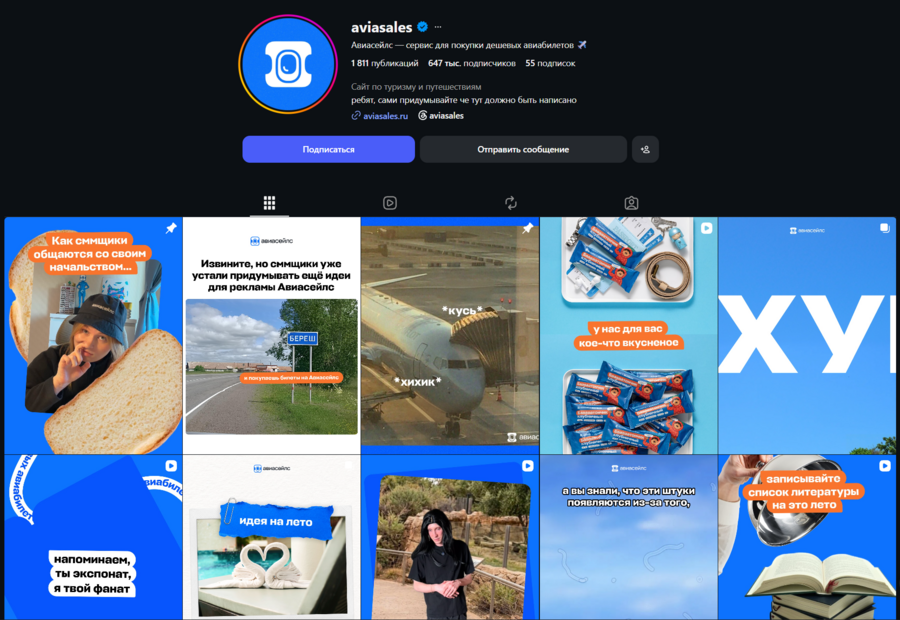
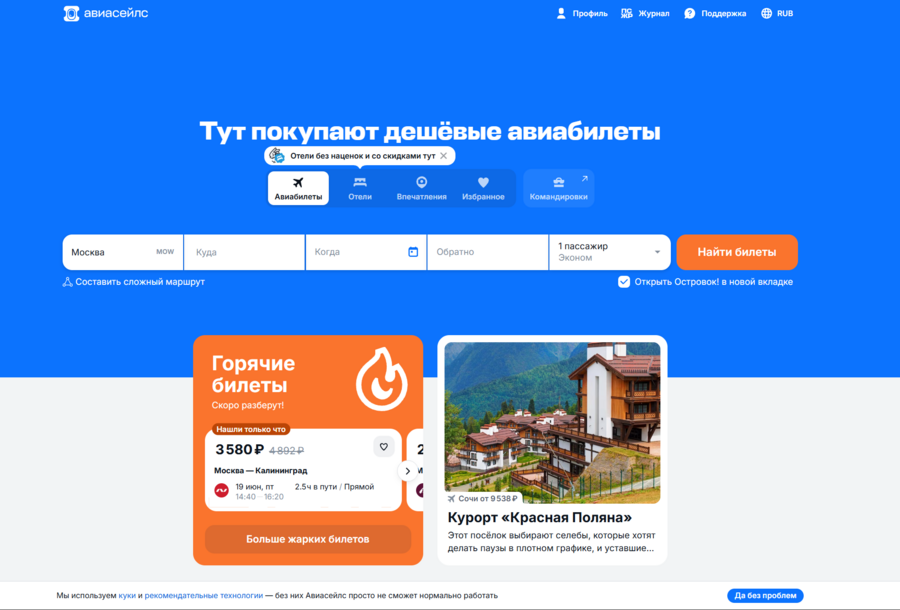
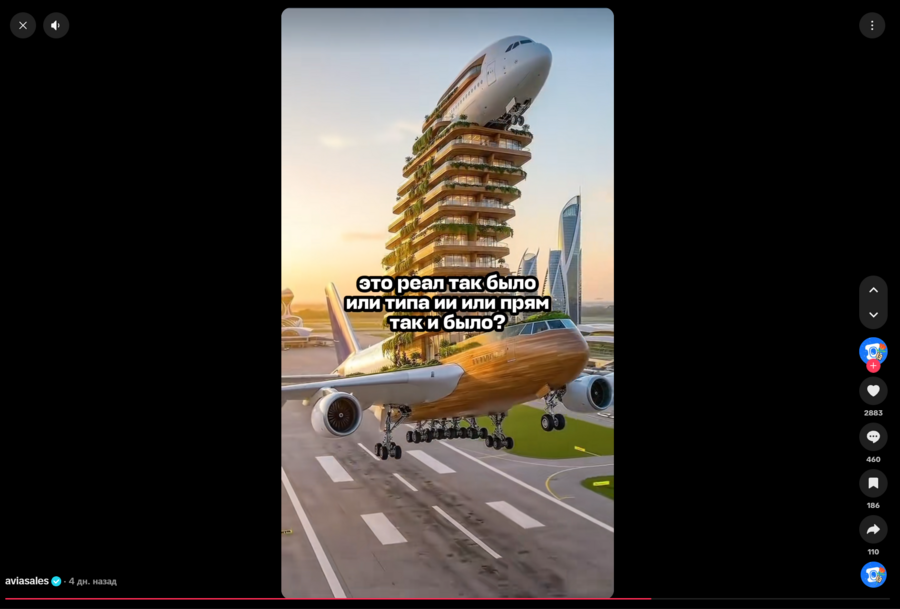
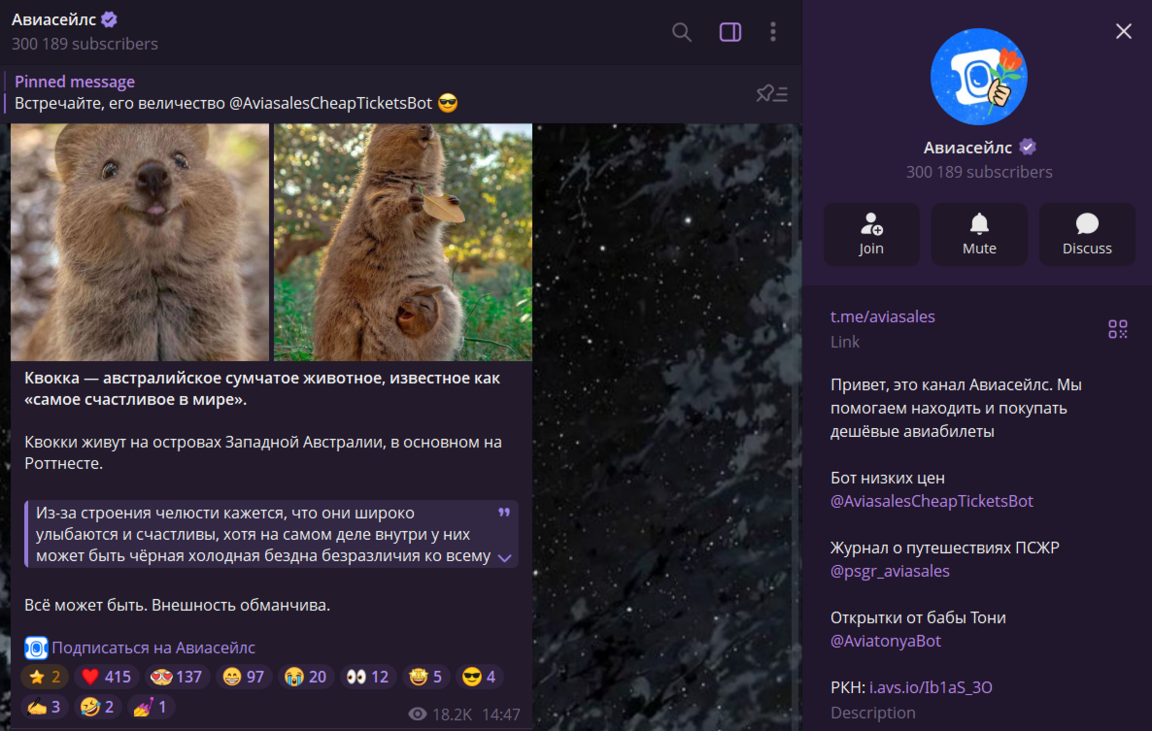
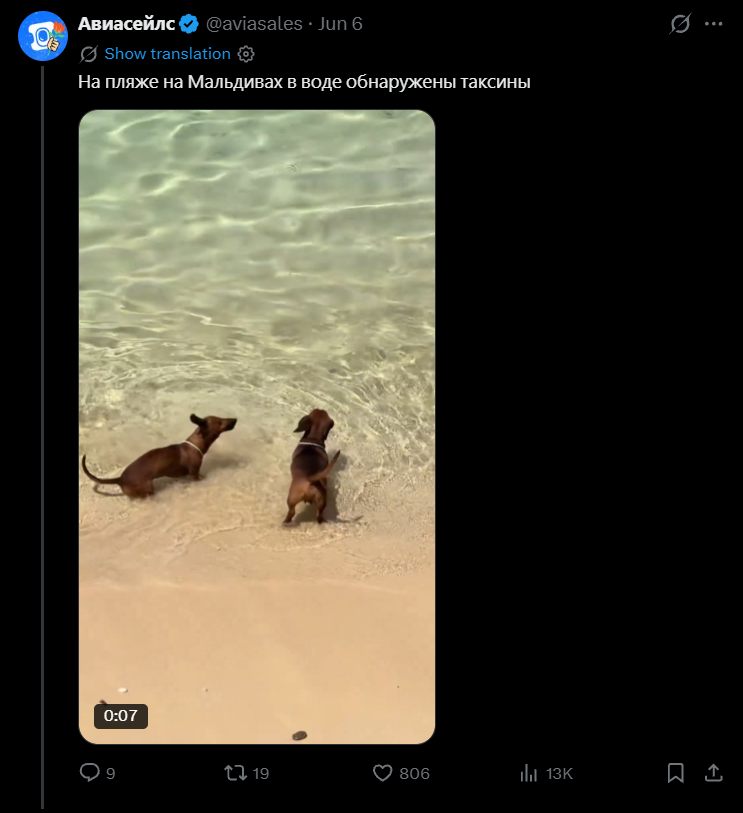
Official Aviasales media accounts
15 seconds to make you feel something.
Aviasales' TikTok is fast, absurd, and built on one rule: never be boring. A typical video opens with funny sound and absurd text or video. There is no price comparison. No feature highlight. Just a punchline that makes you share it.
But the real performance happens in the comments. Aviasales replies to virtually everything. Not with templates — with jokes. The comment section becomes a show in itself, and users come back not to ask questions, but to see what the brand says next.
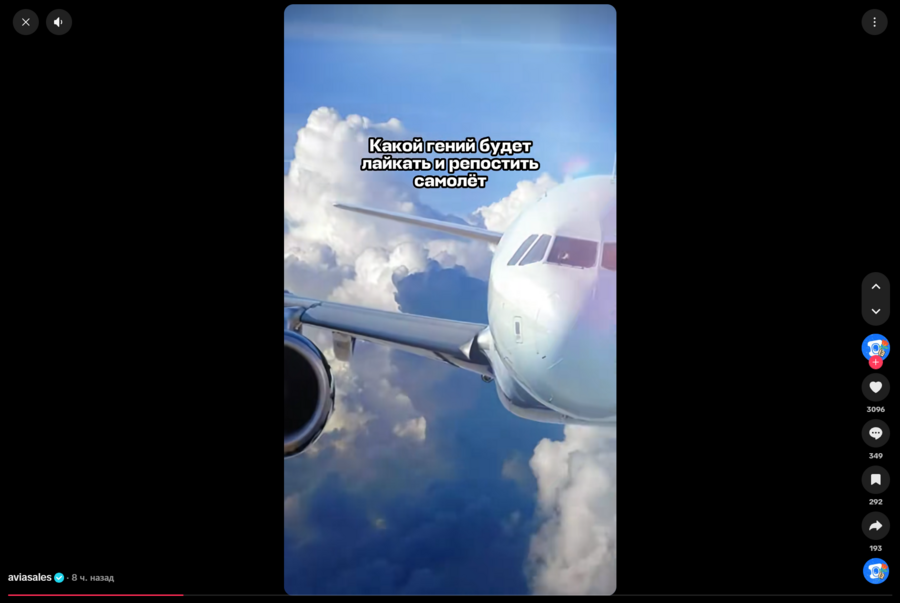
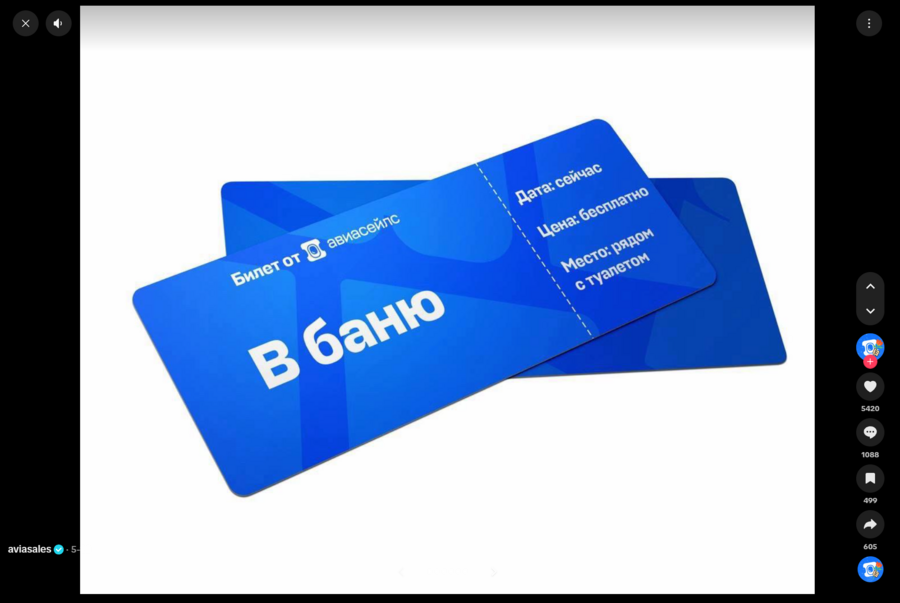
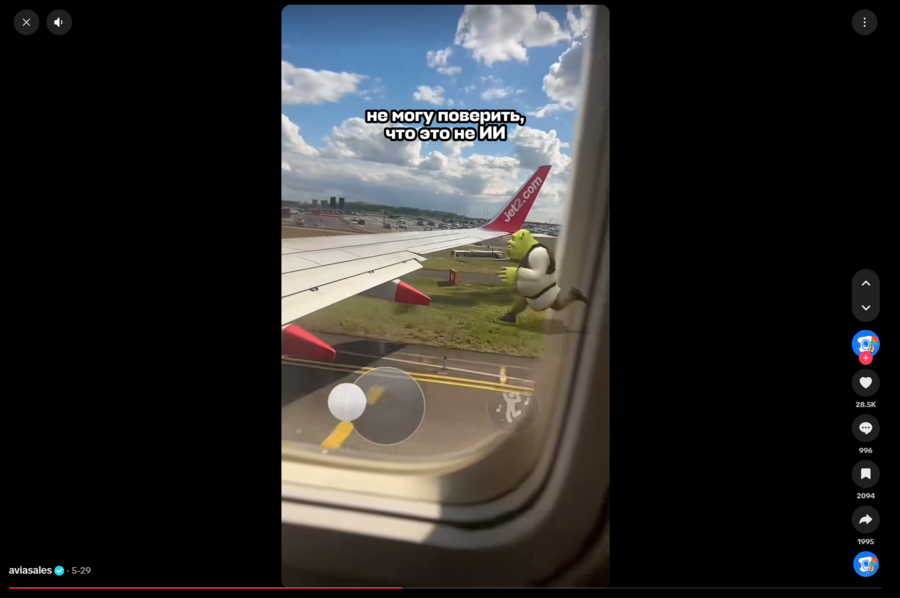
Official Aviasales TikTok account.
The Comment Section as a Stage
When a user attacks the brand, Aviasales does not delete the comment or issue an apology. It fires back with something absurd — and defuses the anger into laughter. Fans observe this and learn: aggression from Aviasales is intimacy. The brand treats them like friends who can handle a joke, not customers who need to be managed.
Most brands would take the safe path. Aviasales doubles down — and its fans defend them for it.
Official Aviasales TikTok account reply.
Official Aviasales TikTok account reply.
PR: Be Free × Aviasales
The Be Free × Aviasales collection is pure lifestyle positioning. It is not about flights. It is about identity. Buying a piece from this drop signals membership in a community of people who share a specific sense of humor and self-awareness. The brand is no longer a utility. It is a cultural reference.
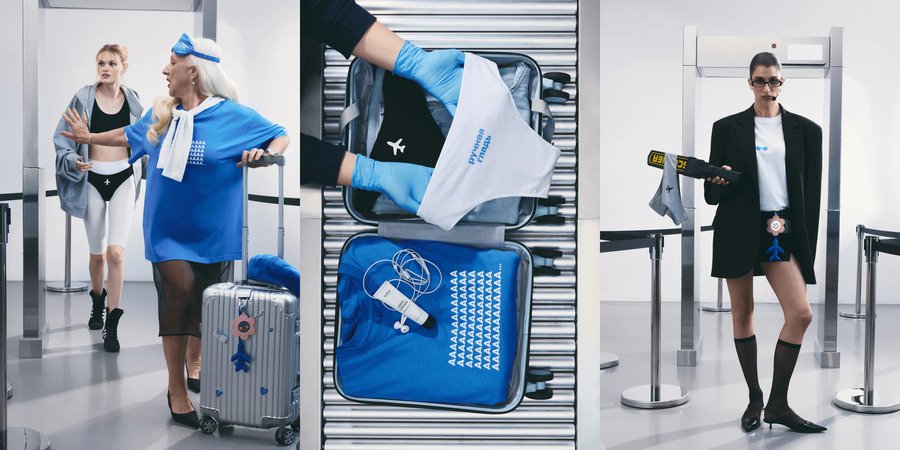
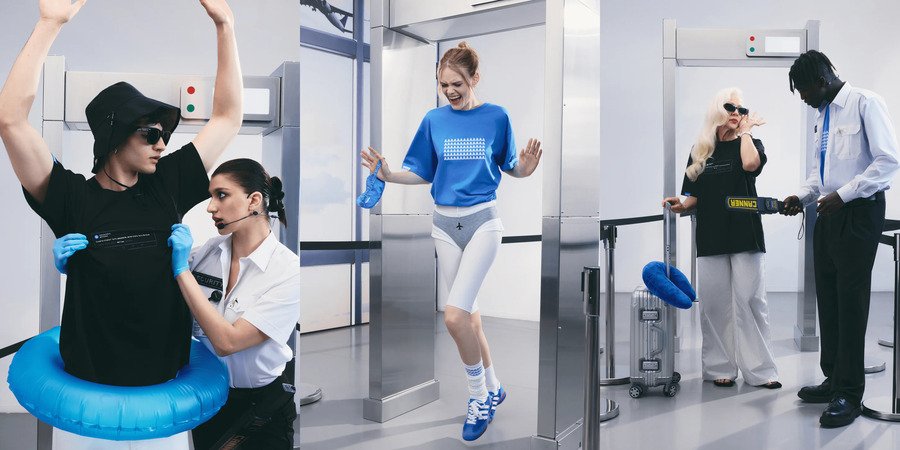
Be Free × Aviasales collaboration.
Theoretical Framework
Elaboration Likelihood Model (ELM) Petty & Cacioppo, 1986
ELM proposes that attitude change happens through one of two routes:
Aviasales operates almost exclusively on the peripheral route. Their content does not argue that they have the cheapest flights. It makes you feel good about the brand — and that feeling does the persuasion later, quietly, when you open a browser to search for tickets.
ELM: Why the Peripheral Route Works Here