A Byzantine icon is a theological image—a window into the spiritual world—that represents a religious depiction. It possesses several unique characteristics that grant it particular value and significance. First, icons have a unique structure. They feature a vibrant color palette and precise symmetry, which underscores their religious meaning. Second, icons possess their own distinct symbolism. They often incorporate inscriptions that convey religious meaning, mysterious symbols, and reverse perspective. Through their multifaceted narratives, which captivate the viewer, the thousand-year history of Russian Christianity is revealed.
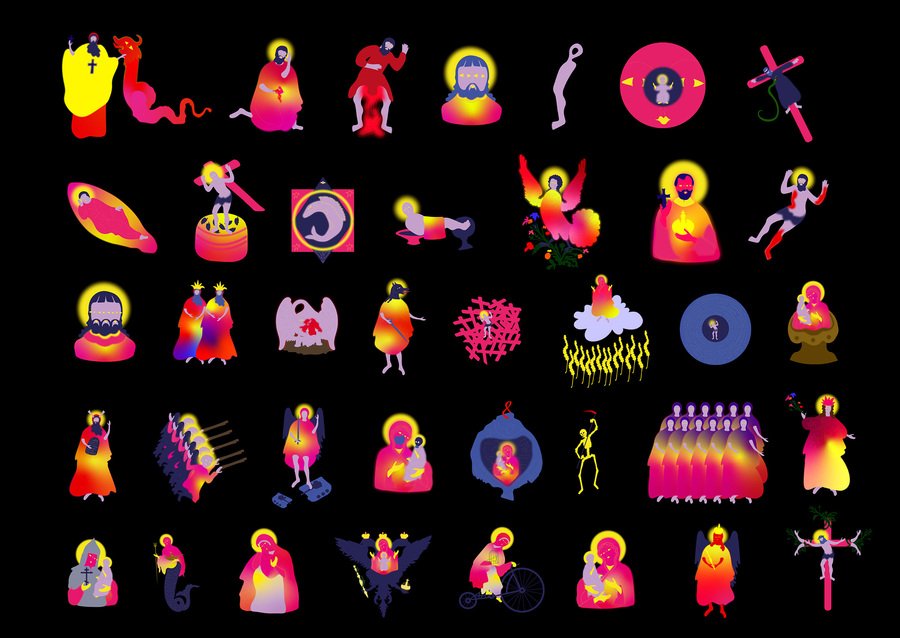
It often feels like the most fascinating things are created somewhere distant, but you only have to look more closely at what surrounds us from early childhood. When we begin to immerse ourselves in Russian culture—from the Middle Ages and the Early Modern period to the Soviet era and contemporary life—we discover unexpected things. The Three-Faced Theotokos, Saint Christopher with a dog’s head, the Mermaid Theotokos, the Bloody Pelican—all of these capture attention and are slightly startling. By examining Russian icons, one can uncover many interesting narratives that have gone unnoticed before: scenes of brutal torture, horned figures, trees with muscles, and killer mosquitoes.
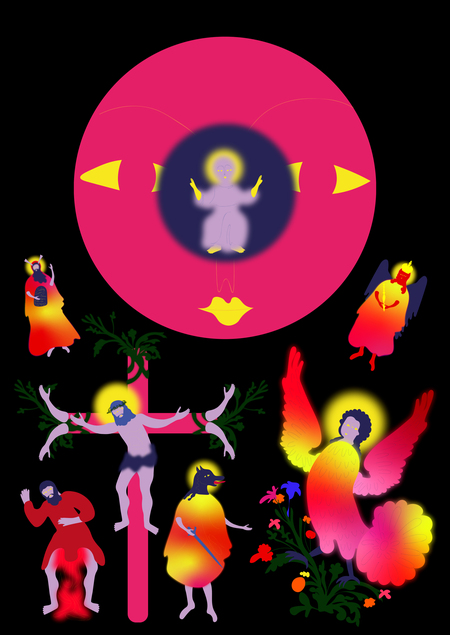
Since there is no text, present or absent, that regulates what is permissible to display in an icon, we will also consider «unofficial» icons created alongside the dominant ecclesiastical position. This infographic is based on Sergei Zotov’s book, «Iconographic Anarchy.» The images from this text were divided into visual groups and presented as illustrations. In turn, these are organized according to the structural schema of one of the most compelling icons—the «All-Seeing Eye.»