
Rubricator
I. Introduction II. Communication channels III. Theoretical framework IV. Analysis V. Conclusion & Recommendations VI. List of Literature and Image Sources
I. Introduction
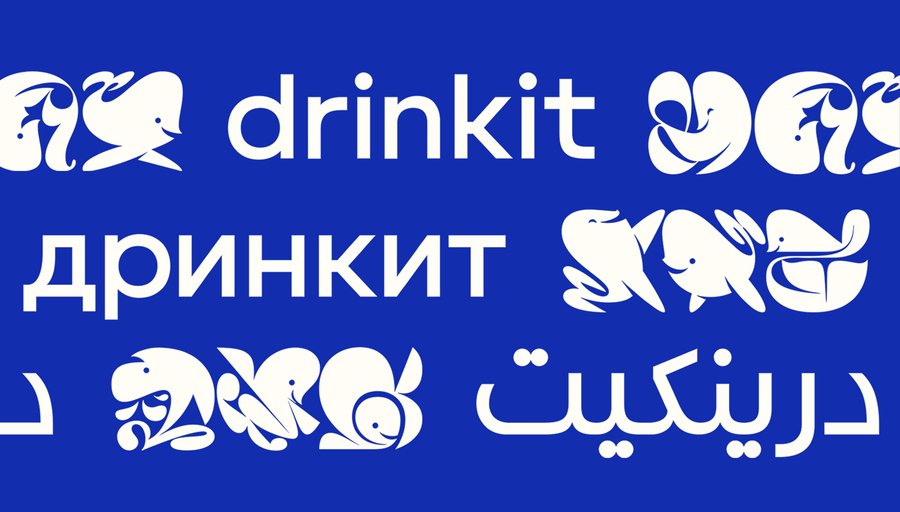
Drinkit brand identity, 2026
Drinkit, whose name plays on the phrase «drink it» is a new-format coffee shop chain that builds its brand around a digital user experience.
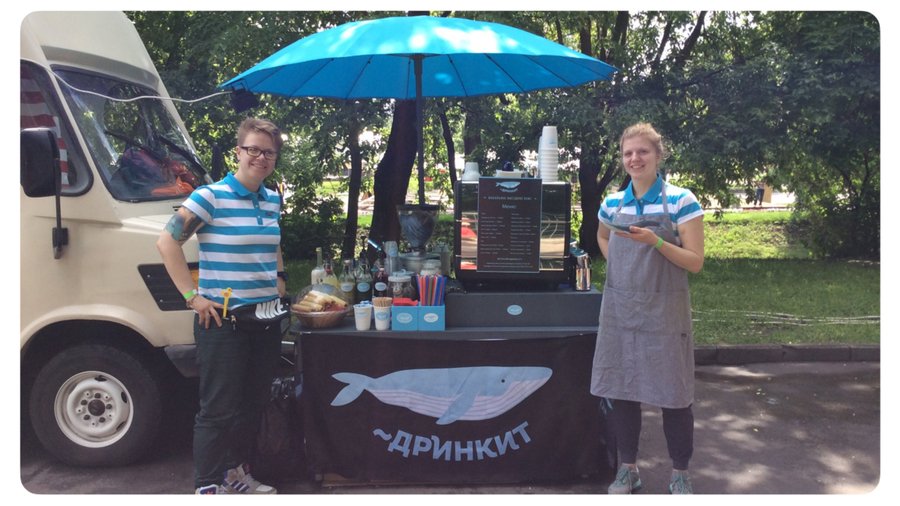
Anastasia Nikitina, founder of Drinkit, 2015
The coffee shop was founded by Anastasia Nikitina in 2015. At first, the project operated as a mobile coffee service at festivals, and by the end of the year the first two locations opened in Moscow. From the beginning, the coffee shop targeted young customers who valued signature drinks and a more individual approach to coffee.
Fyodor Ovchinnikov, founder of Drinkit, 2020
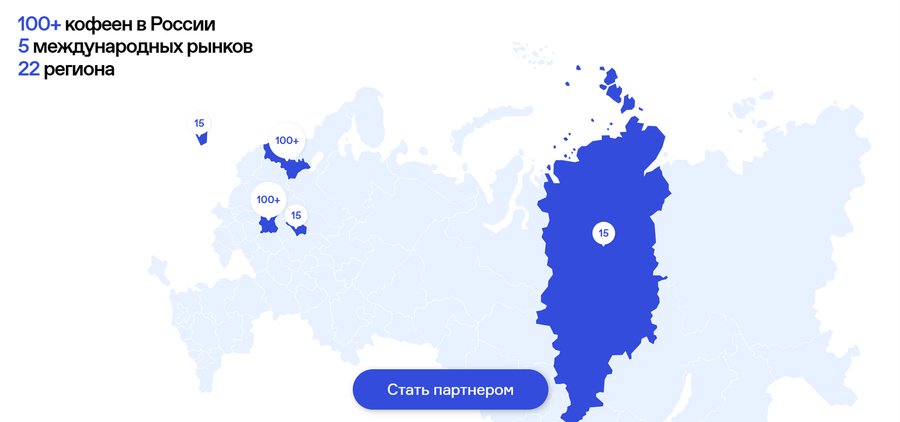
In 2019, Fyodor Ovchinnikov, the founder of Dodo Pizza, who wanted to launch a new-format coffee shop chain based on IT technologies, met the owner of Drinkit. In 2020, Drinkit became part of the Dodo Brands ecosystem. That same year, the first digital coffee shop opened. After showing strong results, the brand continued to grow. As of 2026, Drinkit has more than 100 locations across Russia and operates in five international markets.
Drinkit website, 2026
Drinkit positions itself as a digital coffee shop. Its goal is to make the mobile app the main point of interaction between the user and the brand. As stated on the company’s website, «Drinkit is a place where coffee, food and technology work together». This suggests that Drinkit is more than a coffee shop in the traditional sense; it is a «coffee shop of the future», where technology plays a role as important as that of the barista.
This approach defines the futuristic format of the coffee shops themselves. Customers order all drinks and food through the mobile app or a tablet inside the coffee shop. There is no traditional food display in the space. The barista receives orders instantly, bypassing the stage of communication with the customer at the cash register, which increases efficiency. Orders can be tracked on a screen and picked up in the collection area, where the customer’s name is displayed.
Drinkit’s social networks, 2026
Another important feature is drink customization in the app, which allows users to create combinations according to their personal taste. The app also currently offers Drinkit Lab, a feature that uses Yandex AI Studio to create a drink based on the user’s specific request.
Drinkit’s social networks, 2020
The brand’s target audience consists of young people who live busy, fast-paced lives. They value speed, quality and a personalized approach. The ability to order coffee on the way and quickly pick it up without waiting in line makes Drinkit a convenient solution for students who are running late, as well as office workers who only have a few free minutes during the workday. The brand’s memorable design and wide variety of drinks also help attract new customers.
II. Communication channels
Drinkit’s public communication space is built around several channels: the official website, the mobile app and social media.
Drinkit mobile app, 2026
The app plays a particularly important role because it is the main channel through which the brand interacts with the user. It informs customers about new drinks, promotions and the loyalty program. For this reason, the app can be seen not only as a sales tool, but also as a full-fledged communication channel.
@drinkitcafe, Instagram*, 2026
Instagram* can be considered the brand’s main social media channel. Drinkit has separate accounts for different Russian cities, international accounts for markets such as Kazakhstan, the UAE, the United States and Azerbaijan, as well as a main account, primarily focused on Moscow, with around 45,000 followers. The content balances attractive product photography with reels that either share brand news or show relatable everyday situations. The brand’s tone of voice is friendly but not overly familiar. It addresses the user informally, while still presenting information carefully and attentively.
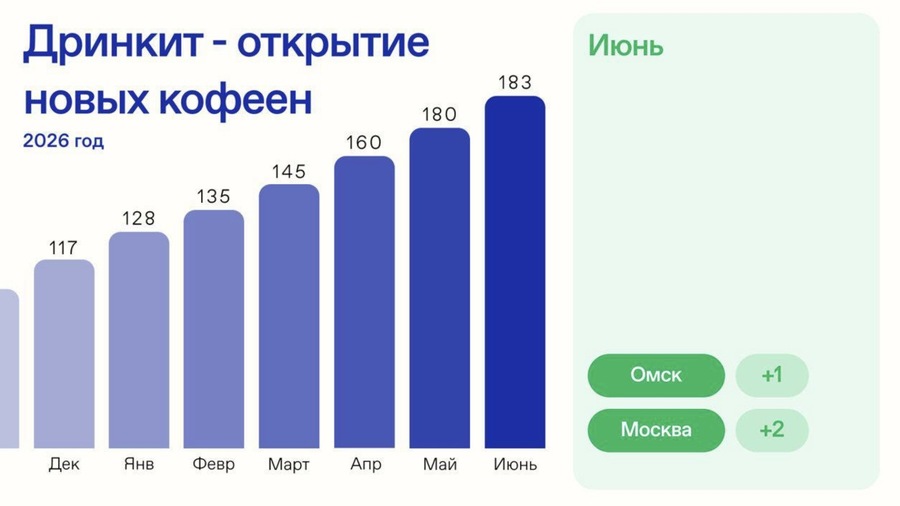
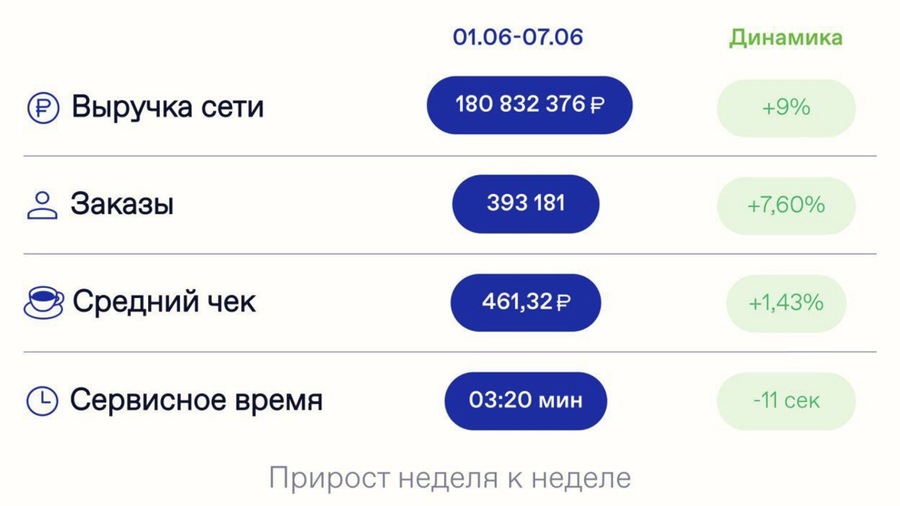
Drinkit Business Russia, telegram, 2026
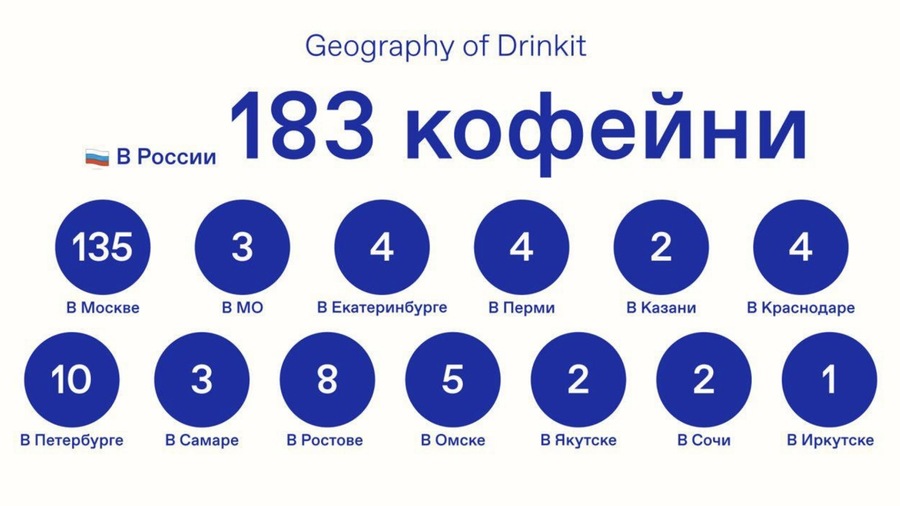
Telegram is used by the brand much less actively than Instagram*. On Telegram, one can find, for example, an account for Drinkit in Rostov, which publishes announcements of local events. Separately, it is worth mentioning the Telegram channel «Drinkit Business Russia», which is aimed not only at consumers, but also at potential partners, franchisees and the professional community. There, the brand shares news about new coffee shop openings, business indicators, partners, the team, internal processes and network development. This type of communication creates the image of a transparent and fast-growing brand that is willing to show its inner workings, share figures and explain how the business operates.
Drinkit affiliate programs, 2026
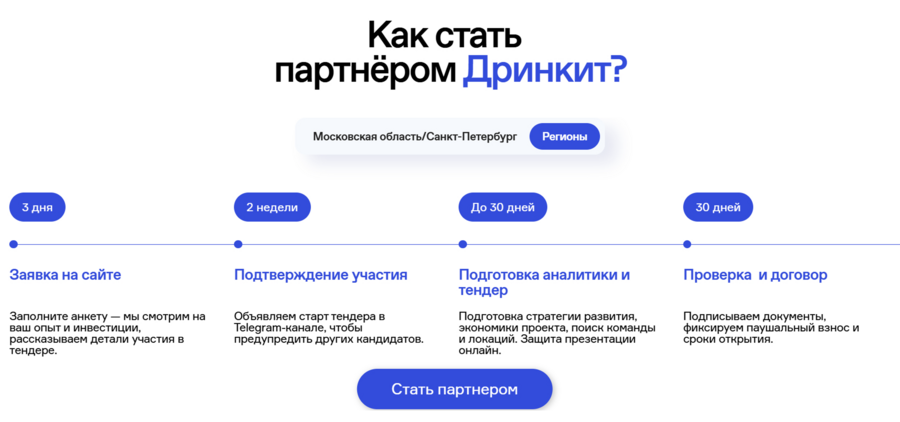
Drinkit’s official website is primarily designed to attract business partners. It presents the regions where the company is looking for partners to open franchise locations, as well as the stages required to launch a coffee shop.
Drinkit brand identity, 2026
It can be concluded that Drinkit’s PR strategy is built around several key directions. The first is its positioning as a technological challenger coffee shop. The brand distinguishes itself from traditional coffee shops by making the app and the digital system a central part of the customer experience. The second is openness and transparency: publishing news about the development of the network, discussing business indicators, and presenting the team and internal processes. The third is product-based PR: seasonal drinks, new food items, collaborations and special offers for app users.
III. Theoretical framework
The Dialogic Theory of Communication, developed by M. Kent and M. Taylor, conceptualizes communication as an ongoing relational system between organizations and their publics. Rather than focusing on one-way dissemination of information, the theory frames communication as a continuous process of interaction in which meaning is co-created through exchange, responsiveness, and mutual understanding.
Within this perspective, organizations are not only content producers but active participants in a communication environment that requires accessibility, transparency, and sustained engagement. Kent and Taylor outline four interrelated principles that structure dialogic communication: mutuality, propinquity, risk, commitment.
These principles function as design parameters for how communication systems should be organized in order to support meaningful relationships between an organization and its stakeholders.
Mutuality refers to the recognition of the communicative relationship as shared and reciprocal, where different stakeholder groups are acknowledged as active participants rather than passive recipients of messages. Propinquity emphasizes immediacy and accessibility of communication, where interaction is continuous and embedded in everyday communication channels. Risk highlights the necessity for organizational openness, including the willingness to disclose internal processes and accept uncertainty in public perception. Commitment refers to the long-term orientation of communication practices, where maintaining relationships is prioritized over short-term messaging goals.
Taken together, these principles position dialogic communication as a system-oriented approach to public relations, where the effectiveness of communication is defined not by message output, but by the quality and sustainability of relationships formed between the organization and its audiences.
Drinkit brand identity