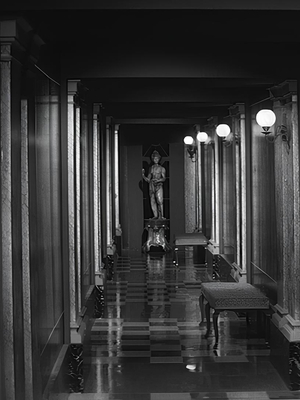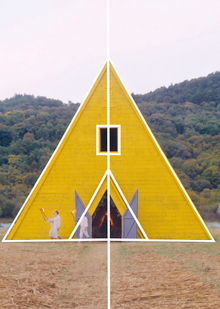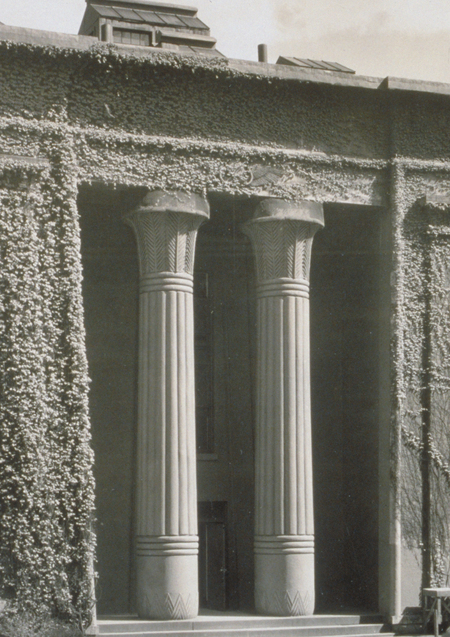
To understand the nature of borrowings that occurred in 19th and 20th-century European and American architecture, it is necessary to highlight the most characteristic elements of Ancient Egyptian structures and examine their original function. In this section, we will not review the entire history of Ancient Egyptian architecture, but exclusively those architectural forms that were further developed outside of Egyptian culture: pyramids, temple pylons, obelisks, columns, and sphinxes. Special attention will be paid to the relationship between the external appearance of a structure and its symbolic content. It is this relationship that will undergo significant changes later on.
This visual study is dedicated to the transformation of ancient Egyptian architectural forms in 19th and 20th-century European and American architecture. The main objective of the work is to trace how architectural elements—originally connected to religious concepts, power, and the idea of eternity—acquired new significance in public, industrial, and commercial architecture.
The study examines the historical precursors of Egyptomania, the specific ways Ancient Egyptian motifs were borrowed, and the change in their original symbolic content. Special attention is given to the transition from monumental and commemorative structures to movie theaters, hotels, and entertainment complexes. Based on a comparative analysis of architectural objects, historical images, and compositional schemes, we will trace how Ancient Egyptian forms evolved from symbols of eternity into a means of creating a spectacular architectural image.
The main premise of the research
Architectural forms, originally conceived to express eternity, have transformed over millennia into tools for attracting attention and staging spectacle.
Categories
- The Origins of Egyptomania: From Archaeological Discovery to Architectural Fascination.
- Architecture of Eternity: Sacred Forms and Their Symbolic Meaning.
- Monumentality Without Sacrality: Egyptian Motifs in 19th-Century Architecture.
- Architecture as Spectacle: Egyptomania in 20th-Century Theaters and Entertainment Venues.
- From Pyramid to Hotel: Transforming a Historical Form into a Commercial Image.
- Conclusion: What Has Remained from Ancient Egyptian Architecture and What Has Changed?
The Roots of Egyptomania: From Archaeological Discovery to Architectural Obsession.
For many centuries, the architecture of Ancient Egypt remained both recognizable and enigmatic to Europeans. Pyramids, obelisks, monumental temples, and massive columns were perceived as evidence of a civilization capable of creating structures that defied millennia.
However, interest in Egyptian heritage did not always equate to a deep understanding of its original function. European travelers, artists, and architects often perceived the ancient monuments primarily through their external appearance—their geometric rigor, colossal scale, symmetry, and expressive silhouette.
By the late 18th and early 19th centuries, the perception of Egyptian architecture began to shift. The advancement of archaeological research, the publication of detailed images of the monuments, and the dissemination of new historical knowledge made ancient Egyptian forms accessible for study and subsequent architectural reinterpretation.
Egypt gradually ceased to exist solely as a distant and mysterious land. Its architecture transformed into a system of recognizable artistic elements that European masters could employ in entirely new contexts.
Historical Premise
Napoleon’s Egyptian expedition marked a turning point in the study of ancient Egyptian heritage. How did Egypt become accessible to European architects?
In 1798, Napoleon Bonaparte launched a military campaign into Egypt, which also incorporated an ambitious scientific mission. Along with the troops, scientists, engineers, artists, and other specialists traveled to Egypt to study the country’s ancient monuments, nature, and contemporary life. Artists and architects played a particularly vital role, meticulously documenting historical structures by creating precise renderings of temples, columns, obelisks, reliefs, and sculptures, as well as drawings and plans. The results of this work were compiled into the monumental publication Description de l’Égypte («Description of Egypt»), which began appearing in 1809. This work contained scientific articles, historical data, maps, and numerous engravings. For European architects, these publications became an invaluable source of information, allowing them to study Egyptian monuments not just through descriptions, but through exact visual material, analyzing their proportions, composition, and decorative elements. Consequently, architecture—which was initially part of a specific religious and cultural milieu—began transforming into a set of artistic forms available for appropriation.
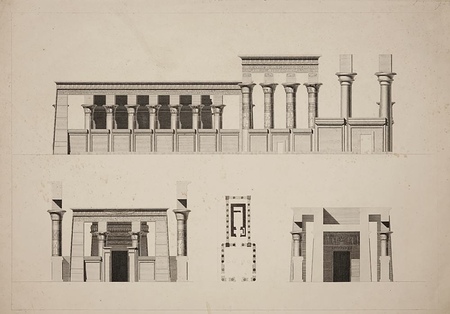
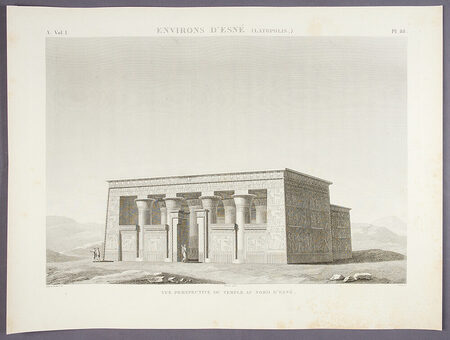
Architectural images of ancient Egyptian monuments. «Description de l’Égypte,» second edition, «Antiquités» volume, 1820.
But why did European architects start not just studying Egyptian structures, but reproducing their forms in their own buildings?
The dissemination of knowledge about Ancient Egypt coincided with a period of active searching for new artistic references in European architecture. At the turn of the 18th and 19th centuries, architects turned to historical styles, striving to expand the familiar language of Classicism.Ancient Egyptian architecture offered expressive forms that significantly differed from traditional ancient models. Instead of slender Greek colonnades, there were massive supports and monumental pylons. Instead of familiar pediments, there were simple geometric volumes, inclined walls, and an emphasized heaviness of the architectural mass.
These features allowed for the creation of buildings that evoked a sense of antiquity, permanence, and grandeur.However, adopting an architectural form did not necessitate preserving its original meaning. Egyptian motifs gradually began appearing in structures unrelated to ancient Egyptian religion or funerary rites.Thus, European Egyptomania represented not merely a repetition of ancient architecture, but its reinterpretation in alignment with the cultural and societal needs of the modern era.
European Egyptomania began not with the simple copying of monuments, but with a change in the very way ancient Egyptian architecture was perceived.
Initially, Egyptian structures were created within a culture where architecture was intimately connected to religious beliefs, royal authority, and funerary traditions. However, in the nineteenth-century European perception, their external qualities—monumentality, geometric clarity, recognizability, and the ability to make a powerful impression—came to the forefront.
This very difference forms the starting point for further study. We are interested not only in which elements of ancient Egyptian architecture were borrowed by European and American architects, but also in why the same forms could be used to express entirely different ideas. To answer this question, we must first turn to the original meaning of the pyramids, temple pylons, obelisks, and other characteristic elements of Ancient Egyptian architecture.
Before tracing how Egyptian forms became architectural ornamentation, it is necessary to understand what they originally signified.
Architecture of Eternity: Sacred Forms and Their Symbolic Meaning.
Pyramid: The Geometric Embodiment of Eternity
One of the most recognizable symbols of ancient Egyptian architecture is the pyramid. During the Old Kingdom, pyramids were constructed as part of the funerary complexes of pharaohs, linked to concepts of the ruler’s afterlife. The exterior appearance of the pyramid was characterized by extreme geometric clarity. A broad square base, sloped faces, and a single apex formed a cohesive composition whose expressiveness did not depend on the number of decorative elements. The pyramid was also associated with solar symbolism and religious beliefs regarding the divine nature of royal power. However, for further study, it is especially important that this architectural form possesses independent visual expressiveness. Even without its original funerary function, it remains recognizable and continues to evoke associations with Ancient Egypt.
Pyramid of Khufu (Cheops). Giza, Egypt. Circa 2560 BCE.
Compositional features of the pyramid: symmetry, wide base, sloped planes, and a unified apex.
The pyramid’s recognizability is primarily determined by its geometry, not its functional purpose.
Temple Pylon: The Architecture of Transition.
Another characteristic element of ancient Egyptian architecture is the pylon—a monumental entrance structure composed of two massive volumes with sloping walls, between which is a passage. In the architecture of ancient Egyptian temples, the pylon signified the boundary between the exterior space and the sanctuary grounds. Its composition also held a symbolic connection to the image of the horizon, between whose two elevations the sun rises.
The visual expressiveness of the pylon was shaped by the contrast between massive side volumes and a relatively narrow central opening. This compositional choice emphasized the importance of the entrance, setting it apart against the surrounding space.It was this capacity of the pylon to create a striking entryway that later allowed its composition to be utilized in the architecture of public, industrial, and entertainment buildings.
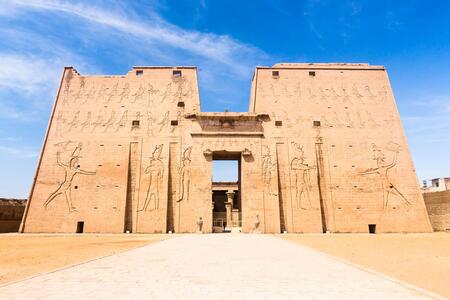
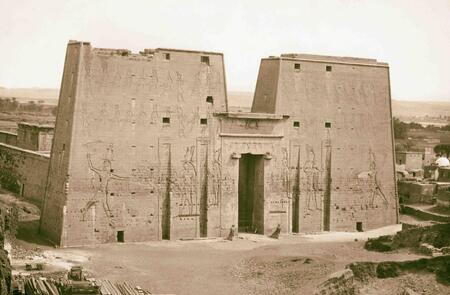
Mortuary Temple of Hor. Egypt, 237–57 BCE. Frontal view of the entrance pylon.
The boundary of the sacred space evolves into a means of architectural emphasis for the entrance by the pillar.
The ancient Egyptian obelisk was a tall stone column topped with a four-sided pyramidal cap. Its symbolic significance was tied to the worship of the sun. In contrast to the pyramid, which emphasized massiveness and stability in its composition, the obelisk possessed a distinct vertical directionality. Its elongated proportions allowed the structure to stand out against the surrounding architecture and create a spatial focal point. In European culture, the obelisk gained widespread use as a memorial and urban design element. Meanwhile, its geometry could remain virtually unchanged, while its symbolic content took on a secular character.