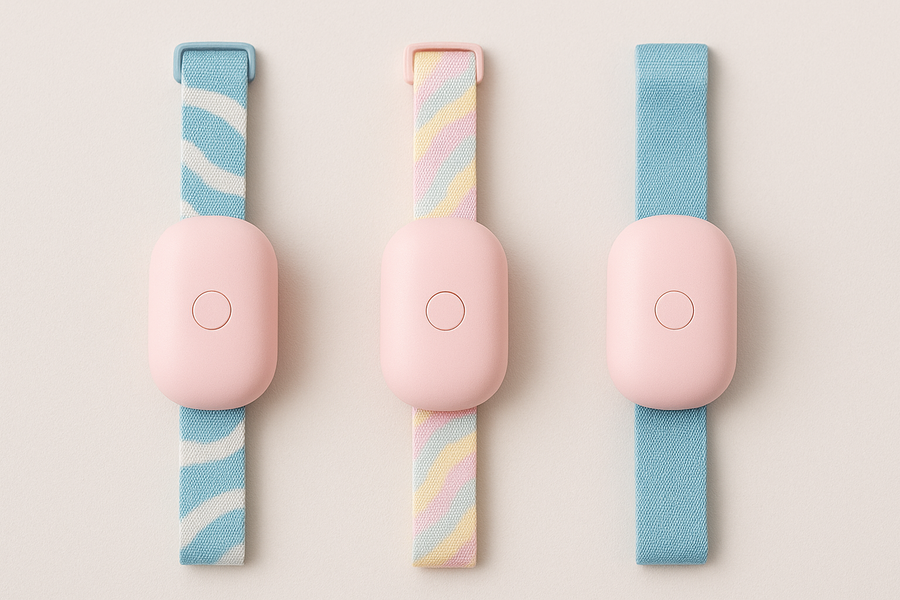
The product
Concept of the brand


Capsules
In the space between one task and the next, between a racing mind and a needed breath, there is a new kind of pause.
For anyone who feels the weight of the constant rush. For the moments when there’s no time for a lengthy remedy, yet the need for calm is immediate.
Introducing CalmWave — a compact capsule designed not to add to your routine, but to softly interrupt the overwhelm. A personal sanctuary that helps gently guide you back to focus, to balance, to a sense of quiet within. It’s the alternative for when meditation feels distant and a busy world feels too close. A touch of peace, on demand.
Your moment of calm is waiting.
Communication theory in design
Communication theories provide the essential framework that transforms design from mere aesthetics into a purposeful dialogue between the object and the user. In communicative design—where the primary goal is to convey specific messages, instructions, or experiences—these theories are the invisible scaffolding for strategy. They move design beyond «how it looks» to answer «how it works» in the human mind.
At its core, design communication relies on models like Shannon-Weaver’s transmission model (sender, message, channel, receiver, feedback) and, more critically, semiotics. Semiotics teaches that every color, shape, icon, and typeface is a sign (signifier) loaded with cultural meaning (signified). A designer doesn’t just choose red; they deploy a sign that may signify «danger,» «love,» «stop,» or «urgency,» depending on context. Understanding this allows designers to encode messages that users can accurately decode, minimizing noise and misunderstanding.
Another fundamental theory is the semiotic approach, which studies signs and symbols—core elements in visual communication. Designers use signs to evoke meaning quickly and efficiently, integrating icons, colors, and typography to guide user interpretation. For instance, red is universally associated with urgency or caution, guiding users’ reactions without requiring explicit instructions. Understanding semiotics helps designers craft visuals that resonate across cultures and contexts, ensuring messages are both accessible and meaningful.
Slogan
Magazine advertisement
The interactive and transactional models of communication, such as those proposed by Schramm, highlight the bidirectional nature of communication, emphasizing feedback. In design, this translates into user-centered approaches, where designers create interfaces or spaces that invite interaction and adaptation. A website with responsive feedback mechanisms allows users to communicate their needs, prompting iterative improvements that better serve the audience.
The Rhetorical Triangle (ethos, pathos, logos) is equally vital. Communicative design builds ethos (credibility) through professional aesthetics and consistency. It engages pathos (emotion) through imagery, color psychology, and narrative. It employs logos (logic) through clear information architecture and intuitive usability. A public health poster, for example, uses ethos (official logo), pathos (emotive imagery), and logos (clear data) to persuade behavior change.
Phone screens with CalmWave app
In the realm of communicative design, these theories emphasize not just transmitting information but facilitating meaningful engagement. Effective communicative design considers audience analysis, context, and cultural nuances, recognizing that messages are interpreted differently depending on the receiver’s background. By applying basic communication principles—clarity, relevance, feedback—designers can foster comprehension, evoke emotional responses, and promote behavior change.
Overall, basic communication theories guide designers to craft messages that are clear, meaningful, and engaging. They encourage an empathetic understanding of how audiences perceive and interpret designs, ensuring that visual and functional elements work harmoniously to achieve effective communication in various contexts.
Presentation for a general audience
Breathe in the chaos. Exhale with CalmWave. Your mind moves a mile a minute. The pressure builds. The world doesn’t pause, so your calm has to be instant. Introducing CalmWave: your personal reset button. A compact capsule of quiet, designed for the space between one stress and the next. No apps, no lengthy routines—just a moment of balance, reclaimed. This is peace, engineered for the present.
Capsuls
At CalmWave, we believe in a future where wellness is accessible, compassion is foundational, and acceptance is the starting point. We saw a world moving faster, yet feeling further from peace. Traditional paths to calm often required time, money, or vulnerability that many simply couldn’t spare. But we refused to accept that inner balance should be a luxury. We created CalmWave from a place of compassion—for the overwhelmed mind, for the stretched-thin spirit. This isn’t about escaping life’s pressure. It’s about meeting it with acceptance, and giving yourself a gentle, instant tool to reset, restore, and return to your center. Your well-being belongs here, in the now. Welcome to a new wave of calm.


Wireless docstation
What is it capable of?
Instant Stress Interruption: CalmWave actively disrupts the cycle of acute stress. Through a curated combination of gentle, pulsed light and targeted sound frequencies, it helps slow a racing mind, dial down physiological tension, and create a measurable buffer from overwhelm in minutes. Emotional Recalibration: Move from frustration or anxiety to a state of balanced calm. The technology is designed to gently guide your nervous system from a «fight-or-flight» state toward «rest-and-digest,» facilitating a tangible return to emotional equilibrium and clarity. Focused Concentration Recovery: Clear the mental static. By helping to quiet internal noise, CalmWave creates the cognitive space necessary for deep focus, allowing you to reclaim your attention and engage fully with the task or moment at hand. On-Demand Mindfulness Anchor: It provides a tangible, tech-assisted point of focus for your awareness—an alternative to traditional meditation that fits into the spaces of your day. This makes the practice of returning to the present moment simple, accessible, and immediate.


Other designs for Capsuls
CalmWave posters
Personalized Ritual of Renewal: With multiple program settings (from Quick Reset to Deep Calm), CalmWave adapts to your need. It becomes your consistent, compassionate tool for a mental reset before a presentation, after a difficult conversation, or as a nightly ritual to release the day. CalmWave does not ask you to change your life. It simply equips you with the profound ability to change your moment—restoring your natural capacity for peace, focus, and presence, on your terms.
Presentation for a professional audience
Our Design, Your Calm: A Guided Tour of the CalmWave World
Every detail of CalmWave is intentionally crafted to be an extension of our values—wellness, compassion, and acceptance. From your first glance online to the moment you step into our space, our environment is designed to be your first deep breath.
Signature colors
Our signature colors—soft baby pink, tranquil baby blue, and pure white—are a quiet conversation. Together, they embody gentle compassion (pink), clear-minded wellness (blue), and open acceptance (white). This palette isn’t just seen; it’s felt. It disarms and soothes, creating an immediate, non-verbal promise of safety and care, free from aggression or overwhelm.
Our shops
Our shops are minimalist yet deeply cozy. We believe clarity nurtures peace. Clean lines and uncluttered spaces allow your mind to settle, while warm lighting, soft textures, and intimate seating invite you to stay, explore, and feel welcome. This is a space that says, «You belong here,» reflecting our commitment to being a brand that meets you exactly where you are.