Content:
- Research Concept
- Background
- Chapter 1: Strategy I — The Archival Subversion (Case Study: Sammy Baloji, Michèle Magema).
- Chapter 2: Strategy II– The Institution as Readymade (Case Study: Meschac Gaba, Yinka Shonibare CBE RA, Roméo Mivekannin, Kendell Geers).
- Chapter 3: Strategy III–Infrastructural Disobedience (Case Study: Núcleo de Arte, Ibrahim Mahama, Vusumzi Nkomo)
- Conclusion
- List of image sources & bibliography
Research Concept
This visual research looks at how contemporary African artists have engaged in institutional criticism which involves questioning the power dynamics, exclusion methods and underlying beliefs of art institutions. While institutional critique started as a clear artistic approach in Western countries during the 1960s and 1970s, its path in African contemporary art has been different. This difference comes from the effects of colonialism, the efforts of new nations after independence, and the unequal global art systems. The research suggests that African artists have created their own ways to challenge institutional authority and offer new models for how culture is made and recognized. It begins with the idea that, in African contemporary art, institution isn’t just one fixed thing but a contested field. This includes colonial museums, national galleries after independence, international biennales, and even the art market. The research argues African artists have shaped a unique two-part development of institutional criticism that moves away from Western-centered stories. Instead of just copying the bold strategies of 1970s European and American artists like Hans Haacke, African artists have worked on reshaping institutions from within, adding their own voices and perspectives.
The artworks are the focus here, not just something in the background. By looking at key works, installations, and archival projects, the study analyzes how artists use space, materials, and historical sources to build their critiques. The researcher acts as a guide, letting the artworks speak for themselves. The artworks use archives, dust, or reenact colonial photography to explain the power structures artists aim to challenge. This approach keeps the study focused on the experience rather than imposing outside theories. The study’s framework identifies a wave of institutional criticism from the 1960s to the 1990s. This period is described as critique from within. After independence artists often were the first in their countries to face museums. These museums were seen as leftovers from times. The artist’s method was to work inside these inherited institutions. They did this to reveal and question the underlying ideas of these institutions.
This topic was chosen because «institutional critique» is a known concept in Euro-American art history. However, it often overlooks the historical and political situations African artists face. These situations include the legacy of museums. They also include nationalism after independence and the unequal global art system. As a result, it misses how African artists see institutions. African artists see institutions not as power centers but also as materials. They can work with these materials visually and conceptually. The artworks and African artists are key to understanding this. The African artists and their artworks provide a perspective; they show how institutions can be challenged.
This research asks: What unique visual strategies have African contemporary artists developed to critique artistic and cultural institutions, and how are these different from traditional Western institutional critique? The idea is that African artists have followed two main paths an earlier set of work aimed at subverting archives and reclaiming colonial institutions, and a later set that uses infiltration, repair, and breaking down infrastructure. Through these methods, they turn institutional critique from mostly a negative, revealing act into a creative process of repair, building counter-archives, and creating new types of institutions grounded in post-independence and decolonial experiences. The material selection of the visual research was based on the institutional reports, case studies, as well as publications from the past decade featuring the history of Institutional Criticism.
Background
Institutional criticism; art that questions the structures, ideas, and power behind museums, galleries, biennials, and the larger art world has mostly been understood through a Western lens. Think of Hans Haacke’s 1970s work revealing corporate influence or Andrea Fraser’s performances showing museums as class-based institutions. In these cases, the focus is usually on Western art museums and commercial galleries. But looking from Africa changes the picture. The institutions involved and the ways artists respond to them come from very different histories, needs, and artistic methods.
«Hans Haacke showing slums and naming slumlords in „Shapolsky et al Manhattan Real Estate Holdings, A Real Time Social System as of May 1, 1971“ (1971) (segment)» Ognjen Simic, November 11, 2019.
African institutional criticism starts with the colonial period. In the late 1800s and early 1900s, European colonizers took African cultural objects like masks, sculptures, and royal items, moving them to ethnographic museums in Paris, London, Brussels, and Berlin. Inside Africa, colonial governments set up museums that aimed to control and classify African cultures as something fixed, primitive, and separate from «fine art.» These museums weren’t neutral; they were part of the colonial system’s agenda. So, for African artists after independence, museums were not just places that excluded them, they were reminders of ongoing cultural harm.
«The interior of Oba’s palace during the punitive expedition, with the looted Benin bronzes in the foreground, 1897.”Sarah Van Beurden, March, 2022.
The first generation of artists after independence (1960s–1990s) faced a tough situation. The old colonial museums kept their old ways of representing Africa, while new national museums often pushed official cultural messages, leaving little room for critical or experimental work. Artists started to develop forms of institutional criticism here. Some engaged with archives by re-photographing and re-framing colonial images to show what was left out. For example, Sammy Baloji uses digital collages to layer colonial postcards over today’s industrial sites, revealing how exploitative systems persist. Others used performance or public acts to question state authority, or borrowed European portrait styles to honor spaces ignored by apartheid, like Zwelethu Mthethwa’s photos of township interiors. This early wave often worked inside the institutions’ own materials archives, displays, buildings to critique while reclaiming control. A second generation of artists, starting in the late 1990s and continuing today, works in a global art world that seems more open but still holds many power imbalances. African biennials in cities like Dakar, Bamako, and Lagos, along with visibility in Venice and Western museums, created new spaces for critique.
Artists treat museum displays as colonial objects that can be «repaired, ” while groups like Mozambique’s Núcleo de Arte avoid formal institutions by creating temporary, community-based projects after civil war. Instead of direct confrontation, these artists focus on working within or around institutions to redirect their role. They don’t just point out bias; they suggest new ways to care, remember collectively, and heal historically, often using tools like archives, exhibitions, and biennials in unexpected ways. What sets African institutional criticism apart from Western models is its creative and forward-looking approach. Where Western critique often aims to reveal the art system’s politics and economics, African artists use it to restore history mending the breaks colonial museums caused, building new archives, and imagining institutions based on community rather than state or market interests. Their methods are very visual: using diptychs to compare histories, showing dust and decay to signal neglect, re-staging colonial photos, or turning galleries into rituals for repair.
These are distinct ways to express critique through visual means. In this way, institutional criticism in African contemporary art isn’t just a copy of Western ideas. It is its own historical line, born from colonial museums’ material and emotional damage, the struggles of new nations, and the uneven global art scene. African artists see institutions as places of harm but also as places that can be fixed. They have shifted institutional criticism from just exposing problems to rebuilding visually, through archives, and with new infrastructures.
Chapter 1: Strategy I — The Archival Subversion (Case Study: Sammy Baloji, Michèle Magema)
This chapter helps us think through different historical ideas. It examines how editing a photograph can make us question what the original picture truly represents. The visual evidence shows that the old colonial thinking about taking things and putting them into categories is still present in how countries are set up politically and economically, even after they’ve become independent. This isn’t just about breaking down old symbols; it’s a more involved way of writing new meanings into the record. The artists don’t just get rid of the colonial archives; they actually go into them, both physically and digitally. They do this to show what was left out and the lasting real-world impacts of those omissions. The whole point of their criticism is built right into how they place things next to each other.
Sammy Baloji
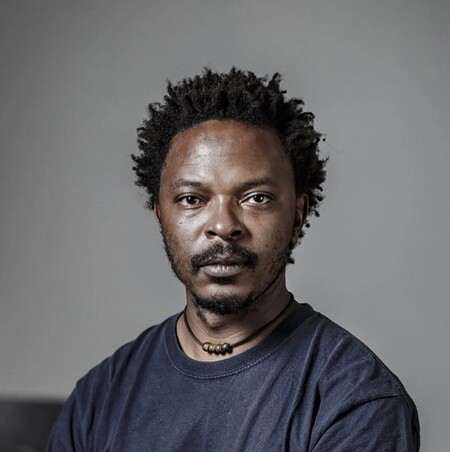
Sammy Baloji, who lives and works between Lubumbashi and Brussels, was born in Lubumbashi, Democratic Republic of the Congo, in 1978. Sammy began his doctoral studies at Sint Lucas Antwerpen in September 2019 as part of an artistic research project titled «Contemporary Kasala and Lukasa: towards a Reconfiguration of Identity and Geopolitics.» Sammy Baloji has been investigating the history and memory of the Democratic Republic of the Congo since 2005. In addition to addressing the effects of Belgian colonization, his work is an ongoing investigation into the Katanga region’s cultural, architectural, and industrial legacy.
Mémoire, 2006. Sammy Baloji.
Sammy Baloji confronts institutions through a technique he refers to as archival subversion. He directly engages with the archives of Western ethnographic museums to challenge their authority and the narratives they present regarding history. As an artist who also takes on the role of a historian or researcher, Baloji centers his work on critically reinterpreting documents and images from the colonial era. He achieves this by undertaking residencies at locations such as the Africa Museum in Tervuren and the Rietberg Museum in Zurich, producing works that challenge the prevailing perspectives on Africa’s history. His work also brings up significant ethical issues regarding museums and the power dynamics that support them, urging institutions to consider ways to decolonize themselves. By using the museums' collections against themselves, Baloji transforms these locations from impartial storage areas into forums for discussion, uncovering the colonial violence that exists beneath the surface.
Memoire, Katanga, Congo (DRC), Sammy Baloji, 2006.
Baloji’s series Memoire (2004-2006) is a foundational example, consisting of twenty-nine digital photomontages that superimpose black-and-white archival images from the early twentieth century onto his own contemporary color photographs of the same locations in the Katanga mining region. The stark contrast between the black-and-white past and the color present, often with archival figures superimposed onto ruined industrial landscapes, visually forces a «collapse between the colonial past and postcolonial decline,» creating a startling juxtaposition that reveals historical continuity and subverts simplistic readings of history.
Memoire, Katanga, Congo (DRC), Sammy Baloji, 2006.
Similarly, in his exhibition Congo Far West (2011) at the AfricaMuseum, Baloji investigated the museum’s collections of expedition photographs to question how these visual records were used to construct colonial mythologies. By revisiting and re-contextualizing these archives, Baloji challenges the legitimacy of the ethnographic collection itself, asking whether museums can legitimately undertake scientific analysis of objects rooted in a violent history of extraction.
Sammy Baloji, Kasala: The Slaughterhouse of Dreams or the First Human, Bende’s Error, 2020.
Another key example is his 2020 installation Kasala: The Slaughterhouse of Dreams or the First Human, Bende’s Error, created from a residency at the Rietberg Museum. Here, Baloji critically engages with the photographic archive of German ethnologist Hans Himmelheber from a 1938/39 trip to the Congo. In this installation, Baloji «overwrites» the colonial archive by developing new methodologies based on local Luba cultural practices of oral history and performative poetry, thereby introducing «missing voices» and alternative meanings to counter the colonial narrative. Through these acts of subversion, Baloji demonstrates that archival subversion is a powerful tool to critique how institutions continue to grapple with colonial legacies.
Michèle Magema
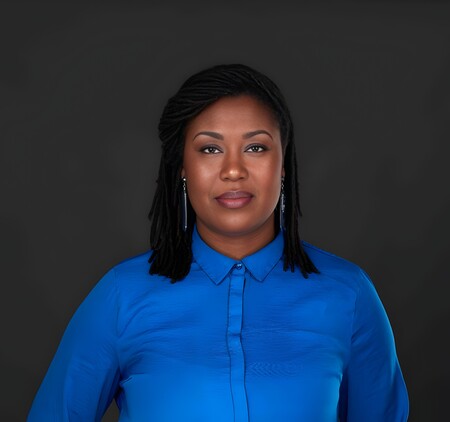
Another important African artist who challenges institutions by looking at old records differently is Michèle Magema. She’s a multimedia artist, originally from Congo but now living in Paris. Two of her main pieces, «Under the Landscape» (2015) and «Evolve» (2019), really show how she does this.
Michèle Magema, 2015; «Under the Landscape»
In «Under the Landscape,» Magema criticizes the arbitrary national borders of the Democratic Republic of the Congo, which were drawn by colonial powers. She carves these borders into 81 blocks of soft rubber tree wood. This wood is significant because it’s directly tied to the brutal exploitation that happened in the Congo Free State. Afterward, she rearranges these blocks into what she calls a «new border landscape,» basically taking apart and putting back together a colonial map. This act reveals how those borders were artificial and oppressive.