Concept
Neo-expressionism is one of the most controversial art movements of the late 20th century. It emerged in the late 1970s as a reaction against the minimalism and conceptual art that had dominated the art world of the previous decades.
The goal of this research is to examine the key visual characteristics of 1980s neo-expressionism and to explore methods for conveying emotional and social tension in painting.

Jean-Michel Basquiat, «Untitled,» 1981
The visual study focuses on analyzing neo-expressionism as a reaction to intellectual asceticism. The movement marked the triumphant return of painting, the figure, emotion, and narrative to avant-garde art. The primary focus of the research is to identify and systematize the key visual techniques artists used to convey intense emotional states, critique society, and reflect on history. This was not merely a return to old forms, but a reinterpretation of them through the lens of postmodern irony.
Key Research Question:
How did Neo-Expressionist artists of the 1980s utilize artistic expression to convey the emotional state of society?
Hypothesis:
Neo-Expressionism of the 1980s emerged as a reaction against the rationalism of Minimalism and Conceptual Art, and its visual language transmits the anxiety and emotional tension of late 20th-century society.
Mimmo Paladino, «Sirens, ” „Evening, ” „Western Poet, ” 1986
The theme of Neo-Expressionism was chosen because this movement occupies a significant place in the history of late 20th-century art, reflecting the transitional period between Modernism and Postmodernism. I am drawn to how artists in this movement reintroduce emotionality and subjective experience into art.
The visual language of Neo-Expressionism is of particular interest to me: sharp brushstrokes, distorted figures, intense colors, and a sense of chaos. Through these elements, artists convey not only personal emotions but also the state of society—the anxiety, instability, and identity crisis characteristic of the 1980s.
Furthermore, this topic remains relevant today, as the visual techniques of Neo-Expressionism continue to be used in contemporary art, illustration, and graphic design. Studying this movement helps provide a deeper understanding of how art can reflect social processes and the emotional states of a society through form and color.
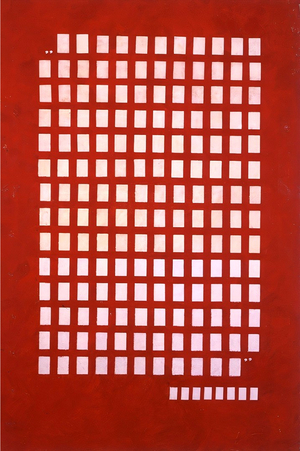
Julian Schnabel, «Homo Painting, ” 1981
The selection of material for the research was based on authoritative art historical sources, scholarly publications, exhibition catalogs, and auction records.
The research structure is designed to gradually explore the phenomenon of Neo-Expressionism in 1980s art: from introducing its socio-cultural preconditions and fundamental visual principles to analyzing the key motifs and artistic techniques in the works of individual movements’ representatives.
Origins and Evolution
The late 1970s marked a time of profound change for the art world. Following a decade dominated by cool, often impersonal conceptualism and minimalism, a new generation of artists burst onto the scene. They reintroduced a sense of sensuality and emotional expressiveness to painting—large canvases, vibrant colors, rough brushwork, and, most importantly, the human figure with all its passions, fears, and suffering.
Neo-expressionism emerged in Europe amidst deep cultural and political transformations. The late 1970s and 1980s were characterized by an ideological crisis, rising consumerism, urbanization, technological shifts, and a persistent sense of anxiety about the future. The Cold War, social conflicts, and the rapid evolution of media created an atmosphere of instability—a backdrop against which artists increasingly turned to personal experience.
Jörg Immendorff, «We’re Coming,» 1983
Neo-expressionism rapidly expanded beyond its German roots. American artists, such as Julian Schnabel and Jean-Michel Basquiat, adopted its principles, reflecting societal issues in their work—class inequality and racial injustice. They also introduced new elements to the movement. This was particularly evident in Basquiat’s work, which adapted neo-expressionism to various cultural contexts, incorporating graffiti and symbolic text into his pieces.
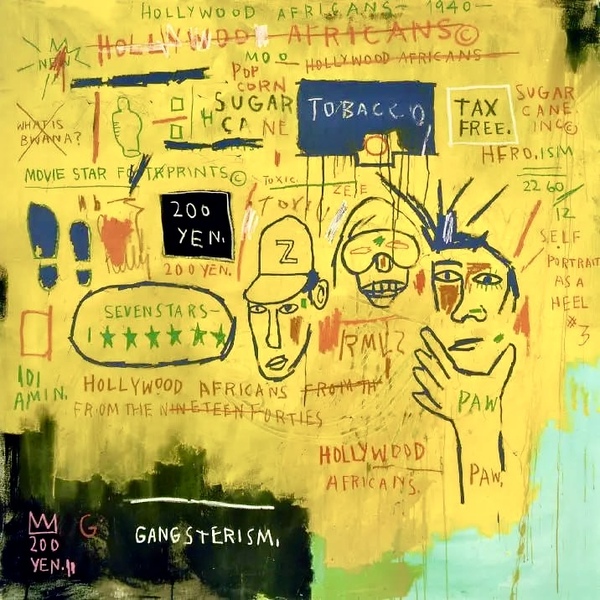
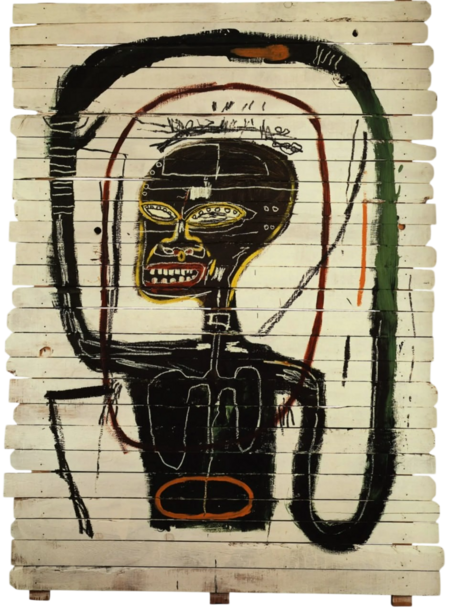
Jean-Michel Basquiat, «Hollywood Africans,» 1983 / Jean-Michel Basquiat, «Flexibility,» 1984
The fluidity of the movement made it appealing to many artists, allowing them to weave local histories, myths, and narratives into their artistic practice. In Italy, artists like Sandro Chia reinterpreted Renaissance traditions through the lens of Neo-Expressionism, while in Britain, painters such as Christopher Le Brun explored poetic and allegorical themes. This international adaptability ensured Neo-Expressionism’s relevance and influence far beyond its original context.
Christopher LeBlanc, «Sir Bedivere» 1982–1983
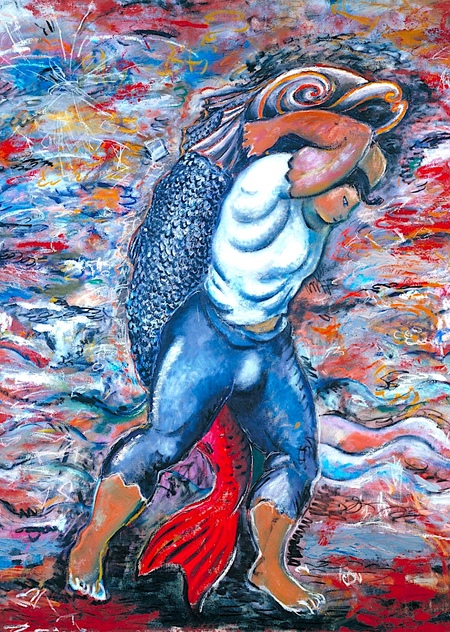
Sanda Chia, «The Water Bearer,» 1981
Themes and Motifs
Neo-expressionism is defined by a bold, emotional style that rejects the intellectual and restrained approaches of preceding movements. In this direction, the artist’s subjective experience takes on particular significance. Using expressive techniques, neo-expressionists sought to convey raw emotion and dynamic narrative.
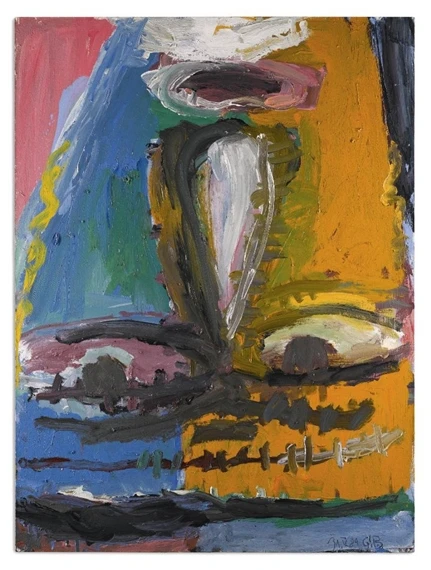
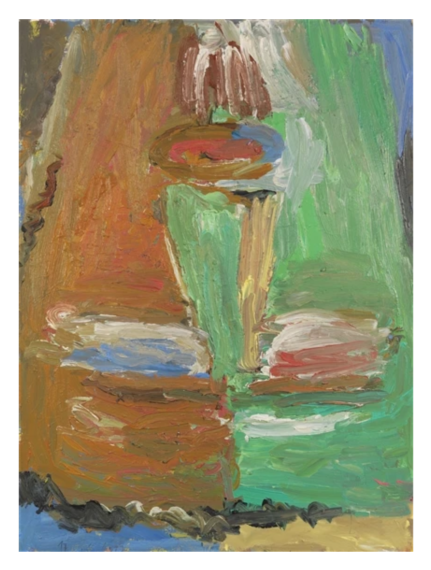
Georg Baselitz, «Der Abgarkopf, ” 1984 / Georg Baselitz, „Das Abgarbild, ” 1984
Neo-expressionism focused on figural painting, utilizing bold and dynamic compositions to explore themes of human struggle and reflect social issues. Artists addressed questions of race, identity, and inequality. Because of this, their works resonated with everyday people. Exaggerated forms, sharp lines, vibrant colors—all of this allowed the viewer to feel the tension within these pieces.
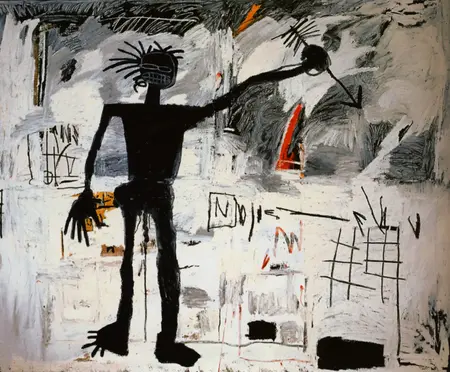
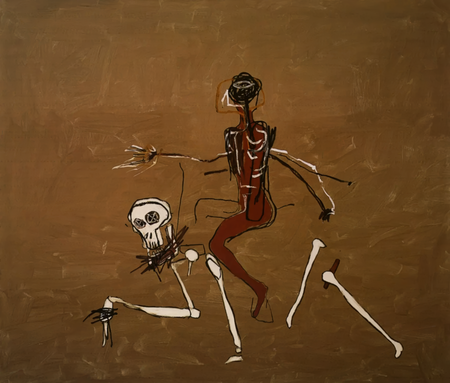
Jean-Michel Basquiat, «Self-Portrait, ” 1982 / Jean-Michel Basquiat, „Riding Death, ” 1988
Jean-Michel Basquiat’s works frequently reflected the lived experiences of marginalized communities. His painting, «Irony of a Black Police Officer, ” serves as a vivid critique of racial inequality. Through such pieces, neo-expressionists emphasized art’s power to provoke dialogue and illuminate societal truths.
Jean-Michel Basquiat, «Irony of a Black Police Officer, ” 1981
«If I weren’t drawing, I would be making films. Films where Black people are just like everyone else—not aliens from space, not evil thieves, not drug traffickers, or anything like that. I would just be telling truly truthful stories, ” said Jean-Michel Basquiat. [1]
The specialization also encompassed broader historical and cultural narratives. Anselm Kiefer’s monumental works addressed Germany’s military past, fusing personal reflection with collective historical memory. Such multi-layered approaches allowed Neo-Expressionism to function simultaneously as a reflection of individual emotional experience and as a critique of social and historical processes, unifying the personal and the public in a highly expressive artistic form.
Anselm Kiefer, «Winter Landscape, ” 1984
A.R. Punk (Ralph Winkel), «Snow in Jerusalem, ” 1984
Artists frequently referenced ancient myths or religious stories; through symbolism, they created a dialogue between the past and the present, making their work simultaneously timeless and relevant.