Topic Selection
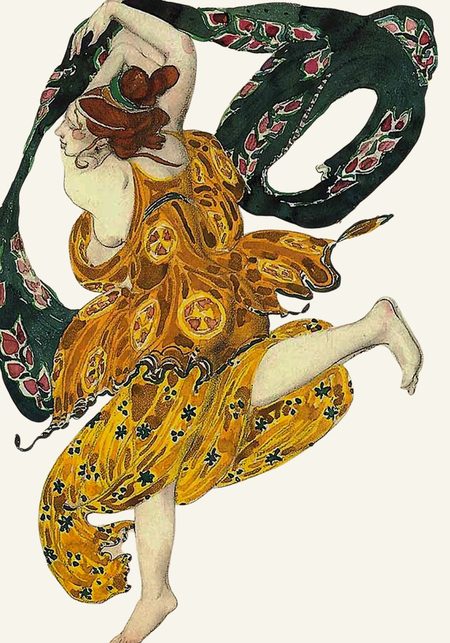
This visual study is dedicated to examining the ornamental language of Léon Bakst—an artist, master of theatrical graphic design, and one of the key ideologues of the «Mir Iskusstva» (World of Art) group. In his works, the ornament is not a secondary background element; rather, it functions as an independent carrier of meaning, setting the rhythm, emotional tension, and historical context for the stage space and costume.
The choice of topic is inspired by the unique and distinctive style of Léon Bakst in his work. I was captivated by his ability to work with the plasticity of forms, the airy quality of his sketches, and most importantly, the diversity of colorful Art Nouveau costume designs he created for the «Mir iskusstv» (World of Arts).
It is also interesting to observe exactly how the artist reinterpreted real historical and ethnographic artifacts in his signature sketches. This allows one not only to gain a deeper understanding of his method but also to identify specific principles of ornamentation reconstruction.
The methodological foundation of this research is the visual comparison method. This method involves the side-by-side juxtaposition of original historical/ethnographic ornaments with Leon Bakst’s graphic and painted sheets. This allows for a clear tracing of the author’s revision trajectory: changes in rhythm, color palette, scale, and line geometry.
Principle of Source Selection
The literary and documentary basis of the research was formed based on the principle of interdisciplinary selection and is divided into two key groups:
- Art historical and cultural studies: research dedicated to the aesthetics of the «Mir Iskusstva» movement and the phenomenon of Orientalism in early 20th-century European theater.
- Ethnographic and historical catalogs: sources on the history of ornamentation (studies of ancient vase painting, Persian miniature, Egyptian art, and Russian folk craft) that served as the material basis for Baxter’s inspiration.
Source Analysis Principles
The work employs the principle of contextual-comparative analysis. The photographic materials are arranged so that the similarity between the original ornament and the artist’s work can be immediately perceived. The textual sources, positioned nearby, complement the main visual sequence, offering only slight clarification of what is depicted in the photographs.
Navigation
- Antiquity and Archaism: From Greek Vase Painting to «Daphnis and Chloe»
- Orientalism: Persia, India, and the Middle East («Scheherazade» and «The Blue God»)
- Ancient Egypt and Assyria: Monumentality and Barbaric Rhythm («Cleopatra»)
- Russian Pattern and Folklore: From Printed Fabrics to «The Firebird»
Key question: How are authentic historical and ethnic ornaments transformed into Leon Bakst’s original visual system, and through which formal techniques is the artist’s recognizable stage style achieved?
Hypothesis: It is posited that the visual transformation of historical and ethnic ornaments in the work of Léon Bakst is not a simple stylization or copying of museum samples. The artist employs a method of emotional-plastic synthesis, within which the canonical geometry or archaic rhythm of the prototype is altered by the influence of three factors: theatrical plasticity, the demands of stage color, and the aesthetics of early 20th-century European Modernism. This allows Bakst to create not ethnographic reconstructions, but independent visual metaphors of the era.
Chapter One
Античность и архаика: от греческой вазописи к «Дафнису и Хлое»
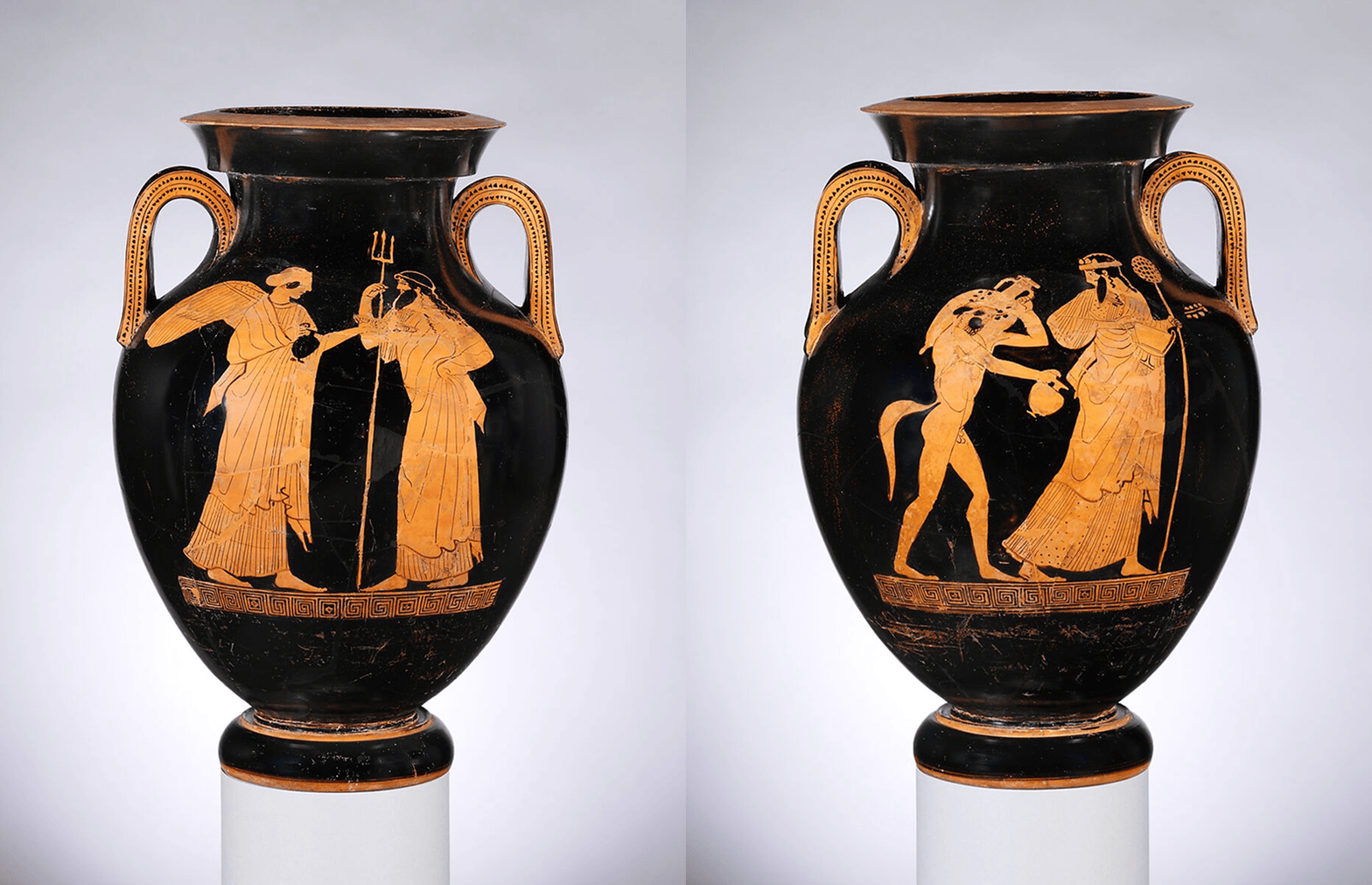
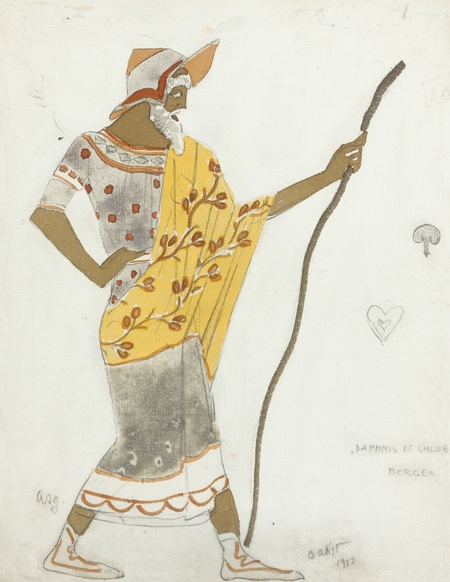
1 — Siracusan vase painter, terracotta amphora, c. 470–460 BCE 2 — Léon Bakst, reference to the ballet «Daphnis and Chloe,» 1912
For the ballet «Daphnis and Chloe,» Bax takes inspiration from ancient Greek vase painting. He examines its elements, the clothing depicted on them on the Greeks, and incorporates these into his work.
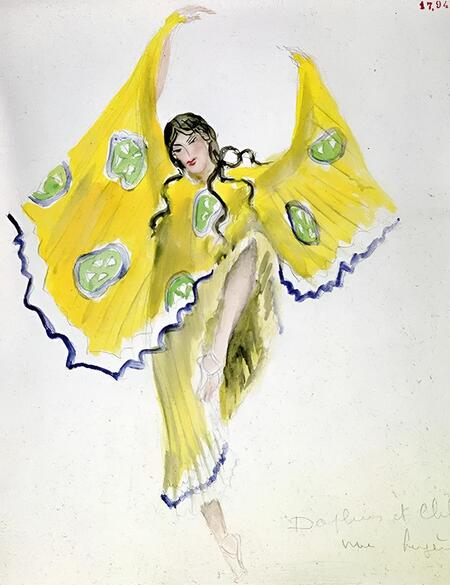
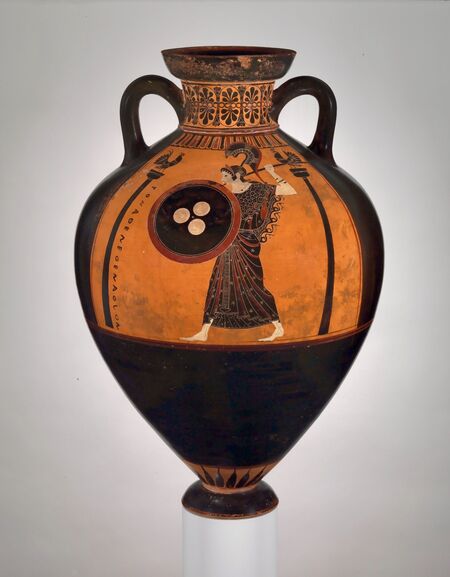
1 — Léon Bakst, reference to the ballet «Daphnis and Chloe, ” 1912. 2 — Euphletes, terracotta Panathenaic prize amphora, circa 530 BCE.
Bakst takes the drapery of chitons, solar symbols, floral motifs, borders, and volutes, and reinterprets them onto the fabric of the stage costume in a completely different way. He increases the scale, transforming modest patterns into large accent patches that begin to function in motion. As the dancer moves, these circles with cruciform divisions on the skirts and chitons establish a rhythm for the entire composition, animating the flat graphics of the original source and integrating them into the stage costume.
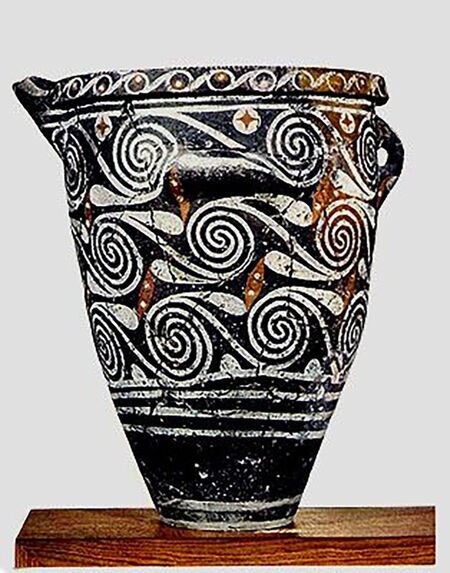
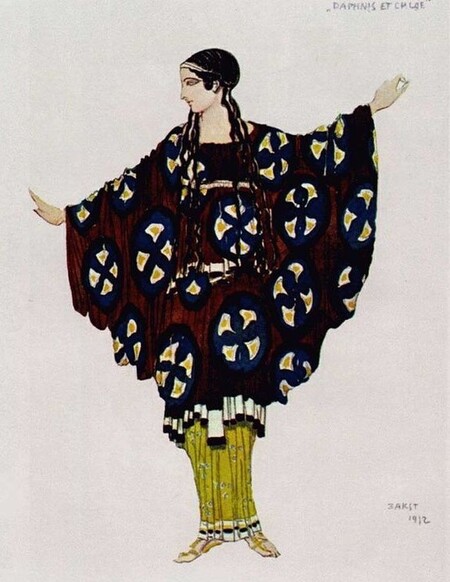
1 — MM II, pithos with three handles and a spout, 19–18 BCE 2 — Léon Bakst, reference to the ballet «Daphnis and Chloe,» 1912
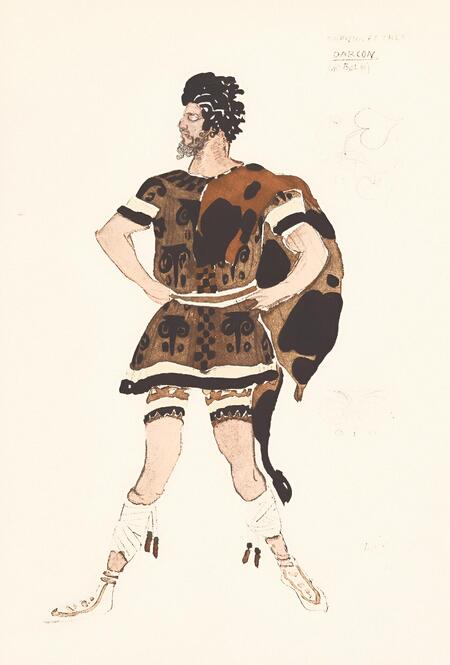
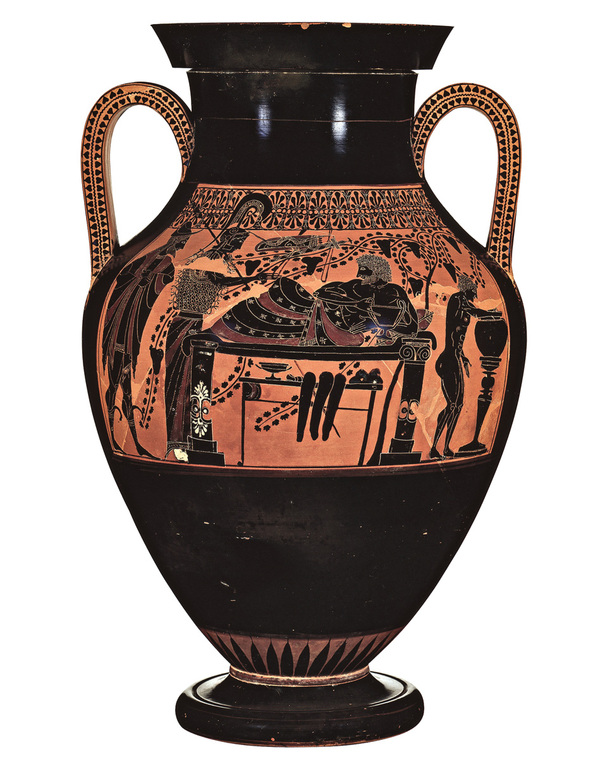
1 — Léon Bakst, reference to the ballet «Daphnis and Chloe,» 1912 2 — Andokid, Lysippid, bilingua amphora, c. 520–510 BCE
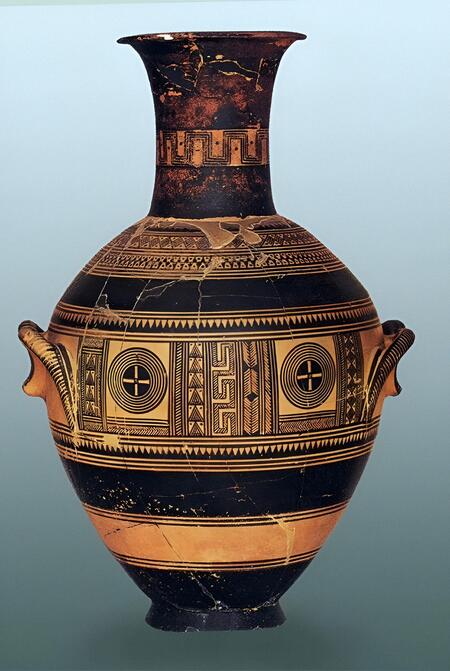
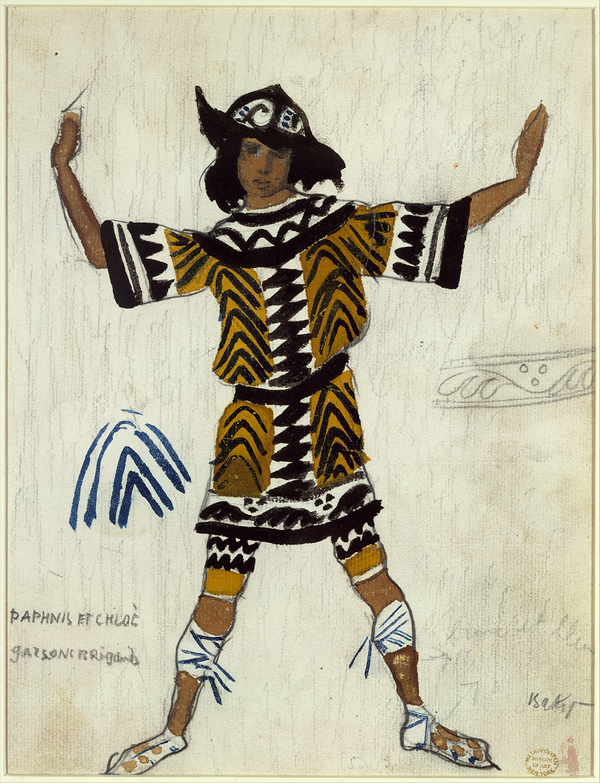
1 — Unknown artist, early geometric ceramic form, 9th century BCE. 2 — Léon Bakst, reference to the ballet «Daphnis and Chloe,» 1912.
Cretan-Minoan Organics and Archaic Grotesque
Minoan (Cretan-Mycenaean) art of the 2nd millennium BCE, discovered by Arthur Evans at Knossos in the early 20th century, became an aesthetic revelation for the «World of Art.» Unlike Classical Greece, which emphasized geometry, Cretan art was rooted in organic forms, water, and a fluid rhythm.
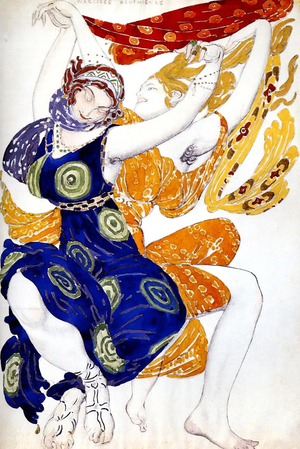
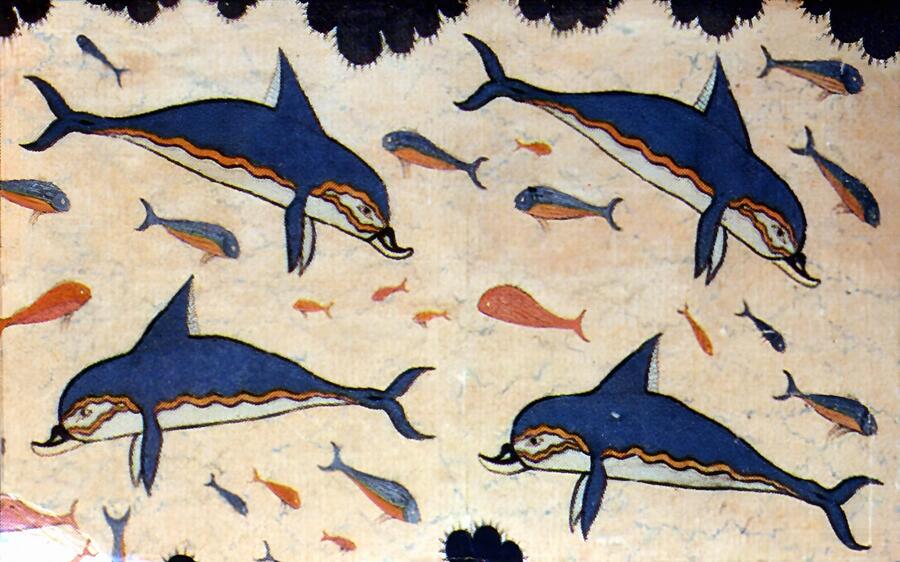
1 — Léon Bakst, reference to the ballet «Narcissus, ” 1911. 2 — Minoan master, fresco fragment with dolphins from the Knossos Palace, 15th–14th century BCE.
Masters of Crete, fragment of a fresco from the Knossos Palace, 15th–14th century BCE.
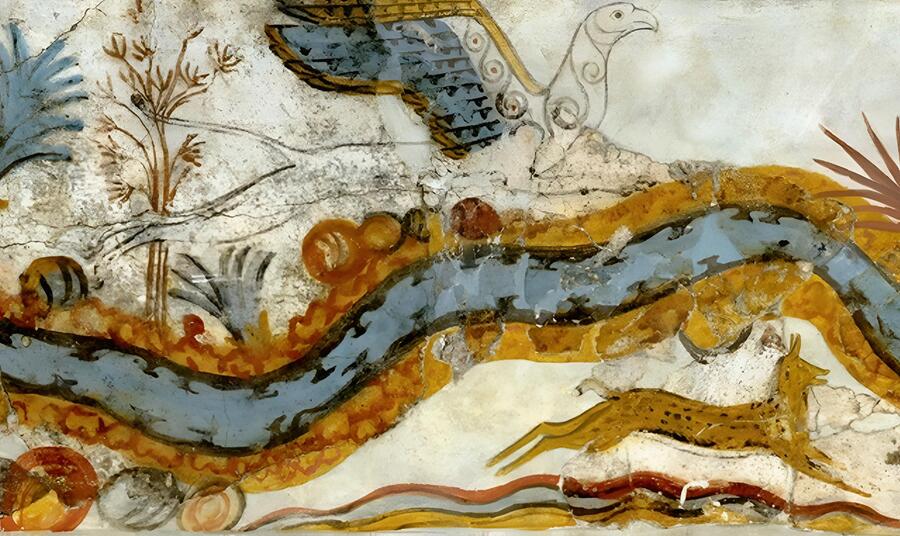
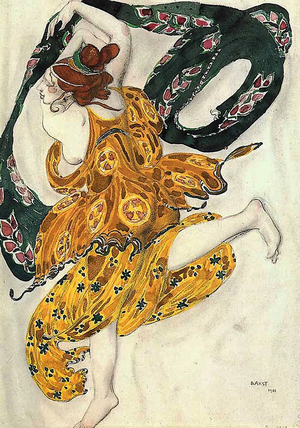
1 — Kritian master, fragment of a panoramic «fresco with a river, ” 15th–14th century BCE. 2 — Léon Bakst, reference for the ballet „Narcissus, ” 1911.
In the ballet «Narcissus» (1911) and in early ancient sketches, Bakst transfers this Mycenaean «floating» graphic to the design, creating images of nymphs that seem to hover in the air.
Chapter 2
Ориентализм: Персия, Индия и Ближний Восток
In search of imagery for «Scheherazade,» Bakst turns to Middle Eastern culture. He draws inspiration from Persian miniatures, antique rugs, and Indian textiles found in museum collections.