//1 The Word as an Image Element
//2 Typography and Textual Space
//3 Everyday Signage as Artistic Imagery
//4 Soviet Slogans and Propaganda Language
//5 Reinterpreting Familiar Words and Symbols
meow
In Soviet culture, words and images played a significant role in people’s daily lives. Slogans, posters, inscriptions on buildings, product names, and ideological symbols were an ingrained part of the surrounding environment. However, in the second half of the 20th century, artists began using these elements not just as a reflection of reality, but as independent artistic material. By placing familiar words and symbols in a new context, they altered their original meaning and compelled the viewer to perceive common imagery in a different way.
The goal of the study is to demonstrate how artists utilized text and recognizable symbols of Soviet culture to create new visual meanings.
The primary focus will be on the art of the 1970s–1990s, particularly the works of Erik Bulatov and Petr Belov. In Bulatov’s work, large words can overlay the canvas space, directing the viewer’s gaze, whereas in Belov’s, inscriptions on familiar objects participate in creating historical associations. For comparison, we will also examine pieces by Ilya Kabakov, Dmitry Prigov, Vitaly Komar, and Alexander Melamid. Western examples will establish a broader context.
The research will be divided into five thematic sections. The first is dedicated to the word as an element within an image and its role in artistic composition. The second examines the form and space of text, looking at how the scale, color, and placement of letters influence the perception of a work. The third section explores everyday signage and naming conventions as artistic imagery. The fourth is dedicated to Soviet slogans and the language of propaganda. The fifth reviews the reinterpretation of familiar words and symbols, which gain new meanings within an artistic context.This sectional structure allows the research to progress from the formal characteristics of text to its semantic content. Works by different authors will be compared within each section to illustrate the similarities and differences in artistic approaches.
The key question is—how did familiar words and inscriptions from the Soviet era transform into artistic imagery?
The research hypothesis posits that new meaning arose not only from the content of the words but also from their visual placement: scale, color, adjacency to objects, and space. Therefore, even a familiar inscription could be perceived differently—as an obstacle, a sign of the everyday, irony, or a reminder of history. Through comparing these works, I aim to investigate which artistic techniques enable such reinterpretation.
Word as an image element
Viktor Pivovarov, The Body of Moscow Non-Official Art of the 60s–70s, 2002
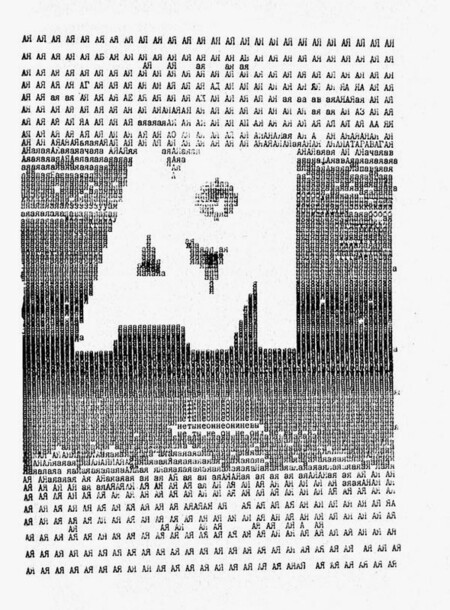
Ilya Kabakov. Everything about him. 1970–1971
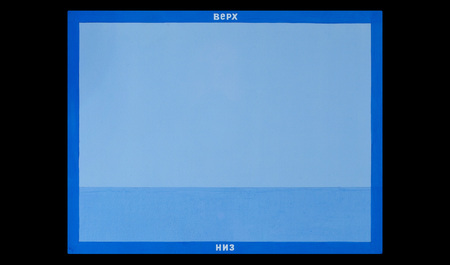
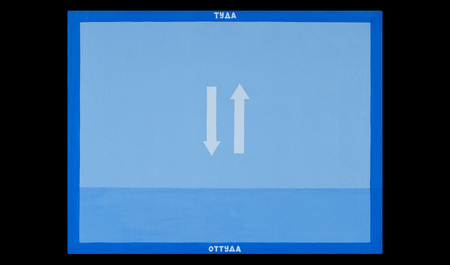
Viktor Pivovarov, Album «Konkluze» 1975
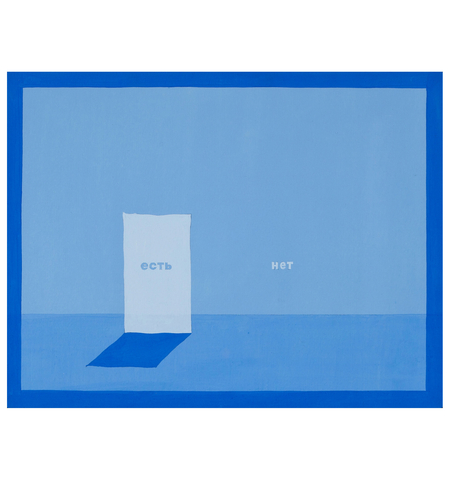
meow