Concept
The story of the Tower of Babel is one of the most well-known narratives in the Bible. It is recognized far beyond Christianity, and artists have referenced it for many centuries. The reason for its enduring appeal lies in the multifaceted nature of the subject: it simultaneously serves as a tale of divine punishment, a parable about human hubris, and a metaphor for cultural diversity. It is this richness that allows every century to interpret the story of the tower in its own way and find timely meaning within it.
The image of the Tower of Babel holds a special place in the history of visual art because it unites a religious narrative about the division of languages with a philosophical metaphor for human ambition. The story recounts the construction of a tower by which people sought to reach the heavens (i.e., God’s greatness). As a result of divine intervention, humanity was divided into peoples who spoke different languages. The narrative is seldom reduced to literal illustration; even when depicting the construction, artists are interested not so much in the event itself, but in its consequences—the scale of the vision, its doomed nature, and the moment of destruction.
This narrative has been depicted differently across various eras—the emphasis has shifted—but the core of the story has remained constant. For instance, in every epoch, one can find an image of the Tower of Babel, which serves as a reminder of human pride, vanity, and ambition for its contemporary audience.
However, throughout the centuries, the emphasis has shifted: the medieval artist saw the tower as a symbol of heresy, the Enlightenment artist saw the grandeur of engineering genius, and the contemporary author sees the fragility of any large-scale system.The visual depiction of the tower changed with the era, allowing the viewer to better interpret the subject based on their surrounding reality. Its image adapted to the expectations and fashion of its time.
This visual study will examine how the depiction, compositional role, architectural appearance, and symbolic meaning of the Tower of Babel have evolved throughout the centuries. Visual sources for this study include engravings, classical paintings, and illustrations, while textual sources were selected based on their relevance and significance to the topic under investigation. The structure of the study is chronological. The first chapter will focus on the Medieval period, when the image of the tower familiar to modern people began to form. The second chapter examines the tower’s image from the 16th to the 20th century. The third chapter will describe how the image of the Tower of Babel is reflected in the contemporary world.
1. The Middle Ages
The image of the Tower of Babel as it appears in the modern person’s consciousness began to take shape during the Middle Ages. The earliest depiction dates back to the 5th century CE and shows the scene of the tower’s construction. It illustrates the process in progress and the large number of people involved.
Mosaic depicting the construction of the Tower of Babel, 5th century
Often, the depiction focused specifically on the building process of the tower itself. What is important is that the image captures the moment when the tower is already high enough to suggest that the individual was attempting to challenge the majesty of God.
Tower of Babel, Palatine Chapel, Palermo, 12th Century
The appearance of the structure was determined by the medieval person’s perception of how the tower should look on its own, and its form was conventional and unfamiliar to the modern viewer, while its meaning remained biblical. Therefore, it often resembled the architecture characteristic of the region where the image was created. For instance, it was frequently depicted as a uniformly walled building ascending into the sky. This simplification of appearance was consistent with the architecture of that era—featuring relatively simple forms that prioritized utility over purely visual appeal. Because of this depiction, the contemporary viewer could interpret the narrative’s message and apply it to their own life through the image of the Tower of Babel.
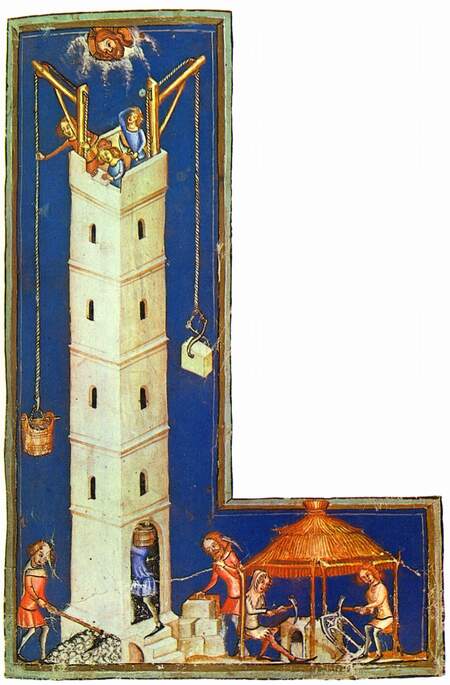
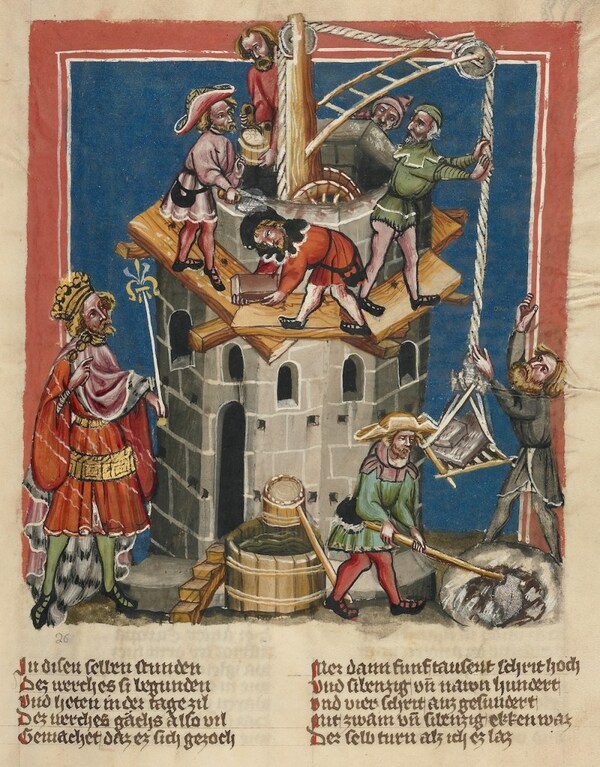
Tower of Babel, miniature from «World Chronicle in Verse, ” 1370 / Tower of Babel, „Universal Chronicle in Verse, ” 15th Century
The simplicity of the form also prevents the viewer from becoming preoccupied with the mastery of the builders and architects. Instead, the focus shifts to the very act of constructing the Tower of Babel and to its inherent meaning within the Biblical narrative.
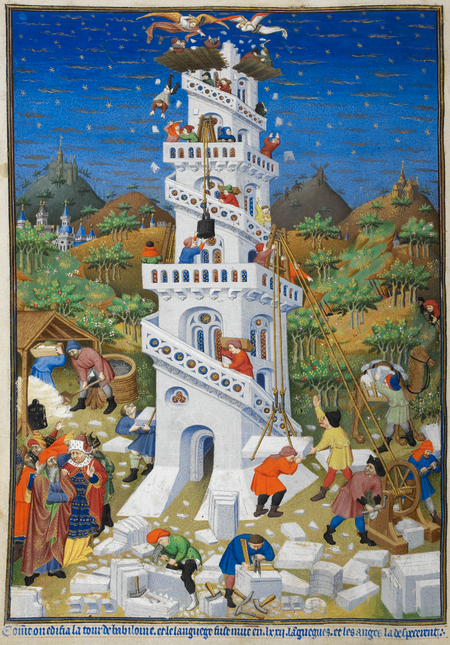
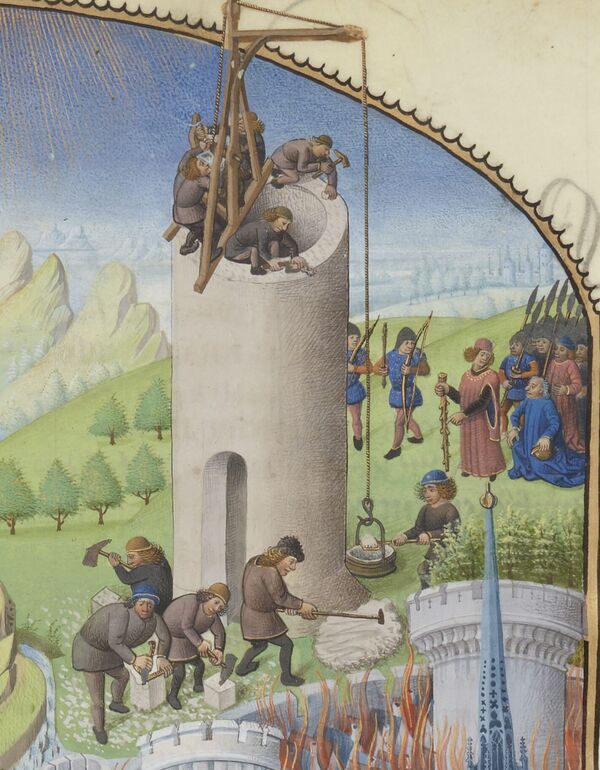
Building the Tower of Babel, Master Clockmaker Bedford, between 1410 and 1430 / Tower of Babel, Pierre Le Bou, 15th Century
The appearance of the builders is dictated by Medieval fashion. They wear bright shirts and pointed-toe boots. Thus, the artistic depiction of the Tower of Babel narrative directly appealed to its contemporaries, reminding them that humanity cannot surpass God.
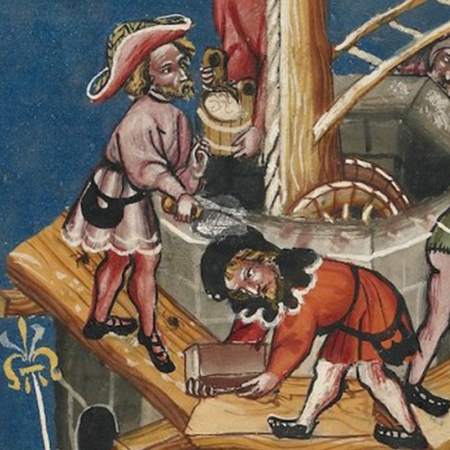
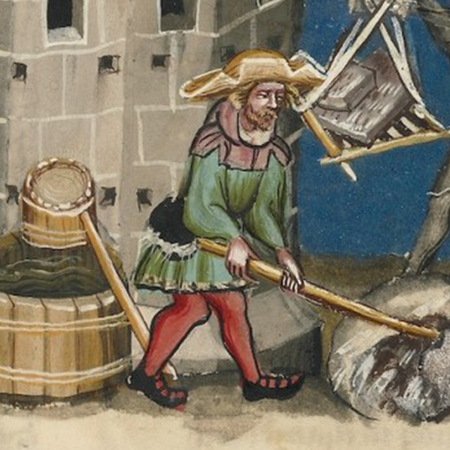
Babylon Tower, «World Chronicle in Verse, ” 15th century, fragments
Construction of the Tower of Babel, Master Clockmaker Bedford, between 1410 and 1430, fragment
In this era, narrative imagery primarily focused on interpreting and visualizing biblical stories. Consequently, medieval art frequently depicted God’s presence during the construction of a tower or the moment God punished people.
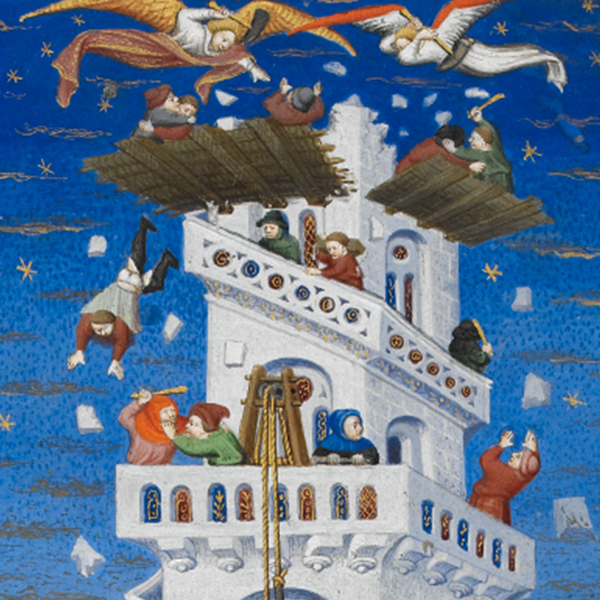
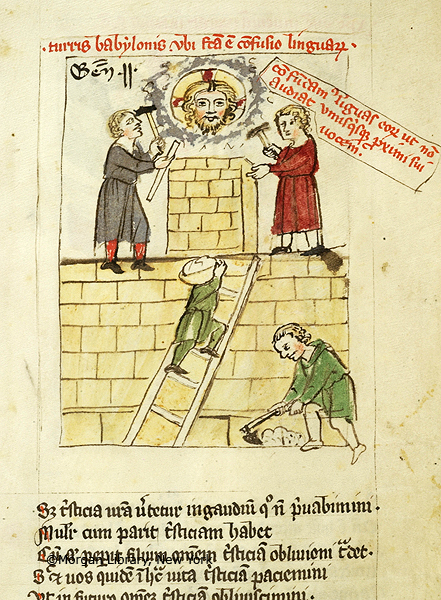
Construction of the Tower of Babel, Master Clockmaker Bedford, between 1410 and 1430, fragment / Tower of Babel, «Mirror of Human Salvation, ” between 1350 and 1400
Building of the Tower of Babel, unknown author, 11th century
2. New Era
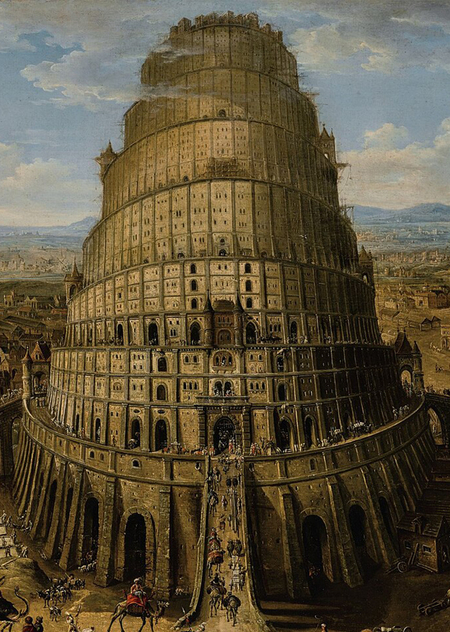
In modern times, the visual approaches to depicting the story of the Tower of Babel have evolved: the architectural element has taken center stage. Thus, the Tower of Babel itself has become a distinct focal point of the composition.It began to be depicted with far greater detail and richness in terms of architectural design—rising levels of the tower, tall walls, and windows of various shapes.
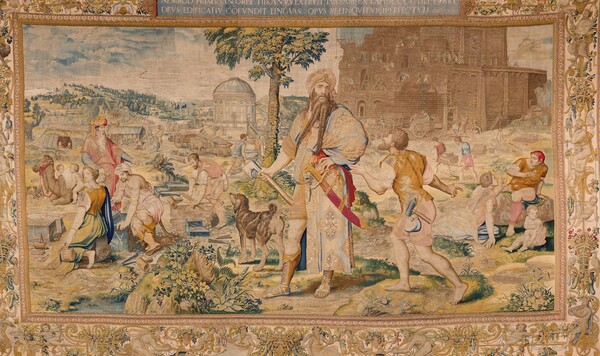
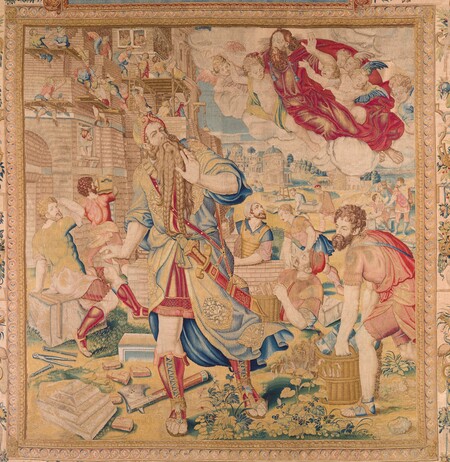
Tapestry from the series «The Story of the Tower of Babel»: Building the Tower / Tapestry from the series «The Story of the Tower of Babel»: God’s Wrath, 1560
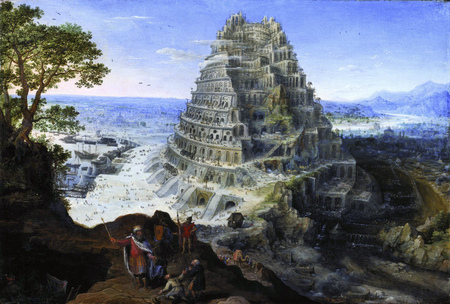
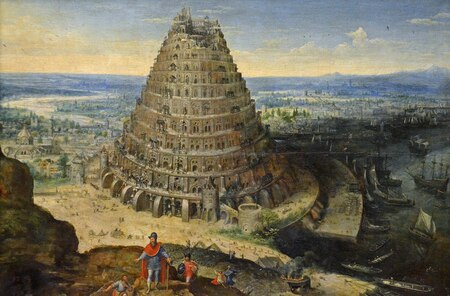
«Tower of Babel,» Lucas van Falkenborch, 1595 / «Tower of Babel,» Lucas van Falkenborch, 1594
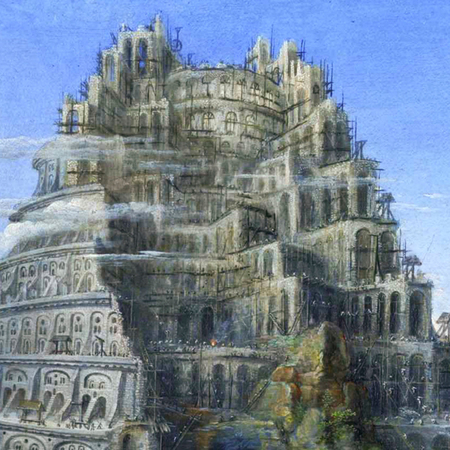
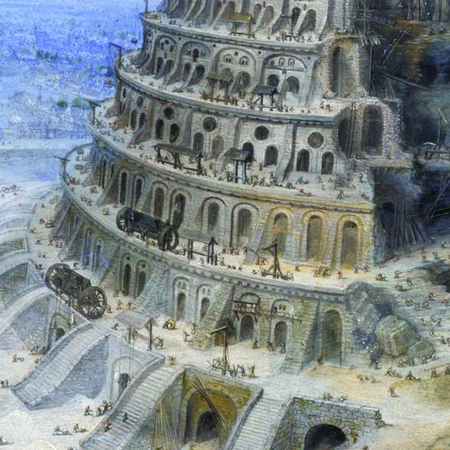
«Tower of Babel, ” Lucas van Falkenborch, 1595, fragments
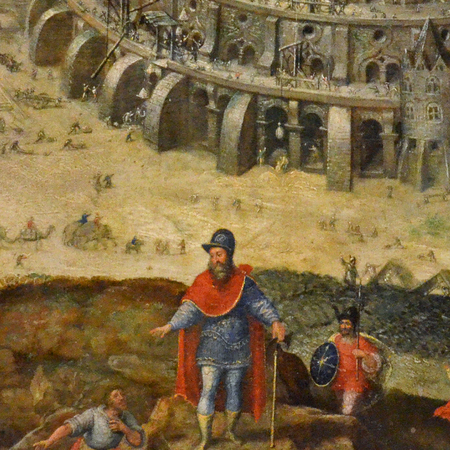
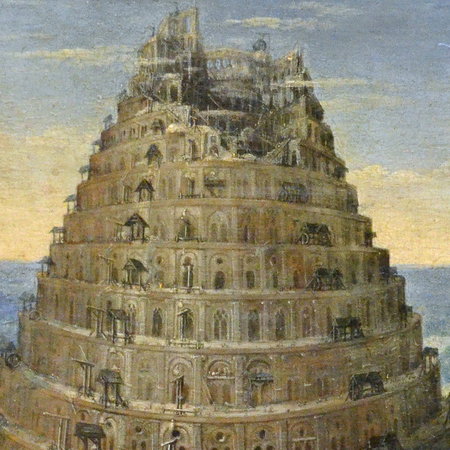
«Tower of Babel, ” Lucas van Falconborough, 1594, fragments
This is particularly striking in the paintings of Pieter Bruegel. The artist meticulously details the architectural form through the abundance of windows, entrances, exits of the tower, and small turrets. Such intricate depiction draws the viewer’s attention, compelling them to examine the tower and its surroundings closely.
«Tower of Babel, ” unknown author, 17th century
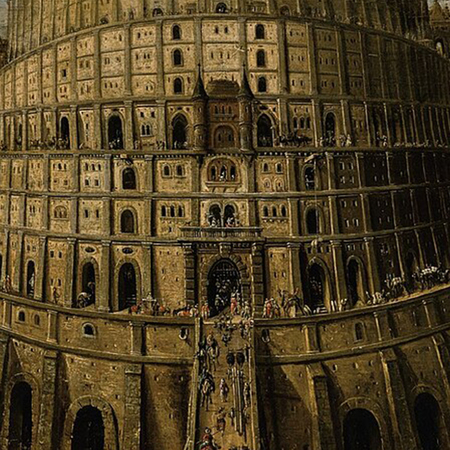
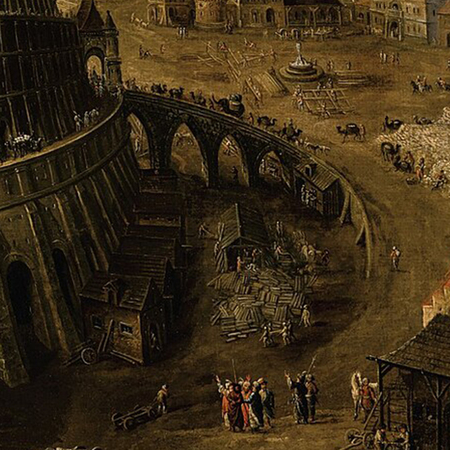
«Tower of Babel,» unknown artist, 17th century, fragments