Медичи — влиятельная фамилия, представители которой с XV по XVII век неоднократно становились правителями Флоренции и оставили значительный след как минимум в каждом уголке Тосканы.
Книга ставит целью инвентаризацию итальянского региона на предмет влияния семейства. В поле исследования: архитектура, искусство, политика, экономика, религия и конечно культура.
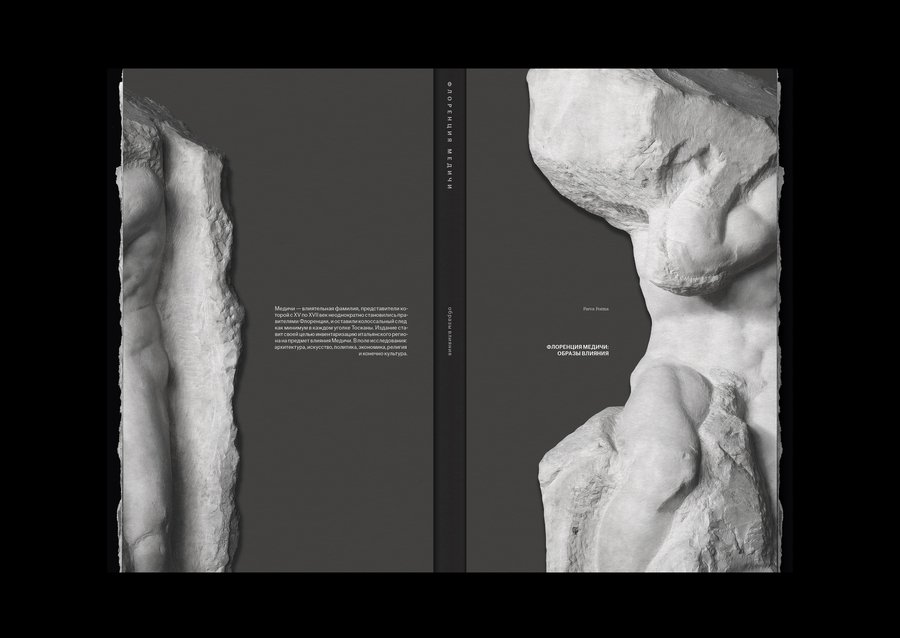
Обложка книги
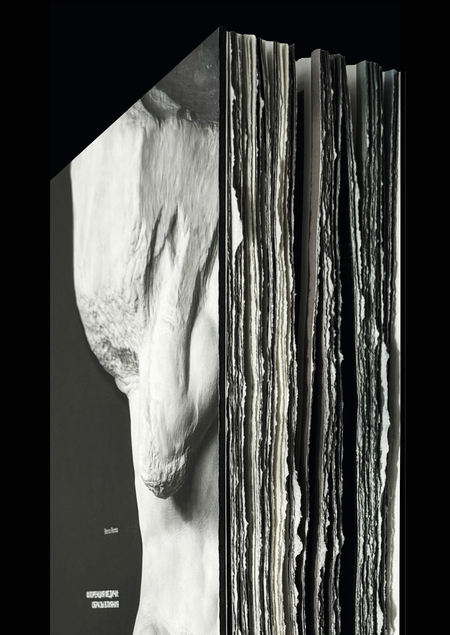
Издание напечатано на тонкой бумаге Palatina в оттенке слоновая кость. Фактурный боковой обрез выполнен вручную и отсылает к книгам эпохи Возрождения.
Фактурный обрез книги
Вход в книгу
Фотографии на заходных разворотах издания напечатаны друг за другом и расположены на полосах навылет. Полупрозрачная бумага позволяет «пересечь» изображения с противоположных сторон страниц, что создает новые образы узнаваемых флорентийских объектов.
Содержание (слева), генеалогия Медичи (справа)
Шмуцтитулы трех частей
Организация разворотов меняется по ходу повествования. В первой части книги используется одноколонник с тонкой колонкой примечаний, во второй — двухколонник, в третьей — одно-, двух- или трехколонник в зависимости от главы.
Организация разворотов книги от первой к третьей части (колонки слева направо)
Часть I. Династия
Типовые развороты
Развороты на белом фоне посвящены основной теме книги — классическому искусству эпохи Возрождения и его создателям. Развороты на черном фоне демонстрируют примеры современных художественных произведений, вдохновленных работами мастеров эпохи Медичи.
Типовые развороты
Фрагмент разворота
На разворотах с большим объемом примечаний колонка основного набора уступает место колонкам с дополнительными сведениями
Сноски в кругах отсылают к иллюстрациям, выделенный жирным начертанием текст — к примечаниям
Часть II. Слава
Типовые развороты
Во второй части книги, посвященной хрестоматийным текстам об эпохе Медичи, одноколонник основного набора сменяется монументальным двухколонником.
Фрагмент разворота
Типовые развороты
Часть III. Наследие
Карта исторических районов Флоренции
Заключительная часть книги, путеводитель по знаковым объектам, связанным с фамилией Медичи, состоит из четырех глав, соответствующих четырем историческим районам города.
Шмуцтитулы глав и карты отдельных районов
Фрагмент карты района Сан-Джованни
Развороты с современными проектами в пространствах Флоренции Медичи
В части-путеводителе, равно как и в первой части «Династия», на черном фоне показаны современные проекты в сфере культуры, организованные в пространствах Флоренции Медичи.