MEDIA CONCEPT
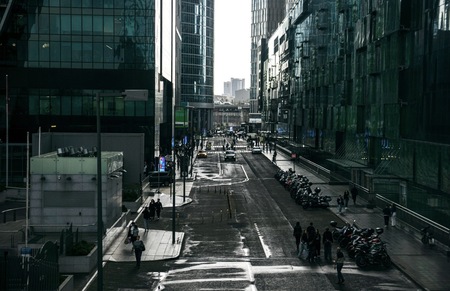
Moscow is a city where one constantly has to balance work and leisure, socializing and solitude, routine paths and new experiences. But finding the right spot isn’t always easy. Maps show where a coffee shop is located, reviews help assess the establishment, and posters inform about events. Still, individuals must independently synthesize the information and decide if a specific space suits their needs.
«BETWEEN”—a practical urban lifestyle media that helps you find the right space in Moscow for your specific life situation. We start not with the space, but with the human need: to work for a few hours, to read in peace, to meet up after work, to be alone, or to find people with similar interests.

To make this search convenient, Media aggregates information from various sources, organizes it, and vets it against criteria that are genuinely important to the user. As a result, the reader does not have to manually sift through dozens of reviews or compare specifications. «MEDZYU» helps navigate the journey from initial query to a finalized solution.
MEDIA DATA SOURCES

To complete the «BETWEEN» project, we require data on urban spaces, including their characteristics, events, and audience needs. It is crucial not to rely on a single source of information, but rather to synthesize several to gain a comprehensive understanding of each location.Primary sources will include mapping services like Yandex Maps and 2GIS, where we can find addresses, operating hours, photos, and visitor reviews. Official websites of coffee shops, libraries, coworking spaces, and cultural centers will help confirm pricing, access rules, availability of additional services, and current conditions. To locate events and communities, we will utilize city institution websites, event listings, organizer pages, and relevant Telegram channels.
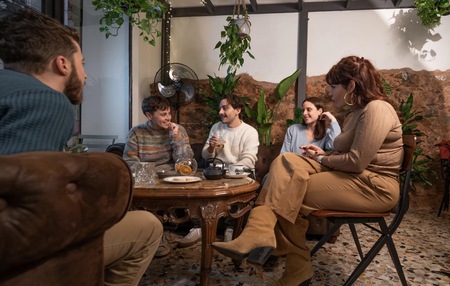
Original media sources will play a distinct role. Interviews with visitors and space owners, surveys of readers, and editorial visits will allow us to gather information that is difficult to obtain from open sources. For example, is it truly convenient to work in a particular coffee shop, how noisy is it on weekdays, is it comfortable to come alone, and is there an opportunity to participate in events regularly?
Thus, «BETWEEN» will integrate open data, information directly from the spaces themselves, and the results of its own editorial work. This will allow it to do more than just describe urban places—it will enable an evaluation of them from the perspective of real-world usage scenarios.
DATA SCHEMA DIVIDED INTO MACHINE AND HUMAN PROCESSING
Working with data in «MEZHDU» is structured around the principle of dividing tasks between automated services and editorial review. Machine processing helps to collect, organize, and compare information more quickly, while human input verifies its accuracy, assesses tone, and makes the final decision regarding publication.
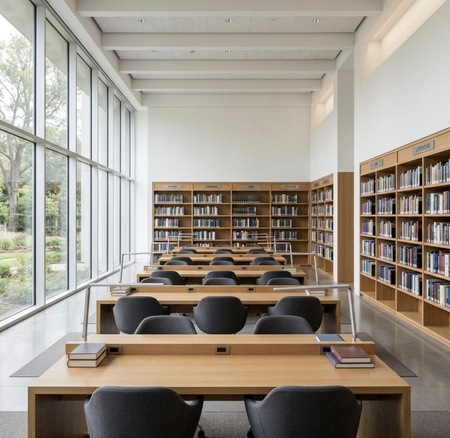
In the initial phase, information is gathered from open sources, official websites, social media, and the editorial team’s proprietary research. Subsequently, automated tools assist in standardizing the data format, identifying duplicate entries, categorizing spaces, and highlighting characteristics relevant to specific scenarios. For example, when curating a list of suitable workspaces, the system can select spaces that specify the availability of Wi-Fi, power outlets, compatible hours, and location.
After initial processing, the data is passed to an editor. The editor verifies key characteristics, clarifies missing information, and contacts representatives of the space or visits the locations in person if it is necessary to assess noise levels, seating comfort, or atmosphere. At this same stage, it is determined how closely the space truly aligns with the stated scenario and whether it should be included in the selection.

After verification, the information is saved in a unified database. For each entry, the following are recorded: name, address, category, district, visit cost, available amenities, suitable use cases, information sources, last verification date, and data reliability status. Data on events, communities, and published materials may be stored separately.
Based on this database, the editorial team prepares articles and collections for the website, Telegram, and Zen. After publication, automated services help track the need for information updates, and reader feedback and new data feed back into the editorial system. In this way, the database constantly evolves, and the recommendations become more precise.
data collection → automated processing → editorial review → publication → information update.
GUIDELINES FOR AUTOMATED SERVICES
Automation in «BETWEEN» should reduce the time spent on routine tasks, but it should not replace editorial work. The primary function of these services is to help users locate the necessary information faster, standardize its format, and prepare materials that a person will subsequently review.
To store and systematize data, you can use Google Sheets or Airtable. These tools will allow you to create a unified database of urban spaces, track changes, and filter locations by district, budget, amenities, and use case scenarios. To integrate services and automate repetitive tasks, you can use Make or n8n, and for drafting, classifying information, and structuring texts—tools based on artificial intelligence, such as ChatGPT.
Automated services will be able to gather available information using permissible methods, check the completeness of profiles, find duplicates, assign spaces by category, and generate preliminary selections. They will also be able to remind editors when outdated information needs to be re-verified and help adapt finished materials for different distribution channels.
However, all facts that directly influence the reader’s decision must be verified. The service cannot independently confirm the availability of power outlets, the actual noise level, the possibility of extended operation, or the timeliness of an event if such information is not available from a reliable source. Artificial intelligence must not invent missing features, present assumptions as facts, or publish unverified recommendations.

For every entry, the source of information and the verification date must be saved. If the information contradicts itself or remains incomplete, the card must be flagged for additional editorial review. Material can only be published after the key facts have been verified and final editorial approval has been granted.
Particular attention must be paid to copyrights, the terms of use of third-party services, and personal data protection. Information must be collected legally, photographs must be used with the necessary permissions, and user data must be processed only to the extent required for the media’s function.
Thus, the automated services in «BETWEEN» act as an editorial tool that speeds up information retrieval and processing, but they do not make final decisions in place of a human. Technology helps make media more convenient and effective, while editorial review preserves its main advantage—recommendations that the reader can trust.