
The logo of Yota
Yota is a Russian telecommunications company and a federal wireless operator, founded in 2007. It is a subsidiary of PJSC MegaFon. The company's main activities include providing mobile communication services and 4G internet.
Even though Yota currently belongs to MegaFon and uses its infrastructure, the operator positions itself as a separate, bolder, more flexible, and younger brand.
Positioning
The brand's main advantage is its flexible plan builder (tariff constructor), which allows customers to create a service that fits their specific needs, rather than choosing from a limited set of options. In this way, the brand adapts to the audience's demands without forcing unnecessary services on people. It gives users the freedom to manage their own package of services, which they can change at any time depending on their needs. At the same time, Yota hasn't abandoned ready-made tariff plans.
«Our users don’t want to be 'subscribers' in the traditional sense — they want to be users of a personalized digital service,» says Elena Martynova, Deputy General Director for Strategic Communications and Brand Development at MegaFon.
Yota positions itself as a "challenger brand" – its development model resembles that of a startup, which allows it to test product and communication hypotheses faster and be bolder and more active. As a result, products are brought to market much more quickly.
Moreover, Yota remains a digital brand. Its interface and communication style are quite light and easy for young people to understand. The brand actively fills the digital space, becoming more accessible and convenient for customers.
«Flexibility and technological adaptability — that is our strategy,» says Elena Martynova.
To connect with its audience, Yota uses a "live communication style" – memes, irony, and self-irony, without being afraid to be informal and unstrict.
Target Audience
Yota's main audience is Generation Z – people aged 14 to 29. The core of the audience is users from 20 to 29 years old, who make up 43% of the product's audience. The brand describes its users as creative people, active internet users who dislike intrusive advertising and stand up for their personal boundaries.
Communication Channels
Yota uses non‑traditional and unconventional media to communicate with its audience. For example, the company launched a brand media project called "Y Magazine" (Й ЖУРНАЛ), which is a VK community and a Telegram channel focused on creativity and pop culture. Its special feature is that subscribers themselves create most of the content by submitting their artwork through a "suggest news" form.
YOTABUS
In addition, Yota has other social media platforms, such as TikTok and a YouTube channel*. The brand also creates various collaborations and viral projects – events that spread from user to user like a virus because people want to share them.
*banned in Russia
Collection of clothes Yota x Sintezia
Yota actively works with different creators: bloggers, musicians (for example, polnalyubvi), and other brands. For instance, the brand released a joint project Yota x Sintezia – a clothing and footwear capsule that reflects the values of both brands: technology, modernity, and freedom of self‑expression. The collection sold out in 7 days, gained over 6 million views, and generated 37 free publications in Telegram channels.
Theoretical Framework and Analysis
For the analysis of Yota's communication strategies, we chose two theories: the Uses and Gratifications Theory and the Elaboration Likelihood Model.
The Uses and Gratifications Theory explains why people choose certain media channels to satisfy their needs and how they use media to achieve their goals.
The Elaboration Likelihood Model works on the basis of how quickly people become convinced of something and what influences their decision‑making speed.
Uses and Gratifications Theory
The theory shows that Yota builds its communication through direct interaction with the audience. This allows customers to express themselves, create things, feel part of a community, and be entertained. In this way, the brand meets many of young people's needs and also attracts new customers.
The screenshot of «Y Magazine» site in VKontakte
First, Yota launched a project called "Y Magazine" (Й ЖУРНАЛ), which gives people the opportunity to create their own content – after which the brand publishes it. Over one year, more than 3,000 applications from users were submitted, and 300 of them were published. In addition, 20 collaborative posts were created. Moreover, Yota ran a "YOTABUS" campaign, where the brand asked users to design the artwork for a minibus and send in their work for a contest. This is another example of customers being able to realise their creative potential.
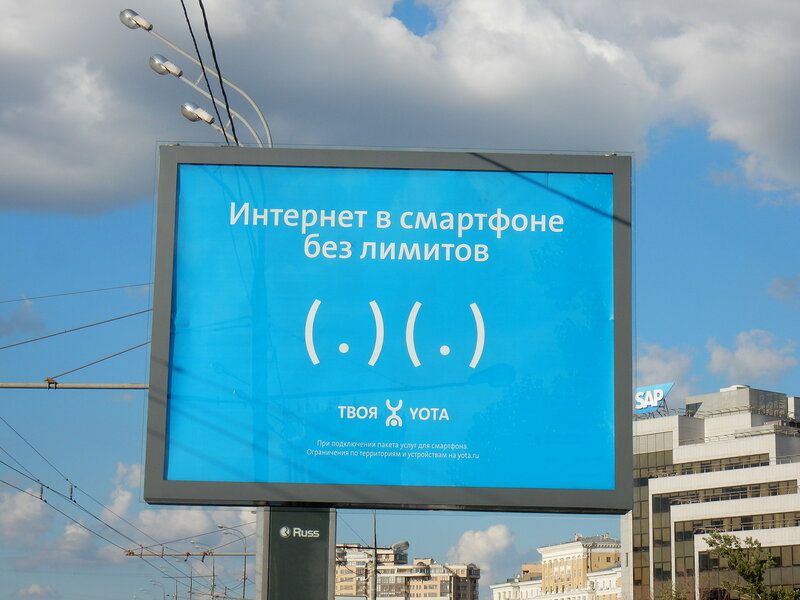


Yota’s advertisement in different places
Second, an important point is how the brand communicates with its audience. Yota has moved away from formal technical support conversations towards memes, freedom of expression, and casual communication on social media. People interact in the comments under posts, which makes them feel heard and understood. It also helps bring the audience together and allows customers to feel part of something bigger. As a result, the engagement rate increased by 35%, and the number of comments on posts grew sevenfold.
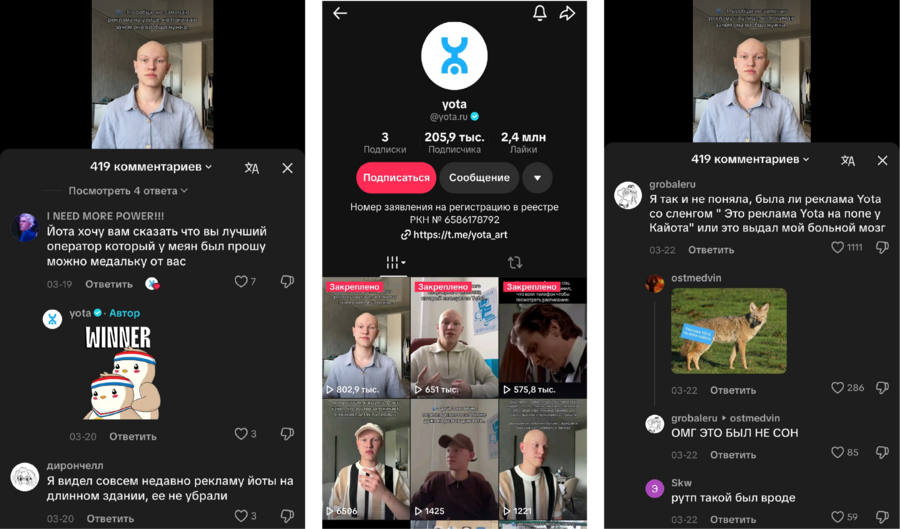
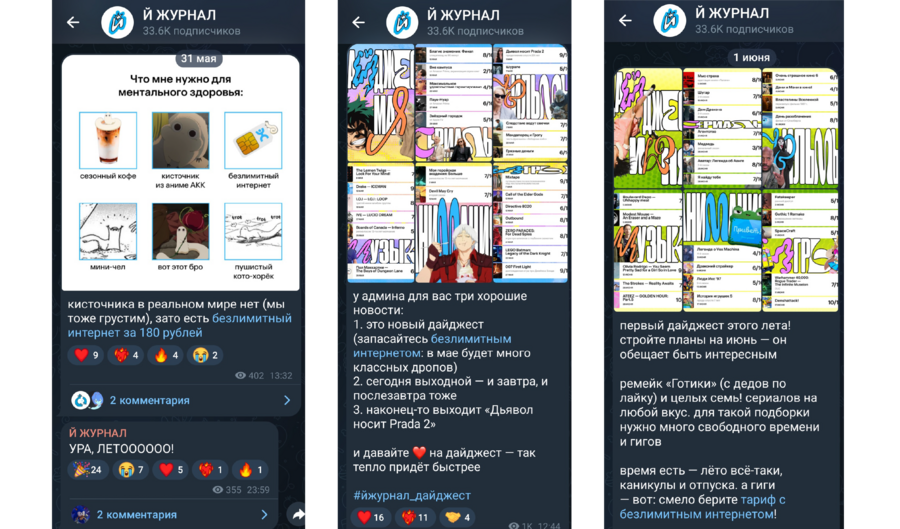
Posts on the «Y Magazine» Telegram channel and comments on Yota’s Tik Tok

Third, Yota often engages with pop culture and tries to become part of it through collaborations with brands, musicians, artists, and by posting memes about current events – for example, the Met Gala. In this way, the brand always strives to stay on trend and be well‑known. For instance, Yota held a contest to create cover designs for an album by the singer polnalyubvi.
On the left, a picture from a post about a contest with a singer polnalyubvi from VKontakte.
Fourth, the brand's main advantage is its plan builder (tariff constructor). It allows customers to personalise the service according to their individual needs and change the terms if their needs change. This satisfies the need for freedom of choice.
Tariff constructor from Yota’s website
Elaboration Likelihood Model (ELM)
The Elaboration Likelihood Model (ELM) helps to analyse how Yota's communication convinces its young audience. This theory states that people process persuasive information in two ways: the central route (when they thoughtfully analyse logical arguments) and the peripheral route (when they rely on emotions, visual appeal, or sympathy for the source). Yota is an example of a brand that uses both routes, adapting to different decision‑making styles of its audience.